Free tool
Can my pet eat this?
A quick food-safety checker for dogs and cats. Search a food and see at a glance whether it is safe, fine in moderation, one to be careful with, or never to be given, with a link to the full guide.

SafeIn moderationCautionNever
Grapes and raisins
Onions
Garlic
Xylitol (sweetener)
Alcohol
Caffeine and coffee
Macadamia nuts
Avocado
Raw bread dough
Cooked bones
Apple
Banana
Blueberries
Strawberries
Watermelon
Carrots
Pumpkin
Cucumber
Green beans
Chicken
Salmon
Tuna
Eggs
Cheese
Milk
Yogurt
Peanut butter
Rice
Bread
Popcorn
Oranges
Tomato
Sweetcorn
Ham and bacon
Mushrooms
No match. Try another food, and if in doubt, ask your vet.
How to use the checker
Type a food into the search box and you will see a separate verdict for dogs and for cats: safe, fine in moderation, one to be careful with, or never to be given. Each comes with a short note, and where we have a full guide, a link to read more. The dangerous foods are the ones worth learning by heart, but the checker is here for the everyday question of whether you can share what is on your plate.
The foods that are never safe
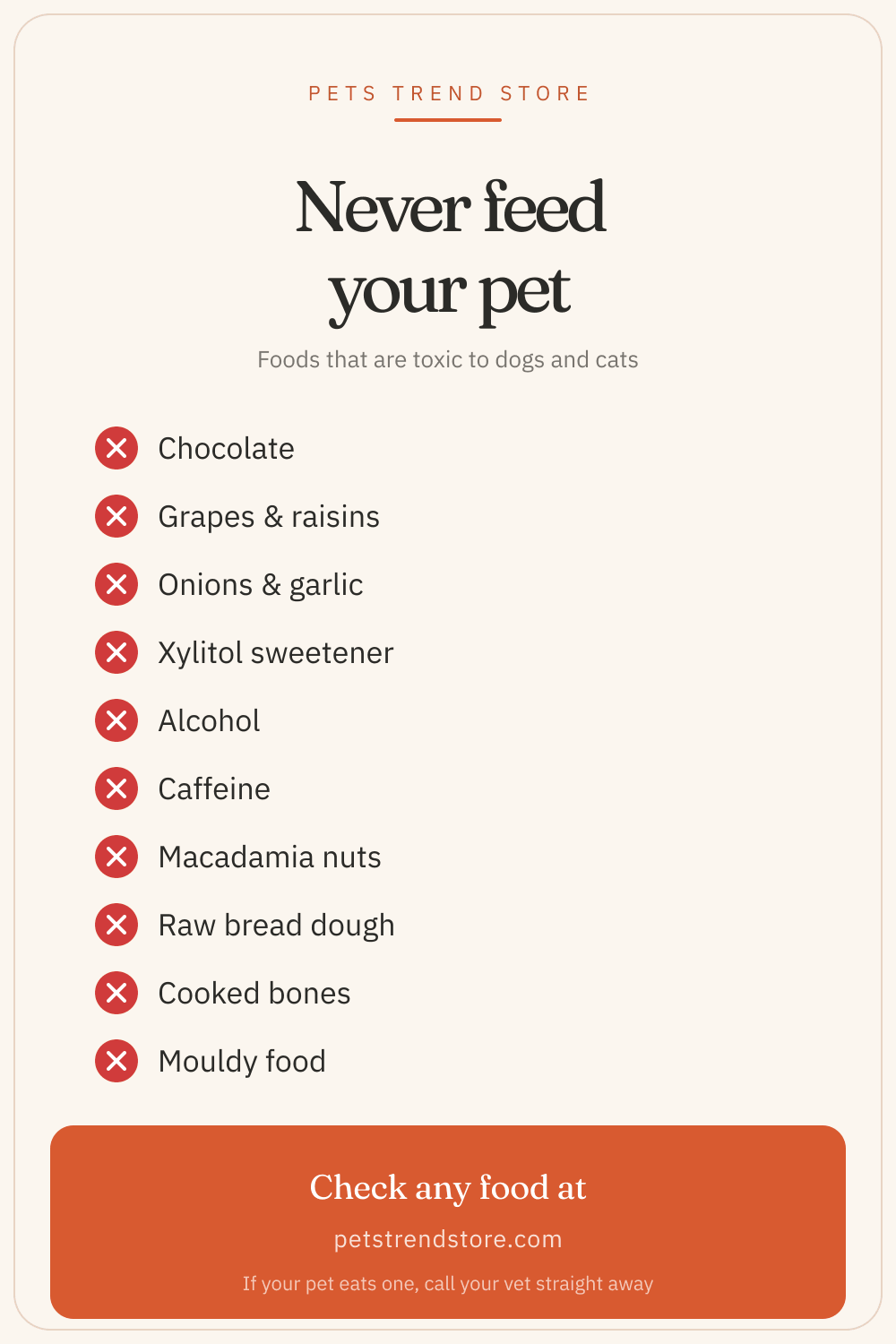
Some foods are toxic to both dogs and cats and should be kept well away: chocolate, grapes and raisins, onions and garlic, xylitol, alcohol, caffeine, and raw bread dough, along with cooked bones. For the fuller picture, see our guides to safe and toxic foods for dogs and safe and toxic foods for cats.
Common questions
What foods are most dangerous to dogs and cats?
The most important toxic ones for both are chocolate, grapes and raisins, onions and garlic, xylitol (a sweetener in sugar-free gum and some foods), alcohol, and caffeine. Cooked bones and raw bread dough are dangerous too. Keep all of these well out of reach, and search any specific food above before you share it.
Can dogs and cats eat the same foods?
There is a lot of overlap, especially on the dangerous list, since chocolate, onions, grapes, and the rest are toxic to both. But suitability differs, cats are strict carnivores, so many fruits and vegetables that suit dogs are simply not appropriate for cats even when they are not harmful. The checker gives a separate verdict for dogs and cats for exactly this reason.
My pet ate something toxic, what should I do?
Contact your vet or an animal poison line straight away, even if your pet seems fine, and have ready what it ate, roughly how much, and your pet's weight. With several toxins the damage is done before symptoms appear, so do not wait. For chocolate specifically, our dog chocolate toxicity calculator can help you gauge the urgency while you call.
Is this checker a substitute for a vet?
No. It is general guidance to help you decide what is safe to share day to day, and to react quickly if your pet gets into something. Individual animals vary, amounts matter, and only your vet can advise on your specific pet. If your pet is unwell or has eaten something dangerous, always contact your vet.
This checker offers general guidance only and is not veterinary advice or a diagnosis. Individual pets and amounts vary. If in doubt, or in an emergency, always contact your vet or an animal poison helpline.