Yes, dogs can eat rice, and plain cooked rice is not only safe but genuinely useful, which is why vets often suggest it as part of a bland diet for a dog with an upset stomach. It is gentle, easy to digest, and something most dogs happily eat. As with any human food, the keys are to keep it plain and to treat it as a small part of the diet rather than a main event.
Rice as a gentle, safe food
Plain cooked rice is one of the more reliably dog-friendly human foods, and its main appeal is how easy it is on the stomach.
Rice is largely carbohydrate, providing easily digestible energy without much to irritate the gut, which is exactly why plain white rice is a staple of the classic bland diet for dogs recovering from a mild tummy upset. It is safe, well tolerated, and simple to prepare. Both white and brown rice are fine: white rice is the easiest to digest, making it the usual choice for a sensitive stomach, while brown rice keeps more of its fibre and nutrients but is a little harder to digest, so it is more of an everyday addition than a settle-the-stomach food. Either way, rice is a helpful, low-risk food to have in the cupboard, though it is a plain carbohydrate rather than a complete meal on its own.
How to serve rice
Serving rice to a dog is straightforward, with the usual rule of keeping it plain.
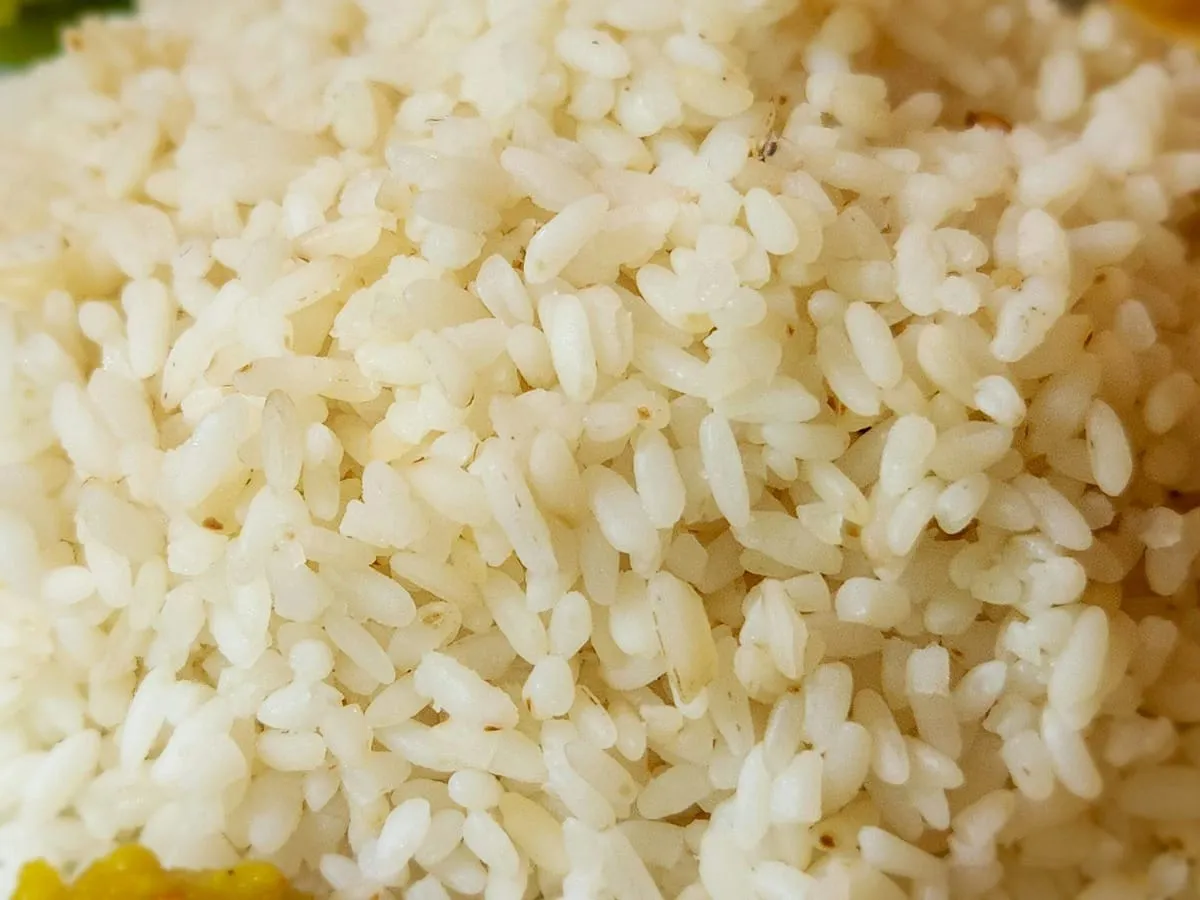
Cook the rice fully and serve it plain, with no salt, butter, oil, stock, or seasoning, and let it cool before offering it. For a bland diet, mix plain white rice with a little plain cooked chicken in modest portions. As an everyday addition, a spoonful of plain rice mixed into food is fine for most dogs. Avoid fried rice, seasoned rice, and rice dishes made for people, since these often contain onion, garlic, salt, and fats that are not good for dogs. Plain, cooked, unseasoned rice is what you want.
Keep it a small part of the diet
Because rice is mostly carbohydrate and light on the nutrients a dog specifically needs, it should be a modest addition rather than a large part of the diet.
Outside of a short bland-diet stint, rice is best kept to a small amount mixed into meals rather than fed in large quantities, since a dog’s main nutrition should come from a complete, balanced dog food that covers everything rice does not. Too much rice can also add unnecessary calories, so keep portions sensible, especially for dogs watching their weight. Used as a small, plain addition or a temporary settle-the-stomach food, though, it is a genuinely handy and safe option.
So, can dogs eat rice? Yes, plain cooked rice is safe and often helpful, particularly as part of a bland diet for a mild upset stomach, as long as it is kept plain and modest and a complete dog food does the real feeding. Just know when a tummy upset needs a vet rather than home care. For the wider list of dog-safe and dog-dangerous foods, see our guide to safe and toxic foods for dogs.
Common questions
- Is rice good for dogs with an upset stomach?
- Yes, plain cooked white rice is a classic part of a bland diet for a dog with a mild upset stomach, often mixed with a little plain cooked chicken. It is gentle and easy to digest. If your dog's stomach upset is severe, lasts more than a day or two, or comes with other signs of illness, see your vet rather than relying on rice.
- Can dogs eat white rice or brown rice?
- Both are safe. Plain white rice is very easy to digest, which is why it is used for upset stomachs, while brown rice has more fibre and nutrients but is a little harder to digest. Either is fine as a plain, cooked addition in moderation, cooked without salt, oil, or seasoning.
- How much rice can a dog eat?
- Rice should be a small part of the diet, not a large one, since it is mostly carbohydrate. A little mixed into food, or a bland chicken-and-rice meal during a tummy upset, is fine, but a dog's main nutrition should come from a complete dog food. Keep portions modest, especially for dogs watching their weight.