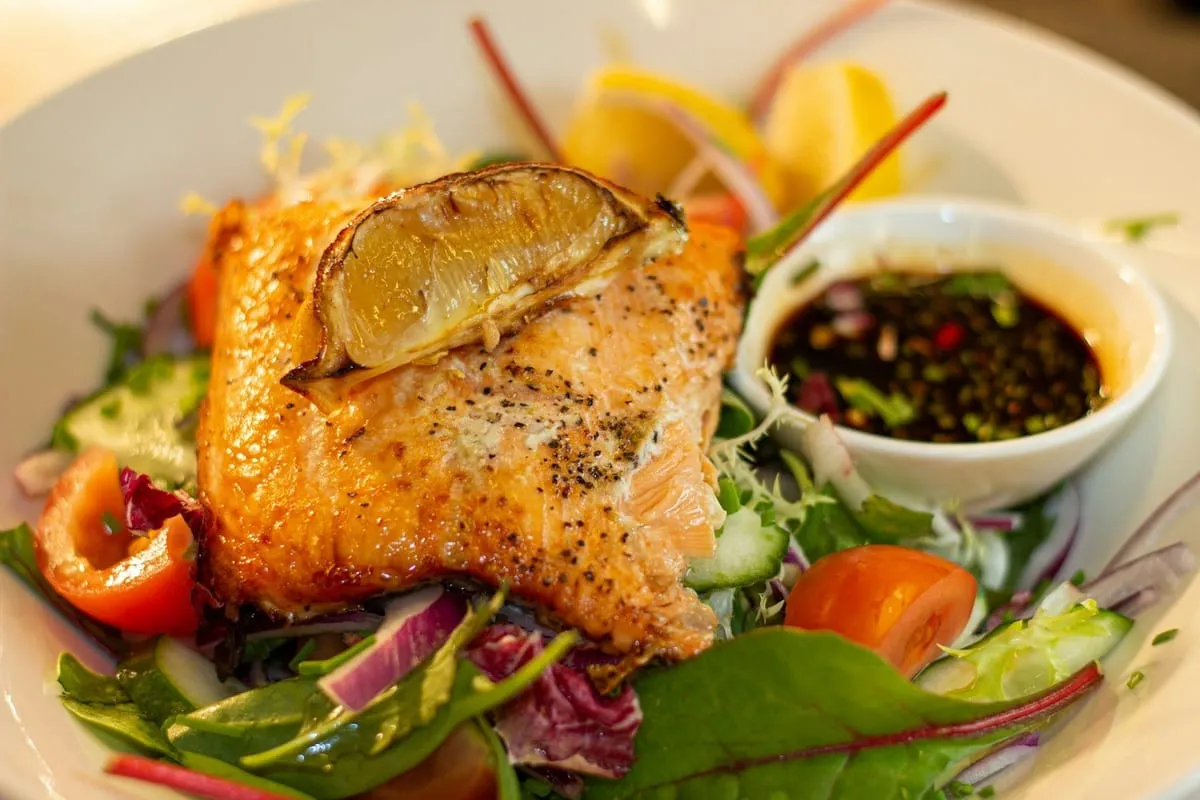
Yes, a little cooked salmon is a lovely occasional treat for cats, and one with a genuine bonus: it is rich in omega-3 fatty acids that are good for skin, coat, and joints. Most cats find it delicious. But as with tuna, salmon comes with clear rules, it must be cooked, never raw, and it should be an occasional treat rather than a staple, because plain fish is not a complete diet for a cat and too much brings its own problems.
Salmon as a treat, with real benefits
Salmon suits cats well as a treat, and unlike some human foods it offers something genuinely useful.
Cats are carnivores that enjoy fish, and plain cooked salmon provides high-quality protein along with omega-3 fatty acids, which support healthy skin and coat and can benefit the joints. A small piece of cooked salmon is therefore both a treat a cat loves and a mildly beneficial one. It also makes a good topper for tempting a fussy or unwell cat. The important qualification is that, like tuna, human salmon is a treat rather than a complete food: it does not provide the full balance of nutrients a cat needs, so it should sit on top of a proper diet rather than replacing it, and it should be occasional rather than daily.
Cooked only, never raw
The firmest rule with salmon is that it must be cooked, and it is worth understanding why raw fish is a problem for cats.
Beyond cooking it, keep it plain and check for bones. Cook the salmon by baking, poaching, or steaming with nothing added, no oil, butter, salt, or seasoning, let it cool, and carefully remove any bones before offering a small piece. Avoid seasoned salmon and anything cooked with onion or garlic, which are toxic to cats, and skip smoked salmon, which is very salty. Plain, cooked, boneless salmon in a small amount is the safe version.
Keep it occasional
As with tuna, the last rule is moderation, because a fish-heavy diet causes problems even when the fish itself is fine.
Salmon should be an occasional treat rather than a regular meal. Plain fish is not a nutritionally complete diet for a cat, and too much oily fish, without enough vitamin E, can cause a painful inflammatory condition of the body fat, the same risk that applies to tuna. A complete cat food, which may itself contain fish balanced with everything else a cat needs, should do the real feeding, with fresh cooked salmon as a treat on top now and then. Kept occasional, it is one of the nicer treats you can offer.
So, can cats eat salmon? Yes, a small amount of plain cooked salmon is a safe, omega-3-rich treat that most cats love, as long as it is thoroughly cooked, never raw, boneless, unseasoned, and kept occasional rather than a staple. For the wider picture of feeding cats safely, see our guide to safe and toxic foods for cats.
Common questions
- Is salmon safe for cats?
- Plain cooked salmon in small amounts is a safe, tasty treat for most cats, and it is rich in omega-3 fatty acids that support skin, coat, and joints. It must be cooked, never raw, boneless, and unseasoned, and it should be an occasional treat rather than a regular meal, since fish is not a complete diet for a cat.
- Can cats eat raw salmon?
- No, avoid raw salmon. Raw fish can carry parasites and harmful bacteria, and it contains an enzyme that destroys thiamine, a B vitamin cats need, which can cause a deficiency if fed regularly. Cooking the salmon deals with all of this, so always serve it thoroughly cooked.
- Can cats eat salmon every day?
- No, salmon should be an occasional treat, not a daily food. Like tuna, plain fish is not a nutritionally complete diet for a cat, and too much oily fish can cause problems. A complete cat food, which may itself contain fish, should do the real feeding, with fresh salmon as a treat.