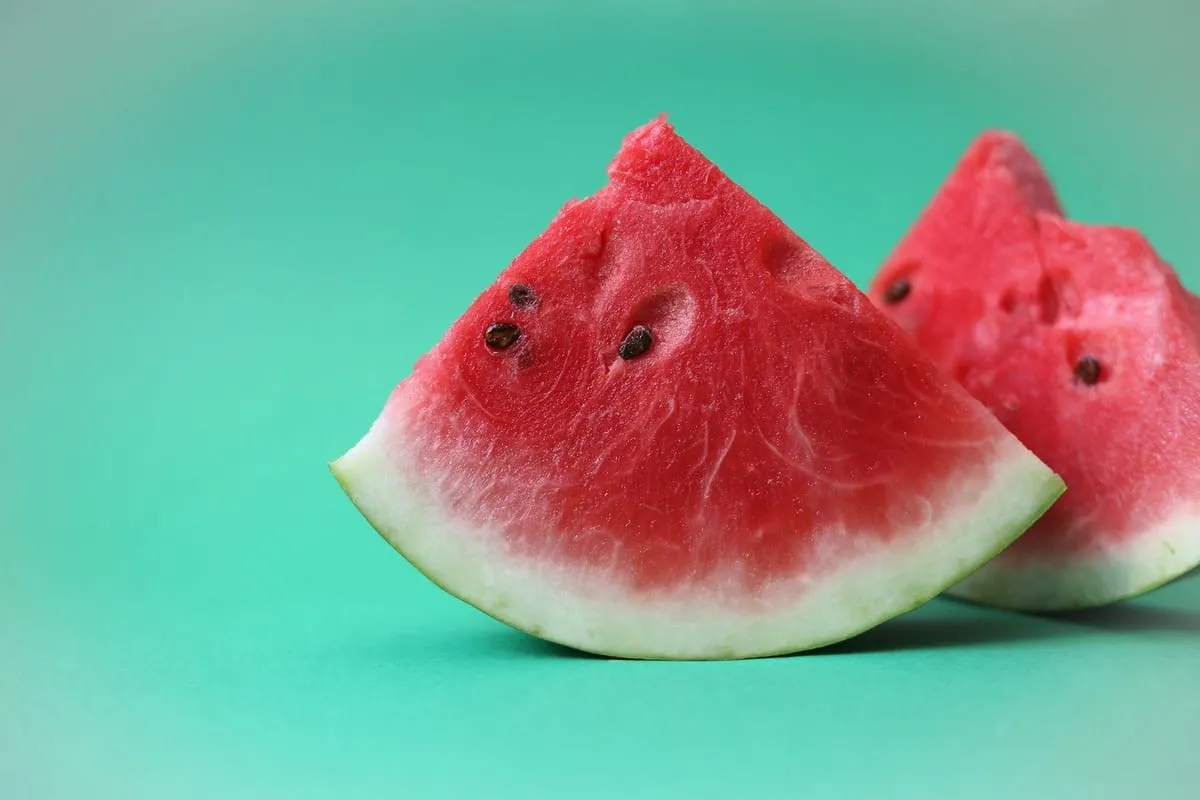
Yes, and watermelon is a lovely treat for a hot day. Made up of around 90 percent water, it is hydrating, refreshing, and low in calories, which makes it one of the nicer summer snacks to share with a dog. Most dogs enjoy the juicy sweetness, and it is genuinely good for keeping them cool and topped up with fluids when it is warm. The only real preparation needed is removing the seeds and the rind before you serve it.
Why watermelon is a great summer treat
Watermelon stands out among fruit treats mainly for its water content, which gives it a useful role beyond just being a snack.
Because it is almost entirely water, watermelon is hydrating and refreshing, and a few pieces of chilled or frozen watermelon can help a dog cool down and stay hydrated on a hot day, which is a genuine benefit when the weather is warm. It is also low in calories while offering some vitamins, such as vitamin A and C, so it is a light, wholesome treat rather than a heavy one. Its soft, juicy texture makes it easy for most dogs to eat and enjoy. All of this makes watermelon a summer favourite and a good way to give a treat that does a little job, keeping your dog cool, as well as tasting good.
How to serve watermelon safely
Serving watermelon is simple, with two clear steps to make it safe.
Remove the seeds and cut away the hard green rind, then offer only the soft red flesh, cut into pieces sized for your dog. Seedless watermelon makes this even easier, since there are no seeds to pick out. On a hot day, frozen watermelon chunks make a wonderfully cooling treat and last a little longer, though for small dogs it is worth keeping the pieces a sensible size or letting them soften slightly. Keep it plain, with nothing added, and avoid anything watermelon-flavoured, which is usually artificial and sugary rather than the real fruit. Fresh, seeded, rind-free watermelon flesh is all your dog needs.
Keep it in moderation
As with any fruit, the thing to watch with watermelon is the amount, because of its natural sugar.
Watermelon is sweet, and while its high water content makes it lighter than many fruits, too much at once can still cause a stomach upset or loose stools, and the sugar adds up, so it should be an occasional treat in modest portions rather than something a dog gorges on. A few pieces for a large dog or a couple of small chunks for a little one is the right kind of amount, counted within the roughly one-tenth of daily food that treats should occupy. Dogs that are overweight or diabetic should have it especially sparingly, and it is worth a word with your vet if your dog has a condition affecting its diet.
So, can dogs eat watermelon? Yes, as a hydrating, refreshing, low-calorie summer treat that most dogs love, provided you remove the seeds and rind and serve only the soft flesh in modest amounts. It is one of the nicest ways to help a dog cool down on a hot day, which is a bonus on top of being a wholesome snack. For the full list of foods to share and to avoid, see our guide to safe and toxic foods for dogs.
Common questions
- Can dogs eat watermelon seeds?
- It is best to remove them. A stray seed is unlikely to cause harm, but a mouthful of seeds could in theory cause a blockage, especially in a small dog, so scoop out the seeds before offering watermelon. Seedless watermelon is the easiest option and avoids the issue entirely.
- Can dogs eat watermelon rind?
- No, avoid the rind. The hard green rind is difficult to digest and can cause stomach upset or, in a small dog, a blockage, and it is a choking hazard. Offer only the soft red flesh, cut into suitable pieces, and discard the rind.
- Is watermelon good for dogs?
- In moderation it is a great treat. Watermelon is about 90 percent water, so it is hydrating and refreshing, especially in hot weather, and it is low in calories while providing some vitamins. Just remove the seeds and rind and keep the amount modest, since its natural sugar means it is a treat rather than a staple.