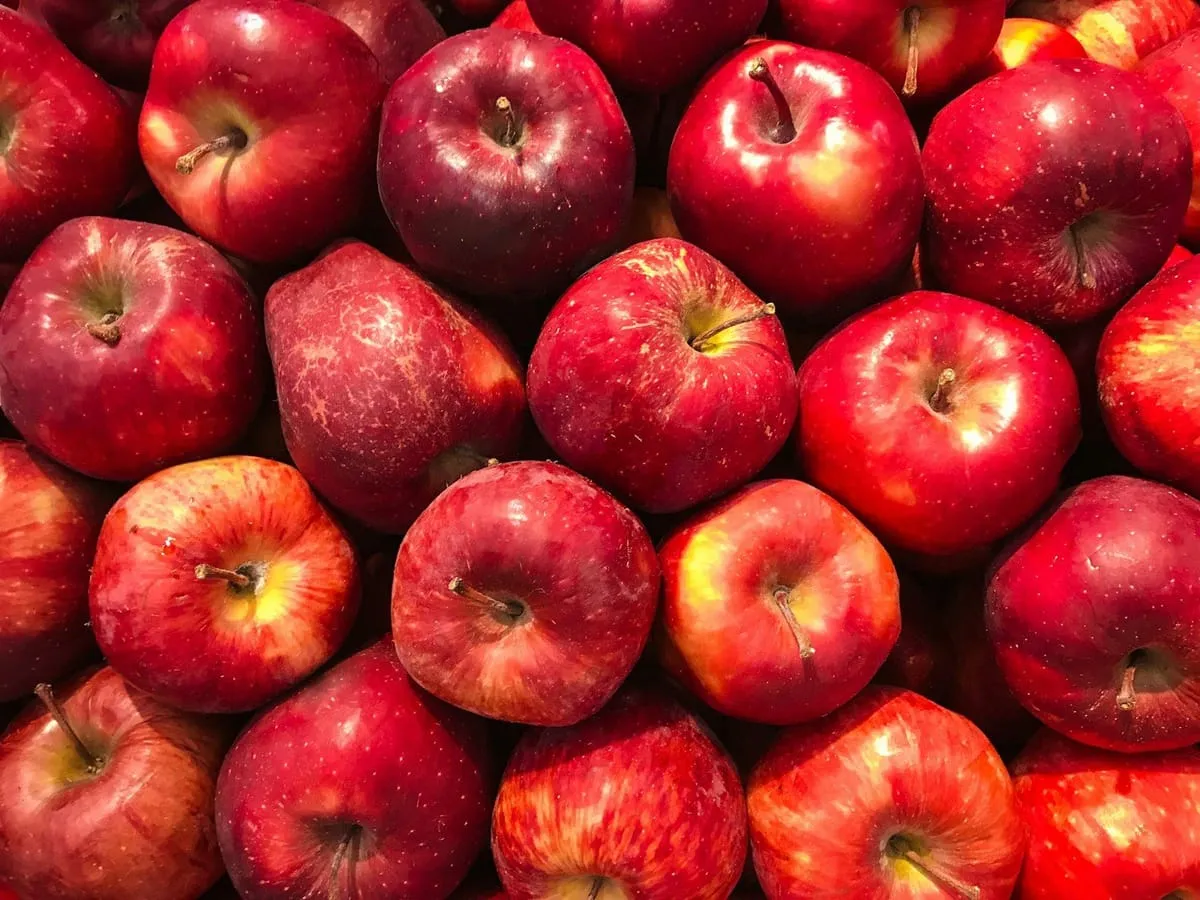
Good news on this one: yes, dogs can eat apples, and they make an excellent healthy treat. Apples are low in calories, high in fibre, and satisfyingly crunchy, which is why many dogs love them and why they are a smart choice when you want to reward your dog without piling on the calories. There are just a couple of simple precautions, chiefly around the core and pips, and the usual reminder that even healthy treats are still treats.
Why apples are a good treat
Apples earn their place as a dog snack because they offer something genuinely useful rather than empty calories.
They are low in fat and calories, which makes them a great reward for a dog watching its weight, and they provide fibre that supports digestion along with some vitamin C and other nutrients. The crunch is part of the appeal too, giving dogs something satisfying to chew, and a slice of chilled or frozen apple can be a refreshing treat on a hot day. Because they are sweet without being calorie-dense, apples are one of the better fruits to reach for when you want a wholesome, low-guilt treat, and they work well cut small as training rewards. None of this makes them a necessary part of the diet, a good complete dog food already covers a dog’s nutrition, but as an extra they are a genuinely healthy option.
How to serve apple safely
Serving apple to a dog is simple, but a little preparation makes it safe as well as enjoyable.
Wash the apple, then cut it into pieces sized for your dog, small chunks or slices, so there is no choking risk, and remove the core and the pips before offering it. The core is a choking hazard and the pips are worth removing as a precaution, for the reason explained below. You can leave the skin on, as it holds much of the fibre and dogs generally enjoy it. Beyond that, apple is versatile: raw slices, small diced pieces for training, mashed into a puzzle toy, or frozen chunks for a summer treat all work well. Keep it plain, though, with no added sugar, caramel, or anything else we might put on apples for ourselves.
Keep it in moderation
As with any treat, the main thing to watch with apples is quantity, because even a healthy food becomes a problem in excess.
Apples contain natural sugar, and too much fruit at once can cause an upset stomach, loose stools, or simply add unwanted calories, so apple should be an occasional snack rather than a daily bowlful. The general guidance that treats and extras stay within roughly a tenth of a dog’s daily food applies here, so think a few slices for a large dog or a couple of small pieces for a little one, counted as part of the day’s treats rather than on top of full meals. Dogs that are overweight, diabetic, or prone to tummy troubles should have fruit especially sparingly, and it is always worth checking with your vet if your dog has a health condition.
So, can dogs eat apples? Yes, happily, as a healthy, crunchy, low-calorie treat, provided you remove the core and pips, cut them to a sensible size, and keep the amount modest. They are one of the nicer wholesome snacks you can share, and a slice of apple makes a great reward that most dogs are delighted to earn. For the bigger picture of which everyday foods are safe and which to avoid, see our guide to safe and toxic foods for dogs.
Common questions
- Are apple seeds bad for dogs?
- Apple pips contain a compound that releases small amounts of cyanide when chewed, so while a stray seed is unlikely to harm a large dog, it is sensible to remove the core and pips before offering apple, especially for smaller dogs and to avoid any risk from a mouthful of them.
- How much apple can a dog eat?
- Treat apple as an occasional snack rather than a meal, in line with the rule that treats stay within about a tenth of the daily food. A few slices for a big dog, or a couple of small pieces for a little one, is plenty. Too much fruit sugar can upset the stomach and adds calories.
- Can dogs eat apple skin?
- Yes, the skin is fine and holds much of the fibre, so there is no need to peel apples for dogs. Just wash the apple first to remove any residues, cut it into suitable pieces, and remove the core and pips before serving.