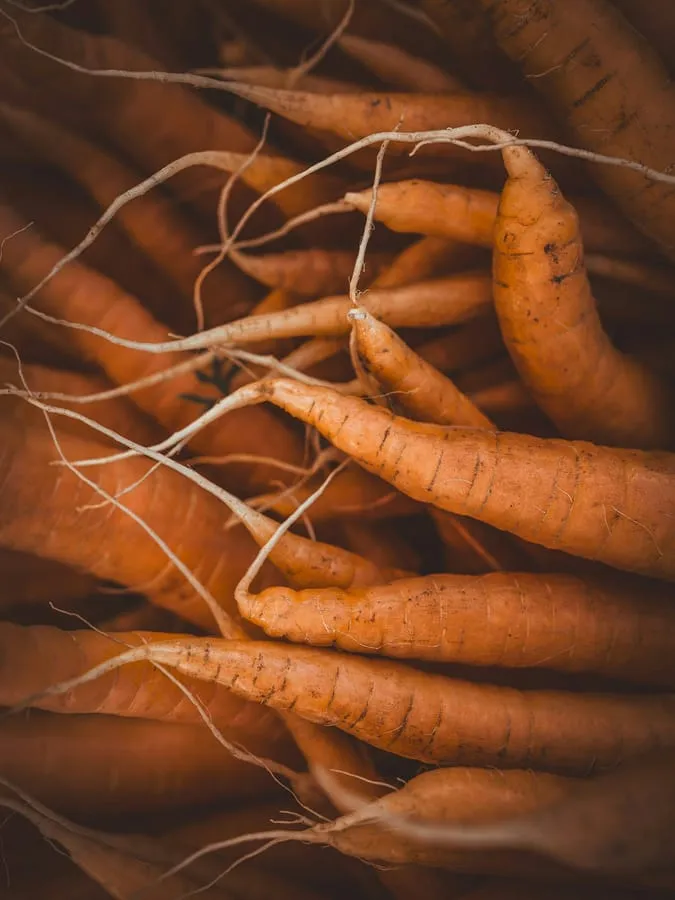
Yes, and carrots are honestly one of the best treats you can give a dog. They are low in calories, high in fibre, good for the teeth, and safe raw or cooked, which makes them a favourite recommendation for dogs that need to watch their weight. Most dogs enjoy the crunch, and unlike sugary fruit you can be a little more relaxed about the amount. There is really only one thing to be mindful of, which is choking on pieces that are too big.
Why carrots are such a good treat
Carrots stand out among dog treats because they tick several boxes at once, which is why they come up so often in advice about feeding dogs well.
They are very low in calories and fat while being high in fibre, so they satisfy a dog’s urge for a treat without contributing to weight gain, which makes them ideal as training rewards or as a snack for an overweight dog. They contain beta-carotene, which the body converts to vitamin A, along with other vitamins and minerals. The crunch of a raw carrot also gives the teeth and gums a bit of a workout and some dogs find gnawing one genuinely satisfying, a little like a natural, low-calorie chew. All of this makes carrots one of the go-to healthy treats, and a great swap when you want to reward your dog often without the calorie cost of richer snacks.
Raw, cooked, and how to serve
One of the nice things about carrots is their versatility, and how you serve them can suit different dogs.
Raw carrot is crunchy and great for the teeth, and a carrot stick makes a satisfying, long-lasting treat. Cooked carrot, plain and unseasoned, is softer and easier to chew and digest, which suits puppies, older dogs, or dogs with dental issues, and it mixes well into food. Grated raw carrot is an easy way to add a little to meals or to serve to very small dogs. Whichever form you choose, keep it plain, with no butter, salt, or seasoning, and cut it to a size that suits your dog. Carrots also freeze well, and a large chilled carrot can soothe a teething puppy’s gums, though always with supervision.
How much is fine
Because carrots are so low in calories, they are one of the few treats you can be a bit more generous with, though moderation still applies.
You do not need to be as strict with carrot quantity as you would with sugary fruit or fatty treats, and a few pieces a day is perfectly fine for most dogs, which is exactly why carrots are such a useful tool for training and for keeping a hungry dog on a diet satisfied. That said, they are still a treat rather than a staple, so they should not replace a balanced diet or be fed in huge quantities, since even a low-calorie food in excess can cause loose stools or crowd out proper nutrition. Used sensibly, though, carrots let you reward your dog often without guilt.
So, can dogs eat carrots? Yes, and enthusiastically recommended, raw or cooked, as a low-calorie, tooth-friendly treat that most dogs love and that is especially handy for training and weight control. Just cut them to a safe size to avoid choking, keep them plain, and enjoy having a healthy treat you can reach for often. For the fuller picture of dog-safe and dog-dangerous foods, see our guide to safe and toxic foods for dogs.
Common questions
- Are carrots better raw or cooked for dogs?
- Both are fine, and each has a small advantage. Raw carrot is crunchy and gives the teeth a good workout, while cooked carrot is softer and easier to chew and digest, which suits puppies and older dogs. Serve whichever suits your dog, plain and cut to a safe size.
- Can carrots be a choking hazard for dogs?
- A whole raw carrot or large chunk can be a choking risk, especially for small dogs or enthusiastic gulpers. Cut carrots into appropriately sized pieces or sticks for your dog, and supervise, and the risk is easily managed. For very small dogs, grated or cooked carrot is safest.
- How many carrots can a dog eat?
- Carrots are so low in calories that you can be more generous than with sugary treats, but they should still be treats rather than a large part of the diet. A few pieces a day is fine for most dogs, and their low calorie count makes them ideal for dogs on a diet.