Somewhere along the way we all decided that dogs are supposed to have bad breath. It became a joke, a thing you tolerate, the price of a face on your knee. I would gently push back on that. A healthy mouth does not smell strongly, and the “doggy breath” so many owners have made peace with is, far more often than not, the smell of dental disease sitting quietly in the background.
That matters because the mouth is not sealed off from the rest of the dog. What goes wrong in there rarely stays there.
Most of the time, you are smelling the teeth
The single most common reason for a dog’s breath to turn is periodontal disease: plaque hardening into tartar, gums becoming inflamed, and bacteria multiplying along the gumline.
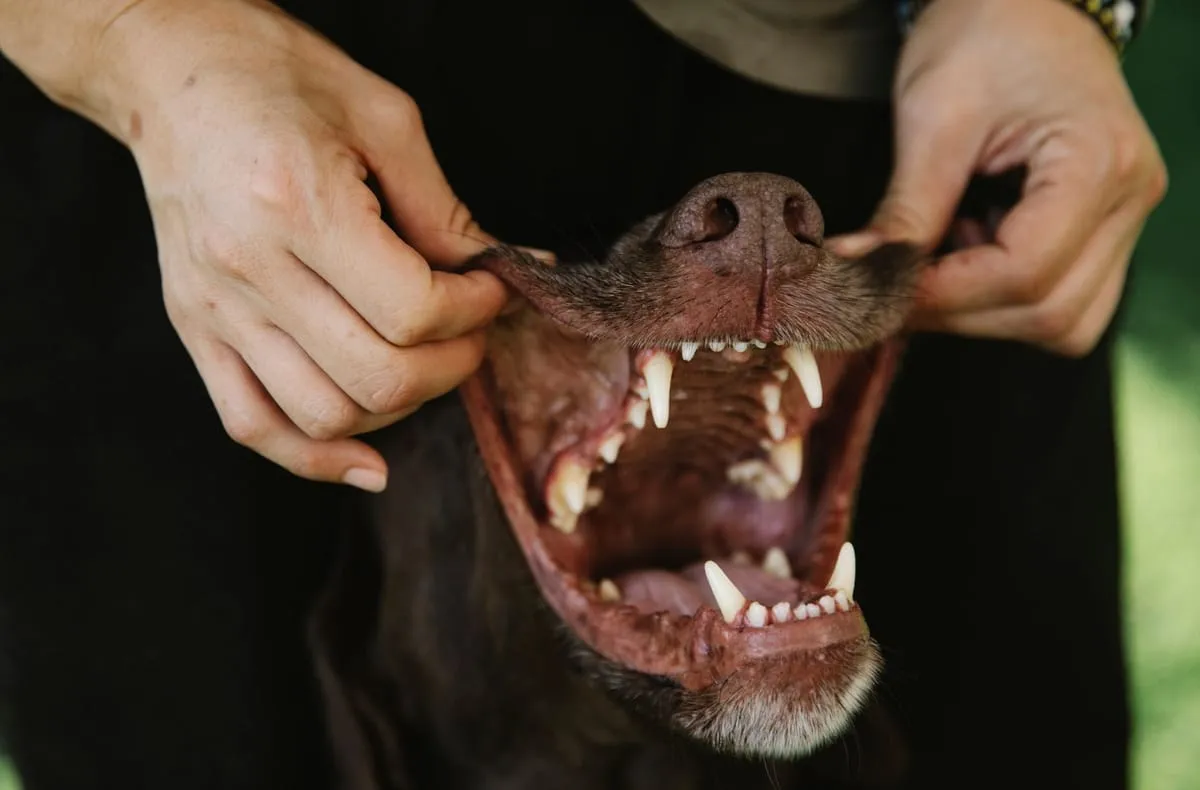
It is remarkably common. By around three years of age the majority of dogs already show some degree of it, and small breeds tend to have it worse because their teeth are crowded into a little jaw. The smell is one of the first signs an owner actually notices, often before any of the visible ones. If you lift your dog’s lip and see yellow-brown crust near the gumline, a red rim where tooth meets gum, or you spot your dog chewing on one side or dropping food, the breath and the mouth are telling the same story.
Left alone this is not just cosmetic. Advanced gum disease is painful, loosens teeth, and sends a steady trickle of bacteria into the bloodstream, which is why vets take it as seriously as we do. The good news is that the early stages are very manageable.
When the smell is coming from somewhere else
A smaller number of dogs have breath that has changed character rather than simply gone stale, and that is the version I want owners to take seriously.
A few patterns are worth knowing. Breath that smells sweet or fruity, oddly like nail varnish or pear drops, can be a sign of diabetes. Breath that smells of urine or ammonia can point to kidney trouble. A heavy, unusually foul smell alongside drooling, vomiting or a dog that has gone off its food can come from liver disease or a problem lower in the gut. None of these can be confirmed at home, and I am not listing them to alarm you. I am listing them because they are the reasons “it is just his breath” is not always a safe assumption.
There is also a simpler mechanical culprit that hides in plain sight: something physically stuck. A splinter of stick, a shard of bone, a piece of chew wedged across the roof of the mouth or between two teeth can rot and produce a genuinely dreadful smell within a day or two. It is always worth a careful look, and a reason to be choosy about what your dog gnaws in the first place, including some of the human foods that are not safe for dogs.
What actually helps, in the order that matters
Fresh breath is a side effect of a healthy mouth, so that is what we are really aiming for.
Brushing comes first, because nothing else controls plaque as well. A dog toothbrush or a finger brush and a dog toothpaste, worked up to over a week or two so it feels routine rather than a wrestling match, genuinely changes things. Never use human toothpaste: many contain xylitol, which is toxic to dogs even in small amounts. Aim for daily if you can, because plaque starts to mineralise into tartar within a couple of days, and every-other-day beats the once-a-month burst of enthusiasm most of us manage at first.
Dental chews and additives fill the gap for dogs who will not accept a brush. They help, but only the tested ones reliably do, so look for the Veterinary Oral Health Council (VOHC) seal rather than a “dental” label on the front of the bag. Treat them as support, not a substitute.
And then there is the professional clean. Once tartar has hardened below the gumline, no amount of brushing or chewing will shift it, and it takes a scale and polish under anaesthetic to put the mouth back to a clean baseline you can then maintain. Your vet will tell you when your dog is due one. It is also the moment problems hiding under the gum, the cracked tooth, the pocket of infection, actually get found.
The quiet reason this is worth bothering with
Bad breath is easy to live with, which is exactly why it gets ignored for years.
Dogs are stoic about mouth pain. They keep eating, they keep greeting you, and they very rarely tell you a tooth is sore until it is genuinely bad, in much the same way they mask other kinds of pain. The breath is often the only early warning you get. This is doubly true in older dogs, where years of quiet buildup catch up at once and where a change in smell deserves a lower threshold for a check.
So the next time you notice it, treat it as information rather than an annoyance. Lift the lip, take a proper look, start a brushing habit, and get your vet to weigh in on whether a clean is overdue. Sweet-smelling breath in particular should never be filed under “just his breath”. Most of the time you are simply smelling teeth that want cleaning, and that is a good, fixable problem to have caught early.
Common questions
- Is it normal for dogs to have bad breath?
- A faint smell after a meal is ordinary, but the strong, lingering bad breath most owners are asking about is not normal, and it is usually a sign of dental disease. By the age of three most dogs already have some degree of gum disease, and the smell is one of the earliest things you notice. So it is common, which is not the same as normal. Common means most dogs have it. Normal would mean it needs nothing doing, and dental disease does need attention.
- What does it mean if my dog's breath suddenly smells really bad?
- A sudden, marked change is worth a vet visit rather than a wait-and-see. Very foul breath can come from a cracked or abscessed tooth, something stuck in the mouth, or a growth. Breath that smells sweet or like pear drops, unusually of urine or ammonia, or strongly chemical can point beyond the mouth altogether, to diabetes, kidney or liver problems. You cannot diagnose these by smell alone, but a clear change in the character of the smell is a reason to get your dog looked at.
- Do dental chews actually work for dog breath?
- The good ones help, but they do not replace brushing. Look for products carrying the Veterinary Oral Health Council (VOHC) seal, which means they have been tested to reduce plaque or tartar rather than just claiming to. A daily chew can meaningfully cut buildup and freshen breath, and for a dog that will not tolerate a toothbrush it is the next best thing. It works best alongside brushing and a proper veterinary dental clean when one is due, not instead of them.
- Can I clean my dog's teeth at home?
- Yes, and daily brushing is the single most effective thing you can do. Use a dog toothbrush or a finger brush and toothpaste made for dogs, never human toothpaste, which often contains xylitol that is toxic to dogs and fluoride they should not swallow. Build it up slowly over a couple of weeks so your dog learns it is not a fight. Brushing controls the soft plaque, but once hard tartar has formed under the gumline only a vet can remove it, which is why home care and professional cleans work together.