If I had to name the questions dog owners ask me most, “why does my dog eat grass?” would be near the top. Owners often worry it means something is wrong, so let me put the main point up front: for the vast majority of dogs, grazing on grass is completely normal and nothing to lose sleep over. It is one of those doggy habits that looks stranger to us than it is to them. That said, there are a couple of situations where it is worth paying attention, so here is the full picture.
It is normal, and very common
Eating grass is one of the most widespread behaviours in dogs, and studies that have asked owners about it find that most dogs do it at least sometimes.
It shows up in dogs of every age, breed, and diet, including well-fed dogs on excellent food, which is the first clue that it is rarely about a nutritional gap. Puppies explore the world with their mouths and often grow into adults that keep the habit. In other words, a dog eating grass is usually just being a dog, and on its own it is not a sign of illness or a problem with what you are feeding.
So why do they actually do it
The honest answer is that nobody knows for certain, but a few explanations hold up better than others.
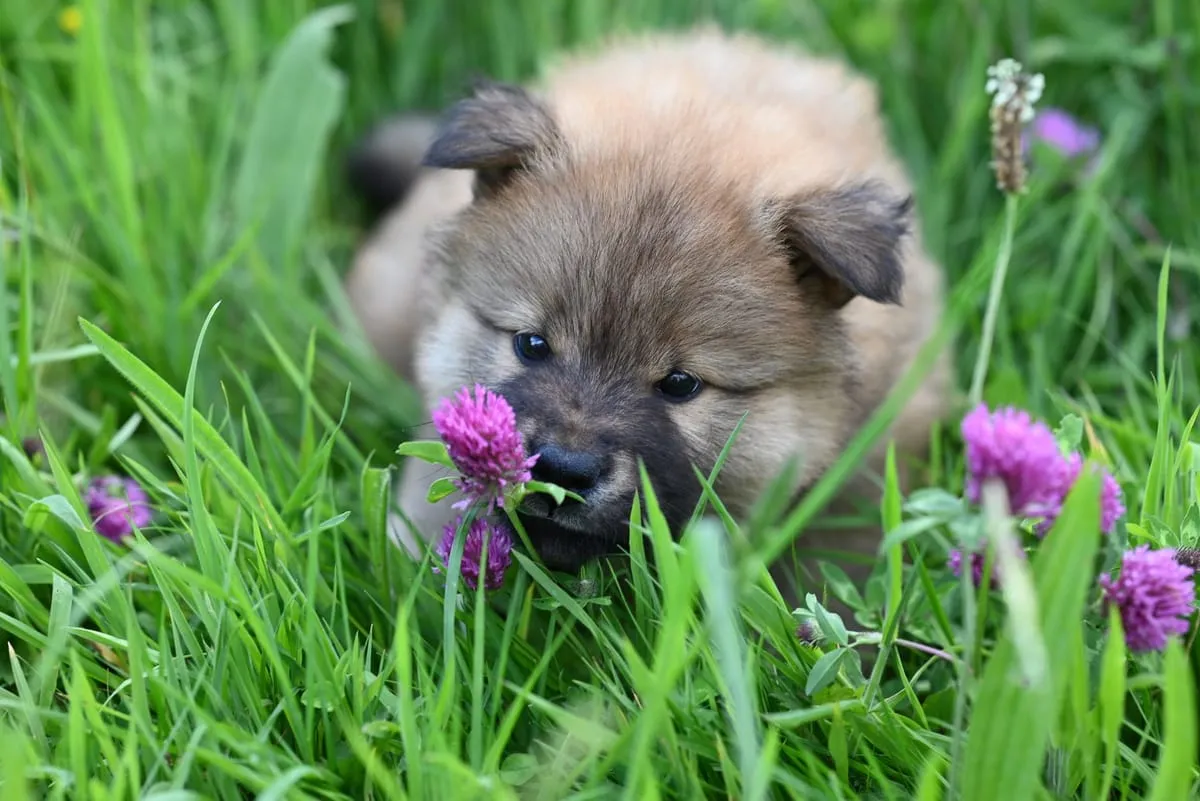
The most likely is simply that it is normal foraging behaviour left over from their ancestry, and that many dogs quite like the taste and texture of fresh grass, especially the soft new growth in spring. Boredom and attention-seeking play a big role too, and this is the part owners can influence: a dog that is under-exercised or left to its own devices in the garden will often graze to pass the time, and if grabbing a mouthful reliably makes you rush over, it can become a neat way to get your attention. The popular idea that dogs eat grass to make themselves sick or to settle an upset stomach is the weakest of the theories, because most dogs are not unwell before they do it and do not vomit afterwards.
When grass-eating is worth a second look
Most grazing is harmless, but a few situations do deserve your attention, and they are mostly about what is on the grass rather than the grass itself.
Beyond that, watch the pattern rather than the odd nibble. A dog that suddenly starts eating grass frantically and in large amounts, particularly if it is being sick afterwards, going off its food, or seeming uncomfortable, may be feeling nauseous, and that is a reason to see your vet. Obsessive eating of grass and other non-food objects can occasionally point to a digestive issue or a behavioural one worth investigating.
What to do about it
For everyday grazing, the aim is not to stamp it out but to make sure it is safe and that boredom is not fuelling it.
Keep the grass your dog reaches free of chemicals, and steer it away from treated verges on walks. If your dog seems to graze most when it is bored or wants attention, the fix is usually more of the good stuff: proper daily exercise, some training or play to work the mind, and enough of your time, and our roundup of the best toys for a bored dog is a good place to start. Make sure it is on a complete, balanced diet so you can rule out simple hunger, and resist the urge to come running every time it puts its nose down, since a calm non-reaction takes the reward out of it. And if the habit ever changes suddenly or comes with vomiting or a drop in appetite, treat that as your cue for a vet check rather than something to wait out.
Common questions
- Is it bad for dogs to eat grass?
- For most dogs, no. Nibbling grass is normal canine behaviour and the grass itself does little harm. The real risks are not the grass but what might be on it, such as lawn treatments, slug pellets, or toxic plants nearby, and the occasional dog that eats so much it keeps being sick. If your dog grazes a little on clean, untreated grass and is otherwise well, it is generally nothing to worry about.
- Do dogs eat grass because they feel sick?
- This is the popular explanation, but the evidence does not really support it. Most dogs that eat grass are not unwell beforehand and do not vomit afterwards, so grass-eating as deliberate self-medicating is largely a myth. A small number do gulp grass quickly and then bring it up, and if that becomes a pattern it is worth a vet visit, but for the majority it is simply something they do because they want to.
- Should I stop my dog eating grass?
- You do not need to stop occasional grazing on safe, untreated grass. Do step in if the lawn has been treated with weedkiller or fertiliser, if there are toxic plants within reach, or if your dog is eating grass obsessively. The most useful thing is usually to make sure your dog has enough exercise, company, and things to do, since boredom is a common driver, and to keep the grass it does reach free of chemicals.
- Why has my dog suddenly started eating lots of grass?
- A sudden, marked increase is the one pattern worth taking seriously. If your dog has gone from the odd nibble to frantic, gulping grass-eating, especially with vomiting, a change in appetite, or signs of tummy discomfort, book a vet check to rule out nausea or a digestive problem. A gradual, casual grazing habit is far less concerning than a sudden obsessive one.