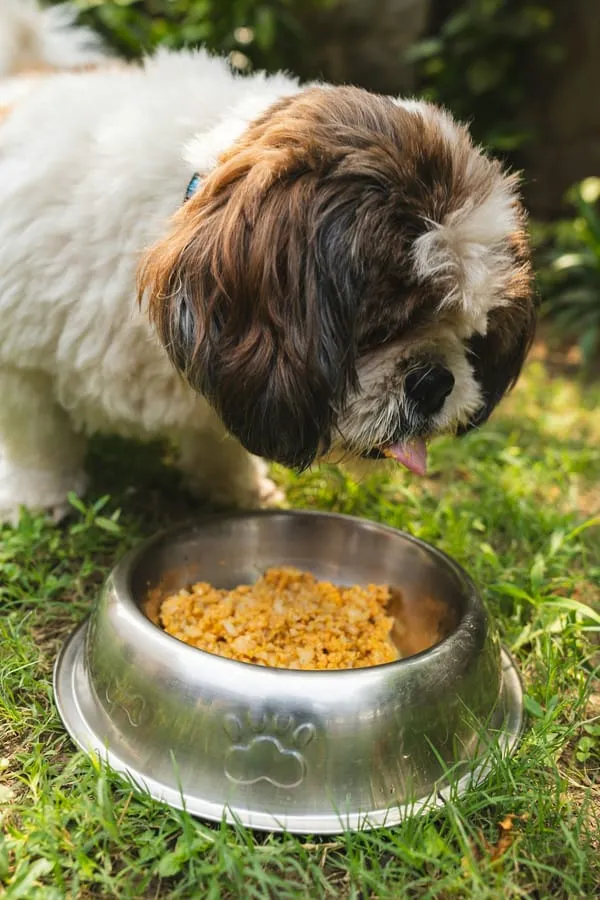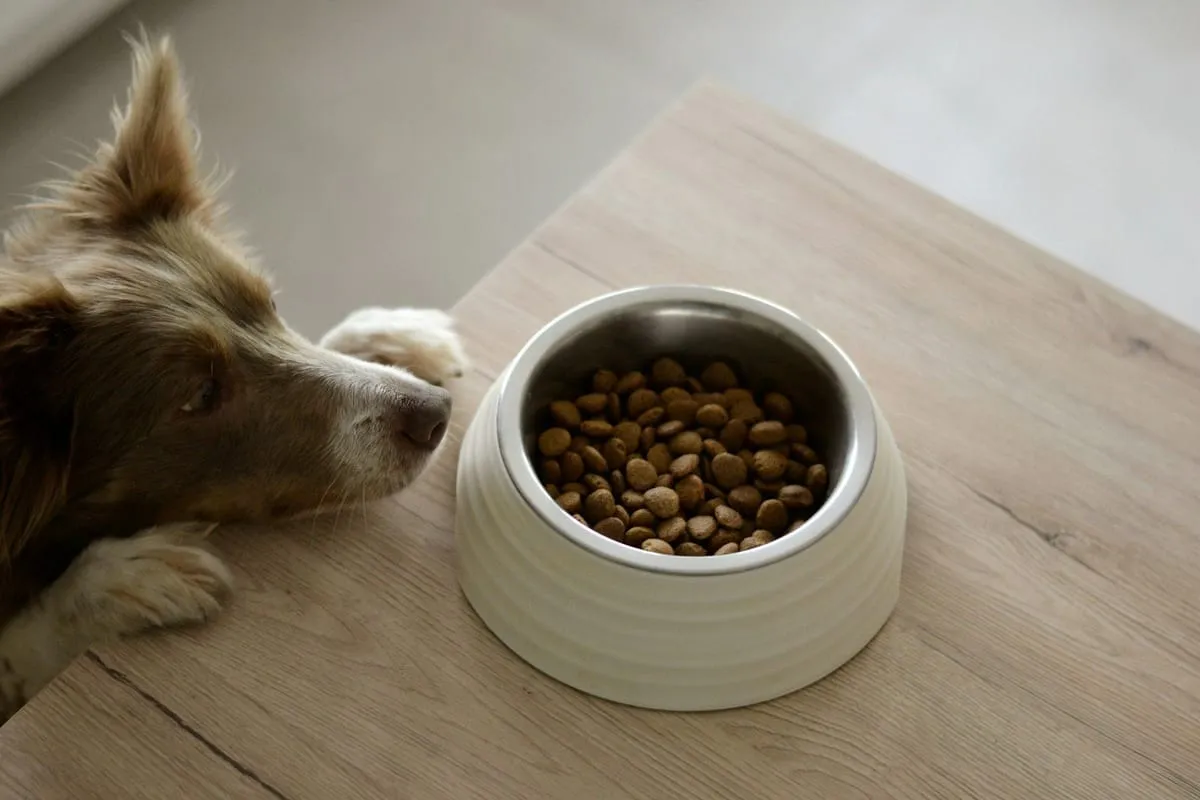
The wet-versus-dry question is one of the most common a dog owner asks, and the honest answer is not what people hoping for a clear winner want to hear: neither is better. A complete wet food and a complete dry food both give a dog everything it needs, so this is not a case of one being right and the other wrong. It is a genuine trade-off between things like cost, convenience, moisture, and how much your dog enjoys it, and the best choice depends on your dog and your life rather than on a nutritional knockout. Here is what actually differs, what is a myth, and how to decide.
The real differences at a glance
Most of the differences between wet and dry come down to water, and what follows from it.
| Dry food (kibble) | Wet food | |
|---|---|---|
| Moisture | Low | High (around 70 to 80 percent water) |
| Cost | Usually cheaper per serving | Usually more expensive |
| Convenience | Easy to store, measure, leave down | Needs refrigerating once opened |
| Palatability | Fine for most dogs | Often more tempting, good for fussy eaters |
| Calorie density | High, so portions look small | Lower per gram, so portions look larger |
| Teeth | Little real benefit (a common myth) | No benefit either |
None of these make one type “better”, they just suit different dogs and households. A busy owner with a robust eater may find dry the obvious choice, while someone with a fussy dog, or one that needs more water, may lean wet.
Where dry food wins
Dry food has real practical advantages, which is why it is the most common way to feed a dog.
It is convenient: easy to store, simple to measure, and it can be left out for a while without spoiling, which suits busy households and dogs fed on a schedule. It is usually cheaper per serving than wet food, a genuine consideration over a dog’s life. And it is calorie-dense, so you feed a smaller volume. The main myth to set aside is dental cleaning: the idea that kibble scrubs a dog’s teeth is largely overstated, because most dogs crunch it briefly or swallow it whole, and it does little for the gumline where dental disease actually begins. Dry food is a fine, practical choice, just not a toothbrush.
Where wet food wins
Wet food earns its place for different reasons, mostly to do with water and appeal.
Its high moisture content helps with hydration, which can be useful for dogs that do not drink much or that benefit from more water in their diet. It is often more palatable, which makes it a good choice for fussy eaters, older dogs with less appetite, or tempting an unwell dog to eat. And because it is less calorie-dense, a satisfying-looking portion can contain fewer calories, which some owners find helpful for weight management. The trade-offs are cost and convenience: it is generally pricier and needs refrigerating once opened.
So which should you choose?
The sensible answer is the one that fits your dog and your circumstances, and for many people that is a mix.
There is no need to pick a side. Feeding a mix of wet and dry, or dry with some wet stirred in, is common and perfectly healthy, and it combines the convenience and lower cost of dry with the moisture and palatability of wet. Choose based on your dog’s preferences and needs, your budget, and your routine, and let those decide rather than a myth about one being superior. The one rule that always applies is portion control: whatever you feed, measure it, and if you mix, count both toward the daily total so you do not accidentally overfeed.
The bottom line is that wet versus dry is a question of practicality and preference, not of one food being healthier than the other. Pick a complete food your dog does well on and enjoys, feed the right amount, and you have made a good choice either way. For how much to feed, our dog food calculator gives a sensible starting point, and for the foods to share and avoid outside of meals, see our guide to safe and toxic foods for dogs.
Common questions
- Is wet or dry dog food better?
- Neither is better across the board. A complete wet food and a complete dry food both give a dog everything it needs, so the right choice depends on your dog and your circumstances, not on one being superior. Dry is convenient and cheaper, wet adds moisture and is often more tempting. Many owners feed a mix, and that is perfectly fine.
- Does dry food clean a dog's teeth?
- Less than people think. The idea that kibble scrubs teeth is largely a myth, since most dogs swallow it with little chewing and it does little for the gumline where dental disease starts. Some special dental diets are designed to help, but ordinary dry food is not a substitute for tooth brushing and proper dental care.
- Can I mix wet and dry dog food?
- Yes, and lots of people do. Mixing can combine the convenience and lower cost of dry with the moisture and palatability of wet, which suits many dogs well. The key is to count both toward the daily amount so you do not overfeed, since it is easy to add wet on top of a full measure of dry and quietly pile on the calories.
- Is wet or dry food better for a dog's weight?
- Either can work, but the calories are what matter. Wet food is less calorie-dense per gram because of its water content, so it can feel more filling for fewer calories, which some find helpful for weight control. Dry is more calorie-dense, so portions look small and are easy to over-serve. Measuring the amount matters more than the type.