Free tool
Dog food calculator
Work out roughly how many calories your dog needs each day, and how much of your food that is, from its weight and activity. A sensible starting point, not a substitute for watching your dog's shape.
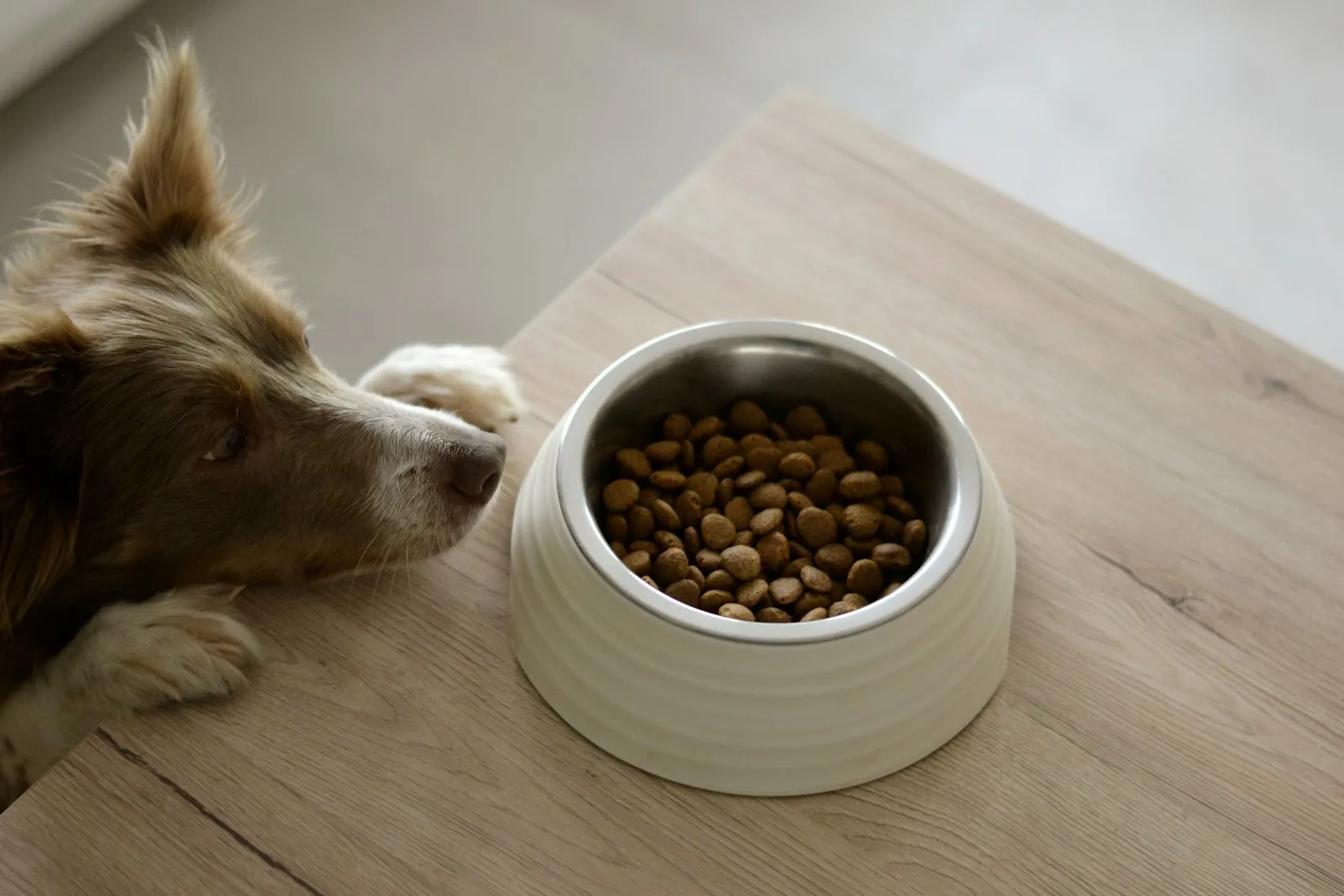
How much a dog should eat, honestly
There is no single right number of scoops, and the feeding chart on the back of the bag is a rough guide at best, usually a generous one. How much a dog should eat depends on its weight, its age, whether it is neutered, and how active it is, and the only real proof you have got it right is your dog's body shape over the following weeks. This calculator gives you a sensible starting point using the same method many vets use, but treat it as a first estimate to adjust from, not a fixed rule.
The method behind the number
The calculation works in two steps. First it estimates the calories your dog would burn at complete rest, its resting energy requirement, from body weight. Then it multiplies that by a factor for life stage and activity, because a growing puppy, a working dog, and a sofa-loving senior of the same weight have very different needs. The result is a daily calorie figure. If you tell it how many calories are in your food, it converts that into a daily amount to put in the bowl.
Watch the dog, not just the numbers
Whatever figure you land on, the dog is the real gauge. You should be able to feel your dog's ribs easily under a light covering, see a waist from above, and see a tummy tuck from the side. If the ribs are hard to find, feed a little less. If they are sharply visible and the dog looks angular, feed a little more. Reweigh or reassess every couple of weeks and adjust in small steps rather than big ones.
Common questions
How many calories does my dog need a day?
It depends mostly on weight and activity. A common vet approach works out a resting calorie need from body weight, then multiplies it by a factor for life stage and activity, so a lean, neutered adult needs far less than a growing puppy or a hard-working dog of the same weight. This calculator does that maths for you, but the honest test is your dog's body shape over the following weeks.
How much food should I actually put in the bowl?
Once you know the daily calories, divide by the calories in your food to get the daily amount. That is why the calculator asks for the energy density printed on your food's packaging (often shown as kcal per cup or per 100g). Feeding by the bag's weight-based chart alone often overfeeds, because those charts are generous and assume an average, active dog.
Should I feed my dog once or twice a day?
For most adult dogs, splitting the daily amount into two meals is better than one large one. It keeps hunger steadier and is gentler on the stomach. Puppies need more frequent meals, often three or four a day when young. Whatever the number of meals, it is the daily total that matters for weight, so divide the calculated amount across them.
My dog is overweight, how do I use this?
For weight loss, base the calculation on your dog's ideal target weight rather than its current weight, and choose the weight-loss activity option. Then feed to that figure and reweigh every couple of weeks. Crash dieting is not safe, especially for cats, so aim for gradual loss and ask your vet to confirm a sensible target and rate.
This calculator gives a general estimate based on weight and activity. Individual dogs vary with breed, metabolism, and health, and some conditions change how much a dog should eat. Treat the result as a starting point, watch your dog's body condition, and speak to your vet about the right diet and amount for your dog, especially for puppies, seniors, and dogs that need to lose or gain weight.