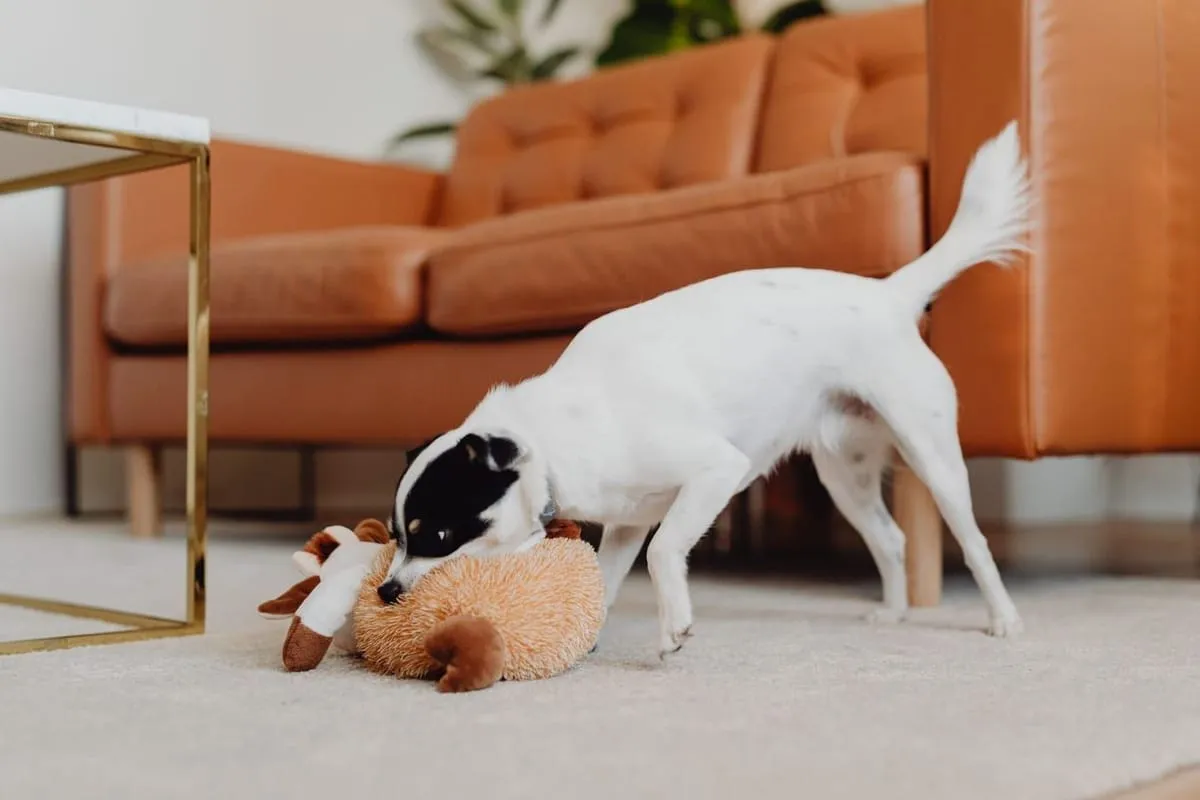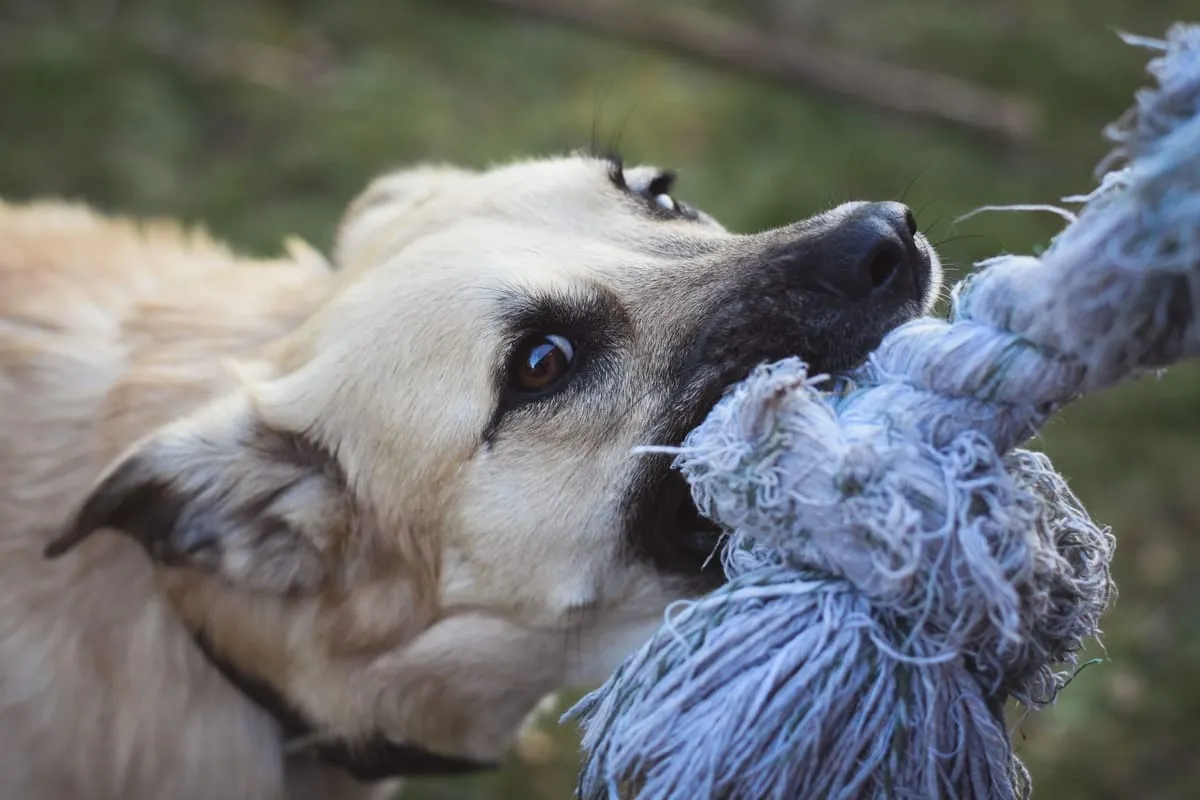
Ten minutes. That is how long some dogs need to turn a brand new toy into a scattered pile of stuffing and one detached squeaker. If you have bought toy after toy hoping the next one survives the week, the pattern is usually not bad luck and it is not a badly behaved dog. It is a mismatch between how hard your dog actually chews and what the toy was built to take.
Work out what kind of chewer you actually have
Before buying anything else, be honest about which category your dog falls into, because it changes every recommendation that follows.
A light chewer mouths a toy, carries it around, loses interest. A moderate chewer gives it a proper session and eventually wears through seams or fabric over days or weeks. A power chewer can strip a toy rated “durable” down to nothing in a single sitting, working with the kind of bite force that shreds rubber and cracks plastic. Most owners underestimate which group their dog is in, usually because the toy that failed was never built for the top end of that range to begin with.
Match construction to bite force, not price
Toy toughness comes down to what the toy is made from and how it is put together, and the price tag is a weak guide to either.
Solid rubber, the kind that flexes slightly rather than shattering, holds up best against a genuine power chewer and is what most toys built for “aggressive chewers” are made from. Nylon is a step down in a specific way: it resists chewing well but can crack into hard, sharp-edged pieces rather than wearing down gradually, so it suits dogs that gnaw rather than dogs that crush. Multi-layer stitched fabric is a different approach entirely, built to survive tugging and shaking rather than chewing, so it is the right pick for a dog that destroys plush toys in a shake-and-rip session but is not actually grinding through the material with its teeth.
The toys built for power chewers
For a dog that has already gone through several “durable” toys, look specifically for products marketed to power or extreme chewers rather than general-purpose ones. KONG Extreme is the tougher black version of the standard red KONG, built from denser rubber for dogs that have already destroyed the original, and it still works for stuff-and-freeze enrichment. For dogs that shred plush and rope toys through tugging rather than steady chewing, Tuffy’s Ultimate Ring uses multiple stitched fabric layers so one popped seam does not mean the whole toy is finished. Goughnuts’ Original Ring goes further for the hardest chewers, with a visible inner safety layer that shows through if your dog ever manages to chew all the way to it, a built-in signal to retire the toy before it becomes a hazard.
Nylon options like Nylabone DuraChew are sold in genuine chewer-strength grades rather than one-size-fits-all, and the advice with any nylon chew is the same: size up from what you think you need, since a toy small enough to fit fully in the mouth is both easier to destroy and a choking risk.
Toys that survive by giving the mouth something else to do
Not every destroyed toy is about raw bite force. Some dogs shred things because chewing alone is not enough to hold their attention, and a toy that also makes them work for a reward survives far better than one that just sits there to be gnawed.
A stuffable rubber toy like the KONG Classic, packed with part of a meal and frozen, turns chewing into a twenty-minute project rather than a two-minute demolition, since the dog is licking and working for the food rather than attacking the rubber itself. Benebone’s Wishbone uses a similar idea in a chew shape, with flavor worked through the nylon so a determined chewer has a reason to keep gnawing patiently instead of trying to tear through it fast.
What to do with what is already destroyed
Every time a toy comes apart, spend thirty seconds on it before buying the replacement. Note exactly how it failed: did a seam pop, did a chunk come off, did stuffing spill out. That tells you whether the issue was construction (buy tougher next time), size (size up), or type (a chewer needs a chew, not a plush toy). Skipping this step is how people end up buying the same toy three times and blaming the dog.
Retire anything showing cracks, exposed stuffing, a squeaker within reach, or a chunk missing, regardless of how new it is or how much it cost. No toy is truly indestructible, and the goal was never finding one that lasts forever, it is finding one tough enough that wear happens slowly and safely instead of in one alarming afternoon. Get the match right for your dog’s actual chew strength, and the toy box stops being a monthly expense and starts doing its job.
Common questions
- Why does my dog destroy every single toy I buy?
- Almost always because the toy is not matched to how hard your dog actually chews. A dog with a strong bite treats a soft plush toy or a thin rubber ball the way you would treat a paper bag, not because something is wrong with the dog, but because the toy was never built for that level of force. Buying by chew strength rather than by what looks appealing on the shelf fixes most of this.
- Is it bad for my dog to destroy toys constantly?
- The toy itself does not matter much, plenty of toys are designed to wear down. The risk is what happens to the pieces. Swallowed stuffing, squeakers, or chunks of rubber or plastic can cause choking or a gut blockage that needs surgery, so the real question is not whether your dog destroys toys but whether they swallow what comes off them.
- What is the toughest type of dog toy?
- Solid rubber toys built specifically for power chewers, and toys rated for "aggressive" or "extreme" chewers by their maker, hold up best against a strong bite. No toy is truly indestructible, though. Even the toughest ones wear down eventually, and the right approach is supervising anything new and retiring it once it starts to come apart, not assuming any toy will last forever.
- Should I stop giving my dog toys if they just destroy them?
- No. A dog that needs to chew and has nothing appropriate to chew usually finds something else, furniture, shoes, skirting boards. The fix is choosing tougher, better-matched toys and supervising new ones at first, not removing toys altogether.