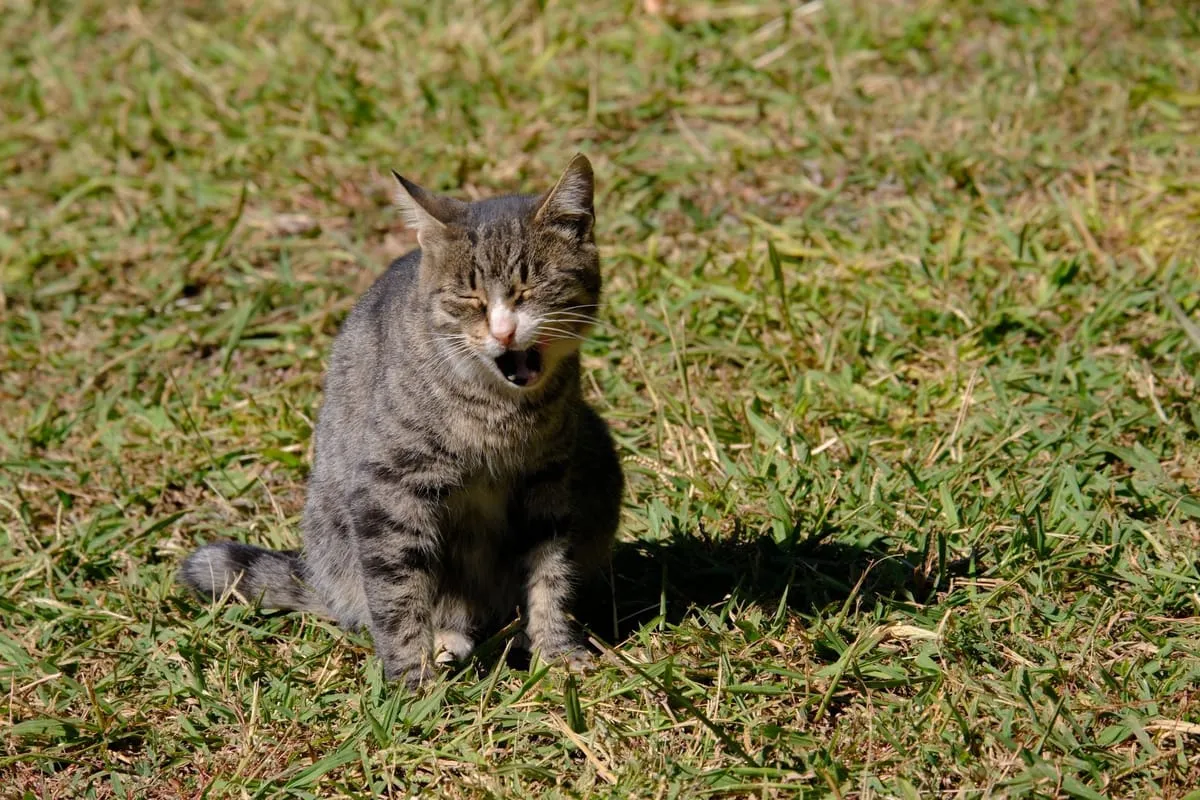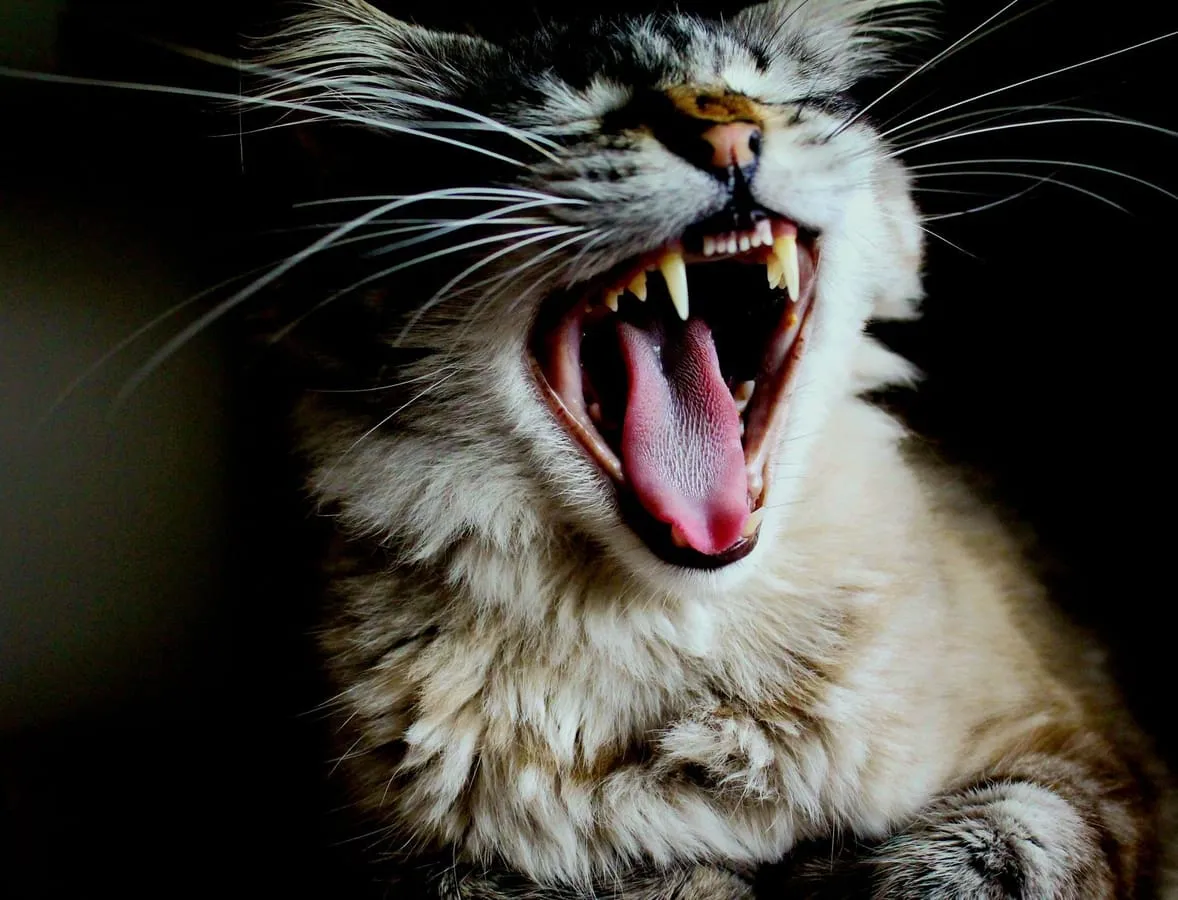
Every cat owner knows the sound: the small hours, that rhythmic haack-haack from somewhere in the dark, and the resigned certainty that you will find something on the rug in the morning. Hairballs have become such a cliché of cat ownership that we have stopped asking whether they are a problem at all.
For the most part, they are not. But “for the most part” is doing a lot of work in that sentence, and the gap between a normal hairball and a frequent one is where I see cats quietly going undiagnosed.
Why they happen at all
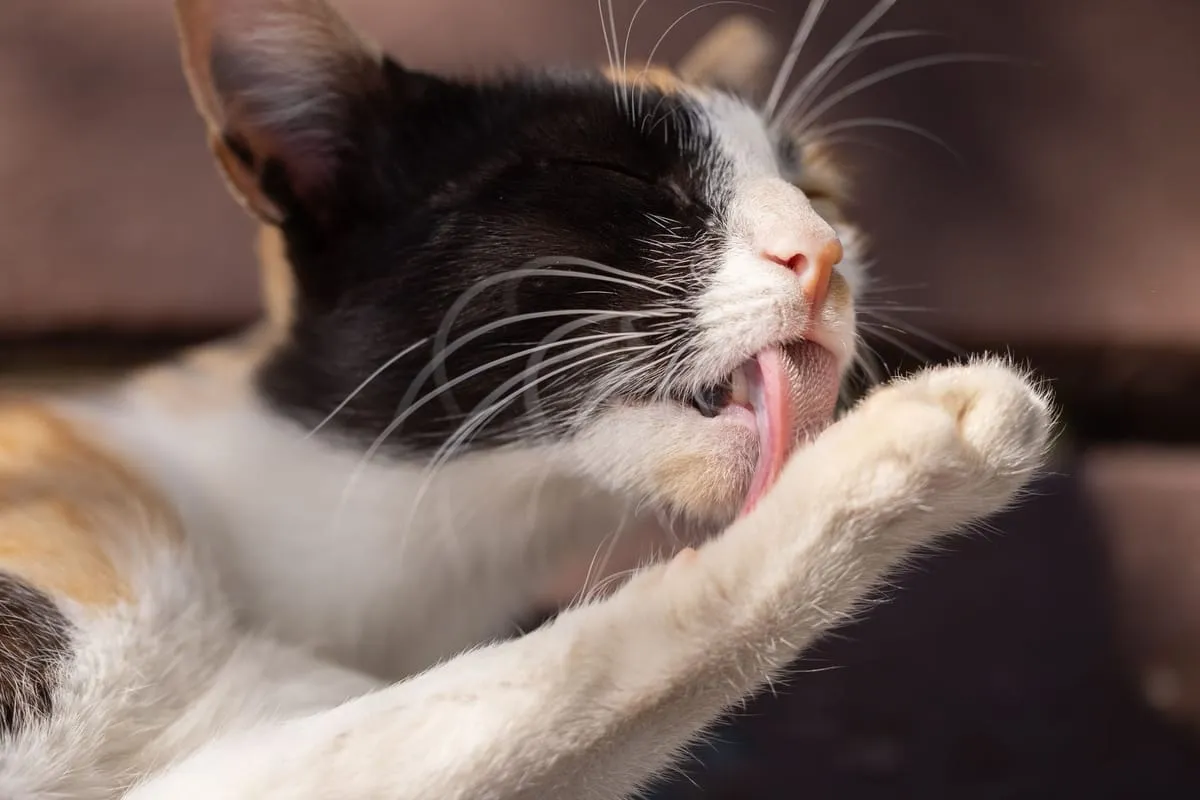
A cat’s tongue is covered in tiny backward-facing barbs, which is what makes grooming so effective and why being licked feels like sandpaper.
Those barbs catch loose and dead hair, and because they point backwards the only direction that hair can go is down the throat and into the stomach. Most of it passes straight through and leaves in the litter tray without you ever knowing. Every so often a wad of it stays behind, gathers into a damp plug, and comes back up the way it arrived. That is a hairball, and in that occasional form it is simply the byproduct of a fastidious animal keeping itself clean.
Some cats are more prone than others for perfectly innocent reasons. Long-haired breeds swallow more hair. So do cats mid-moult, cats that groom each other, and meticulous groomers. An occasional hairball from any of these is nothing to act on.
The number that actually matters
Here is the part I most want owners to take away: frequency is the whole story.
A hairball every couple of weeks or less is unremarkable. A cat bringing one up every week, several times a week, or retching often and producing nothing, is not “a cat that gets hairballs”. It is a cat with a symptom, and hair is frequently not the real issue. Chronic vomiting in cats gets written off as hairballs more than almost any other sign, and underneath it can sit inflammatory bowel disease, other gut problems, or the ordinary repeated sickness that deserves its own look. The hair you see can be a passenger, not the cause.
There is also a mimic worth knowing about. A cat that crouches low, extends its neck and makes repeated hacking efforts may not be trying to bring up a hairball at all, it may be coughing, and feline asthma is regularly mistaken for hairball retching for months. If your cat “tries to cough up a hairball” often but rarely produces one, that is a reason to see a vet, not to buy more gel.
The over-grooming question
When a cat is genuinely swallowing more hair than usual, the honest next question is: why is so much hair coming loose in the first place?
Often the answer is that the cat is grooming too much, and cats over-groom for reasons that have nothing to do with tidiness. Fleas and skin allergies make them lick and nibble at themselves. Pain does too, a cat will groom obsessively over a sore joint or bladder. And stress is a big one, with anxious cats grooming themselves raw as a way to self-soothe, which is why over-grooming shows up in the signs of a stressed cat. If the hairballs have increased and you are also seeing thinning fur, bald patches or a cat that seems to groom constantly, the fur is a clue pointing somewhere else, and that is a conversation for your vet rather than a diet change.
What genuinely helps
For the ordinary, occasional hairball, a few sensible measures cut them down.
Brushing is far and away the most effective, because every bit of loose hair you lift off with a comb is hair your cat will not swallow. A few minutes several times a week makes a real difference, more during a moult, and it is doubly worth it for long-haired cats and for older cats who often stop grooming their back ends properly and need the help. Overweight cats struggle to groom and to pass hair comfortably too, so keeping your cat a healthy weight quietly helps here as well.
Good hydration keeps things moving through the gut, so anything that gets more water into your cat, from a fountain to wet food, supports the passage of swallowed hair, and the ways to get a cat drinking more all apply. Beyond that, hairball-control diets and lubricating gels do reduce how often hairballs form, and they are reasonable to use for a cat that gets them now and then. Just hold onto the distinction that runs through all of this: those products manage an occasional nuisance. They are not the answer to a cat that is being sick often, and reaching for them should never replace a vet visit when the frequency has crept up. Get that line right and hairballs go back to being what they should be, an occasional, unglamorous footnote to living with a cat.
Common questions
- How often is it normal for a cat to have hairballs?
- Genuinely occasional is the key phrase, roughly once every couple of weeks at most, and for many cats far less than that. Long-haired cats and cats in a heavy moult will be at the higher end. What is not normal, and what owners often wave away, is a cat bringing up hairballs weekly or more, or retching regularly and producing nothing. Frequent hairballs are common enough that people assume they are fine, but a cat that is doing it often is worth a vet's attention rather than another tube of hairball gel.
- When is a hairball an emergency?
- Rarely, a swallowed mass of hair fails to pass and causes a blockage, and that is a genuine emergency. The warning signs are repeated unproductive retching or gagging with nothing coming up, a cat that has stopped eating, obvious lethargy, constipation or straining, or a swollen, painful belly. Any of those, especially together, means an urgent vet visit rather than waiting to see if a hairball appears. A cat that is trying to be sick again and again and cannot bring anything up should always be checked promptly.
- Is my cat throwing up food or a hairball?
- It is worth being precise, because owners often file all vomiting under hairballs and miss a real problem. A true hairball is a cigar-shaped plug of matted hair, sometimes with a little food or fluid. Bringing up undigested food, frequent vomiting, or repeated retching that produces only foam or nothing at all is not a hairball problem and points to the gut or something else. If your cat is being sick regularly, the frequency matters more than whether a hairball turns up, and it deserves proper investigation.
- Do hairball remedies and special diets work?
- They can reduce how often hairballs form, but they treat the symptom, not always the cause. Hairball-control diets use added fibre to help hair move through the gut, and petroleum-based gels act as a lubricant, both of which have their place. The single most effective home measure, though, is regular brushing, because the hair you remove is hair your cat cannot swallow. And if a cat is suddenly producing far more hair to swallow, the useful question is why it is over-grooming, which a remedy does nothing to answer.