Cats are experts at hiding how they feel, a survival instinct that makes stress easy to miss. Rather than obvious distress, a stressed cat usually shows subtle changes: a shift in habits, a new behaviour, a retreat from normal life. Because these changes are quiet, they often get put down to a cat “being difficult” or are missed entirely, which is a shame, because stress is not just unpleasant for a cat, it is genuinely linked to health problems. Learning to read the signs, and understanding what tends to cause them, lets you help before a stressed cat becomes an unwell one. Here is what to look for.
The signs, which are usually changes
The key to spotting stress is noticing change, because most signs are a departure from your cat’s normal self rather than anything dramatic.
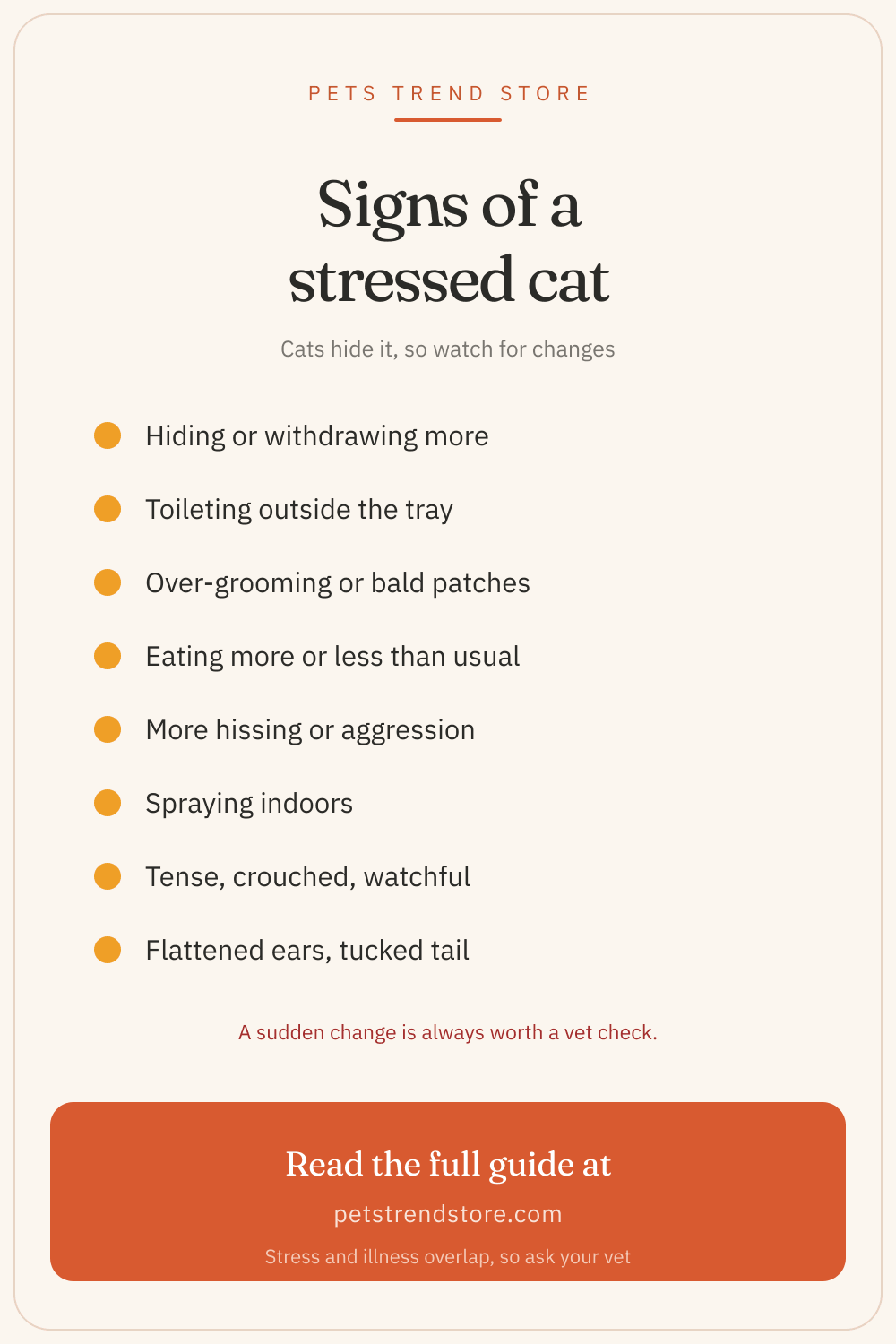
Watch for a cat that hides more than usual or withdraws from family life, or conversely one that becomes unusually clingy. Toileting outside the litter tray is a classic and important sign, as is spraying. Over-grooming, sometimes to the point of thinning fur or bald patches, is a common stress behaviour, and so are changes in appetite in either direction. You might also see more hissing, swatting, or aggression, disrupted sleep, or a generally tense, watchful manner. Alongside behaviour, body language tells you a lot: flattened or swivelling ears, a tucked or twitching tail, dilated pupils, and a crouched, tense posture all suggest a cat that is not relaxed. No single one of these is proof on its own, but a cluster of them, or a clear change from how your cat usually is, is worth taking seriously.
What tends to cause it
Understanding the common triggers helps you both explain the stress and start to fix it.
Cats value predictability and control, so the big causes are change and loss of control: moving house, new people or a new baby, a new pet, building work, or a shift in the daily routine can all unsettle a cat. Conflict with another cat in the home is a major and often hidden source of stress. Cats also stress over their core resources, so too few litter trays, a litter tray placed near the food, or having to compete with another cat for food, water, or resting spots all cause tension. And because cats are territorial, things we barely register can matter, like a strange cat appearing in the garden and being visible through the window to an indoor cat. Often it is a combination, and the trigger is not always obvious.
How to help a stressed cat
The good news is that much of what reduces feline stress is straightforward, and it comes down to giving your cat security, resources, and predictability.
Provide plenty of separate resources spread around the home rather than clustered together: the rule of one litter tray per cat plus one spare, in quiet spots away from food, and several feeding and water stations and beds, so your cat never has to compete or feel cornered. Give it places to hide and high perches to retreat to and observe from, since the ability to get away and watch from safety is deeply reassuring to a cat. Keep routines steady, introduce any change slowly and gently, and provide daily play and enrichment to burn off tension and build confidence. A synthetic pheromone diffuser helps some cats settle. And in a multi-cat home, easing tension between cats, sometimes by going back to careful reintroduction, can transform things.
The bottom line is that a stressed cat rarely announces it, so the skill is in noticing change: more hiding, toileting accidents, over-grooming, appetite shifts, or a tense, watchful cat. Take those signs seriously, look for the trigger, give your cat resources, hiding places, and a steady routine, and involve your vet, because in cats stress and illness are two sides of the same coin. Read your cat well and you can lift its stress before it takes a toll.
Common questions
- What are the signs of a stressed cat?
- Stress in cats often shows as changes rather than dramatic distress, such as hiding more, toileting outside the litter tray, over-grooming to the point of bald patches, eating more or less than usual, becoming withdrawn or unusually clingy, more hissing or aggression, spraying, and disrupted sleep. Body language like flattened ears, a tucked or twitching tail, and a tense, crouched posture also point to it. A cluster of these, or a clear change from normal, is the thing to notice.
- What causes stress in cats?
- Common triggers are change and lack of control, such as moving home, new people, a new pet or baby, building work, a change in routine, or conflict with another cat. Cats also stress over their core resources, so too few litter trays, feeding near the litter, or having to compete with another cat can all cause it. Even things we would not notice, like a new cat visiting the garden, can unsettle an indoor cat.
- How can I reduce my cat's stress?
- Give your cat control and predictability. Provide plenty of separate resources spread around, one litter tray per cat plus one, multiple feeding and water spots, and beds, keep to a steady routine, and offer hiding places and high perches so your cat can retreat and observe. Introduce any changes slowly, use play and enrichment, and consider a pheromone diffuser. If stress is severe or sudden, see your vet, since illness and stress often overlap.
- Can stress make a cat ill?
- Yes. Stress is genuinely linked to health problems in cats, most notably a painful bladder condition often called stress cystitis, as well as over-grooming, digestive upset, and a weakened immune system. Because stress and illness can look similar and feed into each other, a cat showing signs of stress, especially with any change in toileting, eating, or drinking, is always worth a vet check to rule out a medical cause.