Cats are not built to be big drinkers. Their ancestors were desert animals that got most of their moisture from prey, so cats evolved a low thirst drive and a habit of running slightly dry, which served them well in the wild but works against them on a bowl of kibble in a centrally heated home. Poor hydration is quietly one of the most common contributors to the urinary and kidney problems that plague cats, so getting more water into yours is a genuinely worthwhile thing to do. Here is why it matters and how to manage it.
Why hydration matters so much for cats
The reason to care about your cat’s water intake is that too little of it, over time, is linked to some of the most serious and common feline health problems.
Cats are prone to urinary tract issues, including painful crystals and blockages, and to chronic kidney disease as they age, and good hydration helps protect against both by keeping urine more dilute and the kidneys well flushed. The challenge is that a cat’s weak thirst drive means it will not always drink enough to make up for a dry diet, and it tends not to show it until a problem is already brewing. That combination, a low natural thirst and a high stake if things go wrong, is exactly why encouraging water is worth the small effort.
Diet is the biggest lever
Before fiddling with bowls, know that what your cat eats has the largest single effect on how hydrated it is.
Wet food is roughly three-quarters water, so a cat eating it takes in a large part of its daily needs at mealtimes, whereas dry food contains very little moisture and leaves the cat to make up almost all of it by drinking. This is why a wet-fed cat can seem to barely touch its bowl and still be perfectly hydrated, while a dry-fed cat has to work much harder to keep up. Including wet food in the diet, or feeding it entirely, is one of the most effective ways to raise water intake, and our guide to wet versus dry cat food weighs up the wider trade-offs.
Practical ways to get your cat drinking
Beyond diet, small changes to how you offer water make a surprising difference, because cats are particular about how they drink.
Try these, and see which your cat prefers:
- Add a water fountain. Many cats are drawn to moving water and will drink far more from a fountain than a still bowl, which is the same instinct behind the cat that ignores its bowl but drinks from a running tap.
- Use wide, shallow bowls. Deep or narrow bowls press on a cat’s sensitive whiskers, which many dislike, so a wide bowl it can drink from without touching the sides is often more appealing.
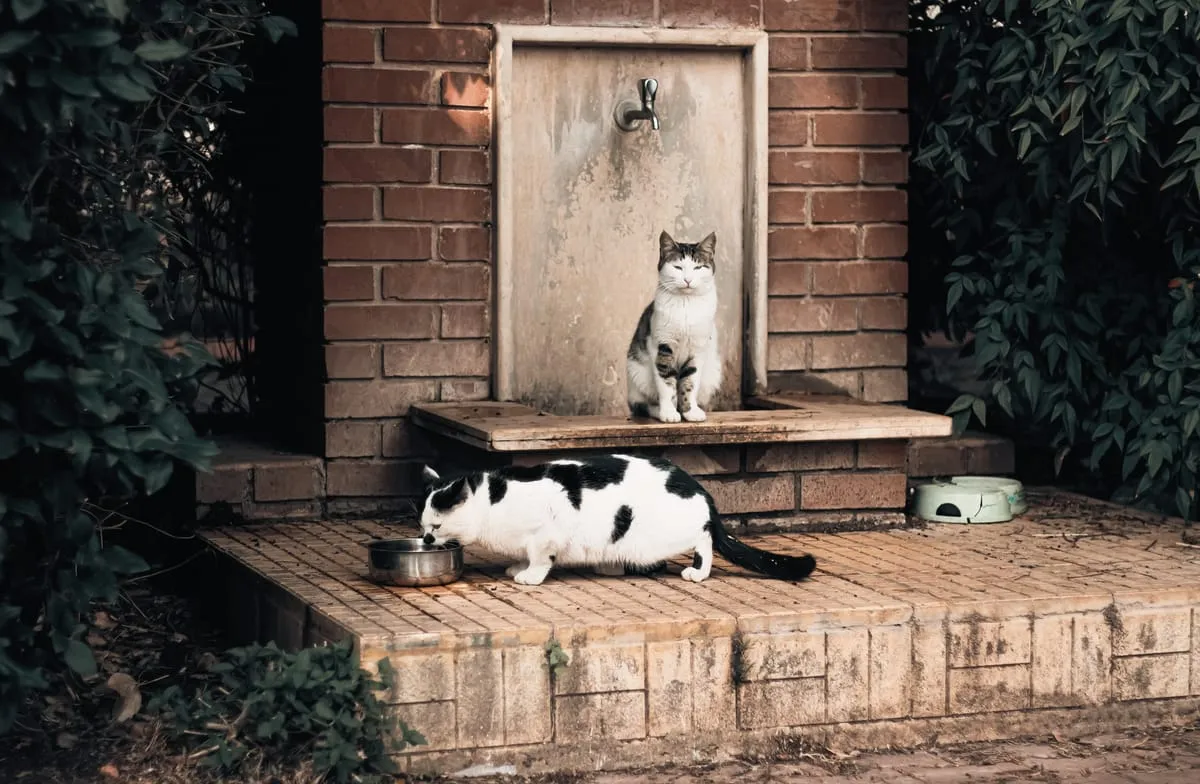
- Site bowls well, and offer several. Cats prefer water away from their food and well away from the litter tray, so place bowls in a few quiet spots around the home rather than one station by the food.
- Keep it fresh, and choose the material. Change the water at least daily, and try ceramic, glass, or stainless steel rather than plastic, which some cats find off-putting.
- Add water to meals. Stirring a little extra water into wet food, or loosening it into a soupier texture, is an easy way to sneak more in.
Keeping an older cat well hydrated matters even more, since kidney changes become more common with age, so hydration sits alongside the other adjustments in our guide to caring for a senior cat. And if your cat is regularly being sick, which can both cause and worsen dehydration, our piece on why your cat keeps being sick is worth a read. The goal through all of it is simple: make water easy, appealing, and always available, and let a moisture-rich diet do the heavy lifting.
Common questions
- How much water should a cat drink a day?
- As a rough guide, a cat needs somewhere around 50ml of water per kilogram of body weight a day, so a typical 4kg cat needs roughly 200ml from all sources combined. The important phrase is all sources, because a cat on wet food gets a large share of that from its meals and may drink very little from a bowl, which is perfectly normal. A cat on dry food has to make up nearly all of it by drinking, so it needs to visit the water far more.
- Why won't my cat drink from its bowl?
- Often it is the bowl or its position rather than the water. Many cats dislike bowls placed next to their food or litter tray, dislike deep or narrow bowls that touch their whiskers, and are put off by plastic or by water that has sat out all day. Cats are also drawn to moving water, which is why so many will drink from a dripping tap but ignore a still bowl. Changing the bowl, moving it, or adding a fountain often fixes it.
- Do cats on wet food still need access to water?
- Yes, always. Wet food provides a lot of a cat's daily water and is one of the best ways to keep a cat hydrated, but fresh water should still be available at all times. Your cat may drink very little from the bowl if it eats mostly wet food, and that is fine, but the water should always be there for it to use, kept clean and topped up.
- Is it bad if my cat doesn't drink much water?
- It depends on its diet. A cat on wet food that drinks little is usually getting enough moisture from its meals. A cat on mostly dry food that also drinks little may be running short, which over time raises the risk of urinary and kidney problems. Watch for signs of dehydration or urinary trouble, and if your cat suddenly starts drinking a great deal more than usual, that is also worth a vet visit, as it can signal conditions such as kidney disease or diabetes.