Cat breath was never going to smell like mint. But there is a real difference between the mild, faintly fishy smell of a cat that just ate, and a mouth odour so persistent you notice it across the room, and owners regularly file the second one under “that’s just cats” when it is actually a symptom with a name.
The usual cause is the teeth
By a wide margin, the most common reason for genuinely bad breath in a cat is dental disease, and it is far more common than most owners expect.
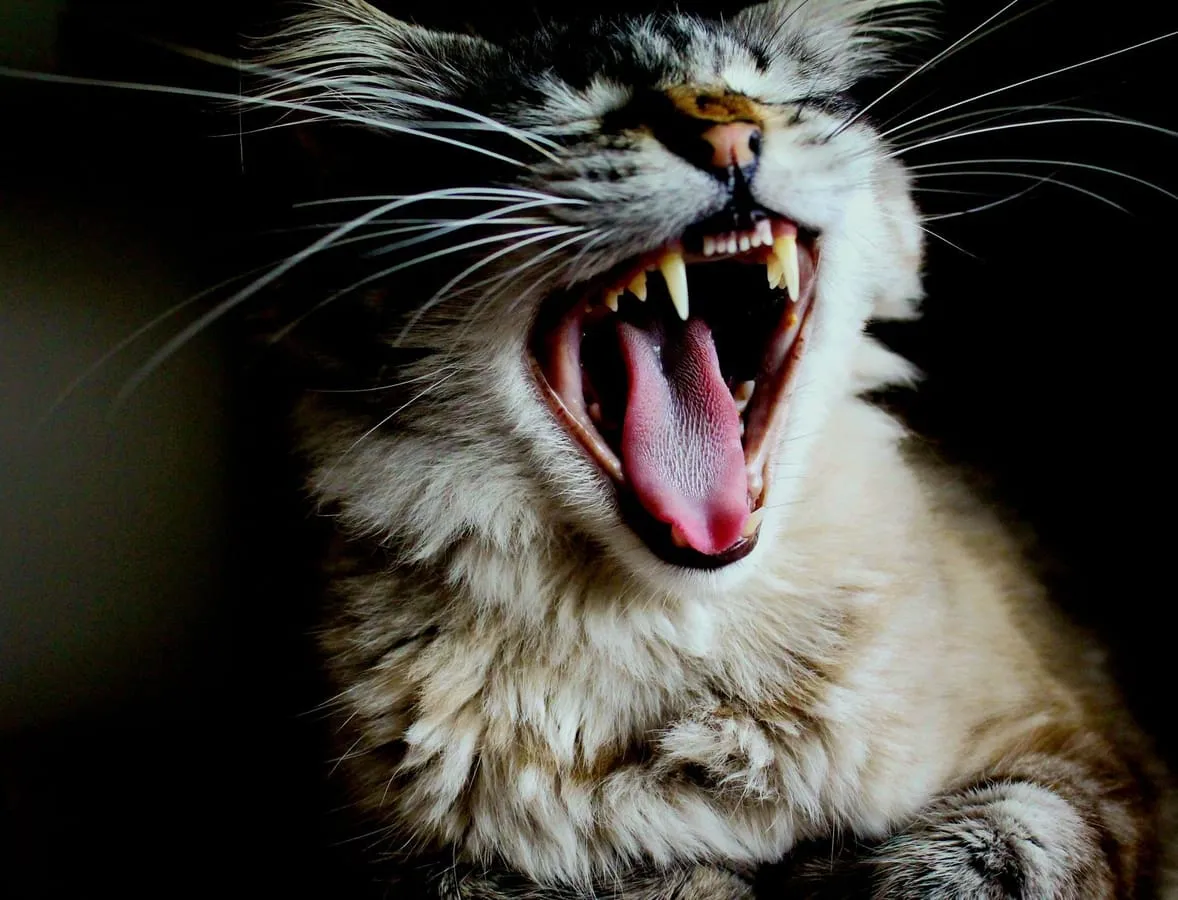
Plaque builds up on a cat’s teeth just as it does on ours, and left alone it hardens into tartar and works its way under the gumline, causing gingivitis, then more serious periodontal disease as it progresses. The bacteria involved in that process is what produces the smell, and it gets worse the further the disease advances. Cats are also very good at hiding the pain that comes with it, they do not stop eating or obviously wince, so a smelly mouth is very often the first and only sign an owner notices, even though the disease itself has usually been building for a while by that point.
Why it matters beyond the smell
Treating dental disease as a cosmetic annoyance rather than a health issue is the mistake I see most often, and it undersells what is actually happening in a cat’s mouth.
Advanced gum disease is painful, even when a cat shows no obvious signs of it, and it can lead to tooth loss, abscesses, and difficulty eating that owners sometimes only notice once it is severe. Beyond the mouth itself, the bacteria involved can enter the bloodstream through inflamed gums and has been linked to strain on organs elsewhere in the body over time, including the kidneys and heart. None of that requires alarm over an occasional whiff of cat breath, but it is the reason a persistently smelly mouth deserves an actual look rather than an air freshener response.
When it points somewhere else entirely
Occasionally bad breath is not a dental problem at all, and this is the pattern worth knowing so you do not miss it.
A mouth that looks clean, with healthy-looking teeth and gums, but breath that still smells distinctly off, especially a sweet or ammonia-like smell, can be a sign of kidney disease, where the body is no longer clearing waste products the way it should. This tends to show up alongside other signs like drinking more, being sick more often than usual, weight loss, or a duller coat, and it is far more common in older cats, whose kidneys are more likely to be under strain. Far less commonly, a sweetish odour can point to diabetes. Neither of these is something to diagnose from smell alone at home, but they are the reason a vet check is worth doing even when you cannot see anything obviously wrong in the mouth itself.
What actually helps
The most effective single thing you can do is brush your cat’s teeth, and the reason it works is the same reason it works for us, it physically removes plaque before it has the chance to harden into tartar.
Daily is ideal, but any regular brushing beats none, and it is worth building up gradually with a cat-specific toothpaste (never human toothpaste, it is not safe for cats) rather than expecting a cat to tolerate a toothbrush on day one. Dental treats and diets formulated to scrape the teeth as a cat chews are a genuinely useful addition, and they help between brushes, but they are a supplement to brushing and professional care rather than a substitute for either. Beyond home care, a vet dental check at a routine visit catches early gum disease long before it reaches the smelly, painful stage, and a professional clean under anaesthetic is sometimes needed to properly clear tartar that has already built up below the gumline, something no amount of home brushing can undo once it is there.
Get into the habit of checking your cat’s mouth occasionally and brushing when you can manage it, and a smelly mouth becomes far less likely in the first place. And if the smell is already there, treat it as the useful piece of information it is, a mouth (or occasionally a body) asking for a proper look, rather than just an unglamorous fact of cat ownership.
Common questions
- Is it normal for a cat's breath to smell a little?
- A very faint, food-tinged smell right after eating is normal. A persistent smell you notice every time your cat is near your face is not, and owners often mistake that for how cats "just are". The single most common cause by far is dental disease, which is treatable, so a consistently smelly mouth is worth a vet check rather than something to live with.
- Can dental disease in cats actually make them ill?
- Yes, more seriously than most owners realise. Untreated gum disease is painful, it often goes unnoticed because cats hide pain well, and the bacteria involved can enter the bloodstream and affect organs further away, including the kidneys and heart, over time. Dental disease is a genuine health issue, not a cosmetic one, and it is one of the most common problems vets see in cats over a few years old.
- When is bad breath a sign of something more serious than the teeth?
- If the mouth and teeth look reasonably clean and the breath is still bad, or if it has a distinctly sweet or ammonia-like smell alongside increased thirst, weight loss, or lethargy, that points away from the mouth and towards the kidneys or, less commonly, diabetes. A vet visit sorts out which it is with a proper mouth exam and, if needed, blood work, rather than guessing from the smell alone.
- How can I keep my cat's teeth healthy at home?
- Daily brushing with a cat-specific toothpaste is the gold standard if your cat will tolerate it, built up gradually rather than forced. Dental-specific diets and treats designed to scrape plaque help too, though they are a supplement to brushing and professional cleans, not a replacement for either. Regular vet dental checks catch problems early, well before they progress to the point of smelly breath and loose teeth.