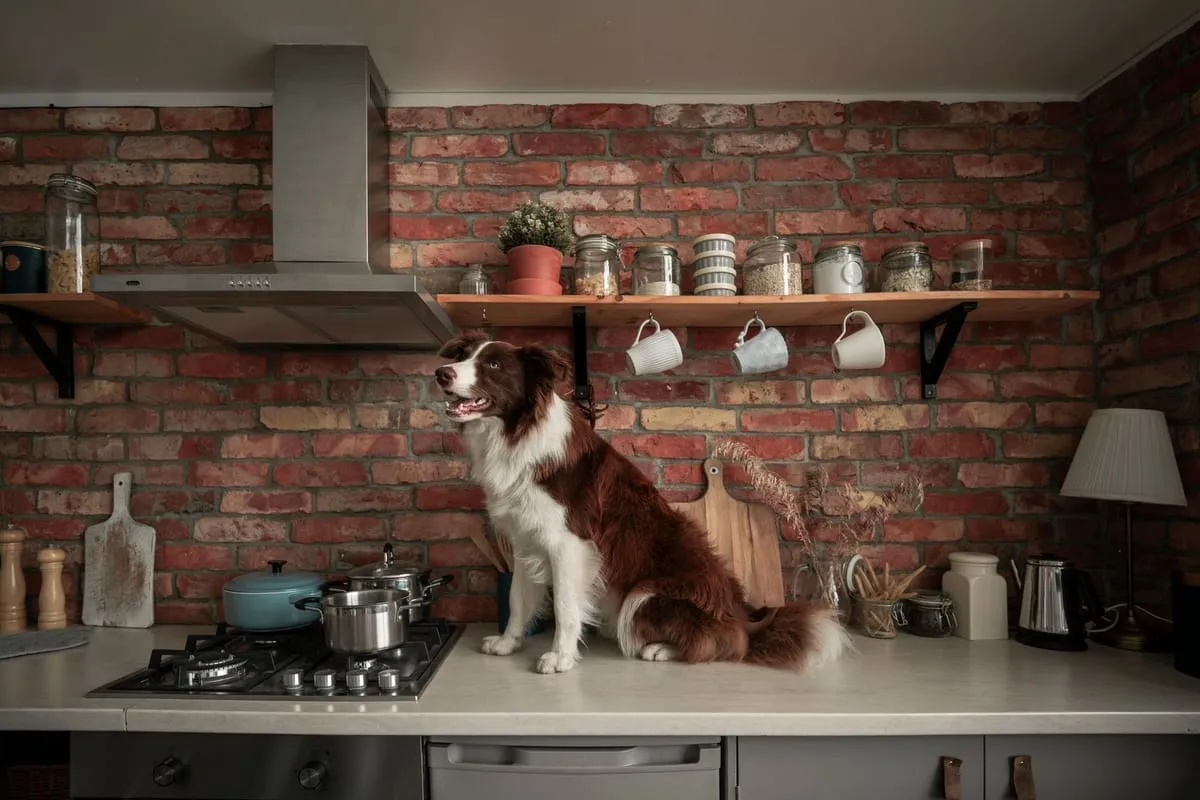
Your back is turned for ninety seconds and the roast chicken you left resting has a dog-shaped gap in it. It feels deliberate, almost smug, like your dog waited for the exact moment you looked away. In a sense they did, but not because they are cunning or getting even with you. They are doing what worked last time, and the time before that.
This is a learned habit, not a discipline problem
Every successful counter raid is a full-sized reward landing at exactly the right moment to teach a dog that counters are worth checking. It does not take many wins before checking becomes automatic, the same way you check your phone without deciding to.
This is why telling a dog off after the fact rarely works. By the time you catch them, the food is already half gone, so the behaviour already paid off before the scolding arrived. What your dog actually learns from the shouting is usually one of two things: either that you turning your back is the cue to move fast, or that grabbing food while you watch is risky, so waiting for you to leave the room is safer. Neither of those is the lesson you were trying to teach.
Why some dogs do it far more than others
Food motivation explains most of the difference. A dog that would cross a river for a piece of cheese has a much stronger pull toward an unattended plate than one who takes food or leaves it. Breed plays a part here, retrievers and beagles are frequently mentioned for a reason, but plenty of food-driven dogs of every kind will try it once they learn there is something up there worth trying for.
Hunger and routine matter too. A dog fed on an irregular schedule, or one whose meals are noticeably smaller than its appetite wants, has a real incentive to go looking. And a dog that has never been taught what counters are for, because the house has always kept them clear, simply has not had the opportunity to learn the habit yet. That last group is the easiest to keep it that way.
Management beats willpower, every time
The single most effective thing you can do costs nothing and needs no training: stop leaving food where a dog can reach it. This sounds almost too simple to be advice, but it is the difference that actually works while everything else below is still being taught.
Push plates and boards back from the edge, use the back burners, and get into the habit of covering food that has to sit out to cool. If your dog is tall enough to reach a counter you thought was safe, treat that counter as within reach from now on, because they have already worked out that it is.
Teach an incompatible behaviour
Management stops the opportunity, but a dog that is bored in the kitchen will still hover, so it helps to give them something better to do than hang around the counter.
A reliable “place” or mat command, where your dog goes to a specific spot and stays there while you cook, is the single most useful thing to teach for this. Start away from any food temptation, reward generously for going to the spot and staying, and only add the difficulty of a real meal being prepared once the behaviour is solid. A dog lying on its mat cannot simultaneously have its paws on the counter, which is exactly the point.
“Leave it” is worth teaching separately, for the moments management fails and food ends up within reach anyway. Practise it with low-value items first, reward for backing off rather than punishing for going toward it, and build up slowly. It is a genuinely useful command, but it is not a substitute for keeping food out of reach in the first place. No cue is reliable one hundred percent of the time, and a dog alone in the kitchen will not have you there to give it.
Do not reward the hovering either
A subtler mistake is feeding a dog that is standing right by the counter, even with something you meant to give them anyway, like a vegetable offcut while you cook. From the dog’s side this looks identical to a reward for being near the counter, and it undoes some of the work above.
If you want to give your dog something while you cook, call them to their mat first and deliver it there. It is a small habit that keeps the message consistent: good things happen away from the counter, not next to it.
When it is worth a longer look
Most counter surfing is exactly what it looks like, an opportunistic dog taking advantage of an easy win, and it responds well to keeping surfaces clear and building the alternatives above. It usually settles within a few weeks of consistent management, faster than most owners expect once the food actually stops being reachable.
Occasionally there is more going on. A dog that has suddenly started raiding after years of never bothering, especially alongside a bigger appetite, weight change, or drinking more than usual, is worth mentioning to your vet, since a handful of medical conditions can genuinely increase hunger. That is the exception rather than the rule, but it is worth ruling out if the pattern changes out of nowhere rather than building gradually the way habits usually do.
Common questions
- Why does my dog only steal food when I'm not looking?
- Because that is when it works. Dogs are excellent at reading exactly when a behaviour pays off, and a counter raid succeeds far more often when you are out of the room. This is not cunning or spite, it is a dog doing more of what has been rewarded and less of what has been interrupted, which is why shouting after the fact rarely changes anything.
- Does yelling at my dog for stealing food actually work?
- Rarely, and often it backfires. By the time you catch them, the food is usually half gone, so the raid already paid off. Some dogs also learn to grab and bolt the moment you appear, which makes the behaviour faster and harder to interrupt, not less likely to happen.
- Is counter surfing more common in certain breeds?
- Food-motivated breeds and generally food-driven individuals do it more, but almost any dog will try it once they discover the counter has something on it. Size matters more than breed for what is at risk, since a bigger dog reaches further and can clear more of the surface in one go.
- My dog stole something toxic off the counter. What should I do?
- Call your vet or an animal poison helpline straight away rather than waiting to see if your dog seems fine, since some toxic foods take hours to show signs. Have the packaging or a note of exactly what and how much your dog ate ready, because it changes what they advise.