A dog that launches itself at everyone it meets is friendly, excited, and usually completely misunderstood. Owners often read jumping up as bad manners or dominance, when really it is just a dog trying to say hello in the most enthusiastic way it knows. The good news is that once you understand why it happens, the fix is refreshingly simple. It rests on a single rule, and the hard part is not teaching it but applying it consistently, every time, by everyone. Here is how to do it.
Why dogs jump up
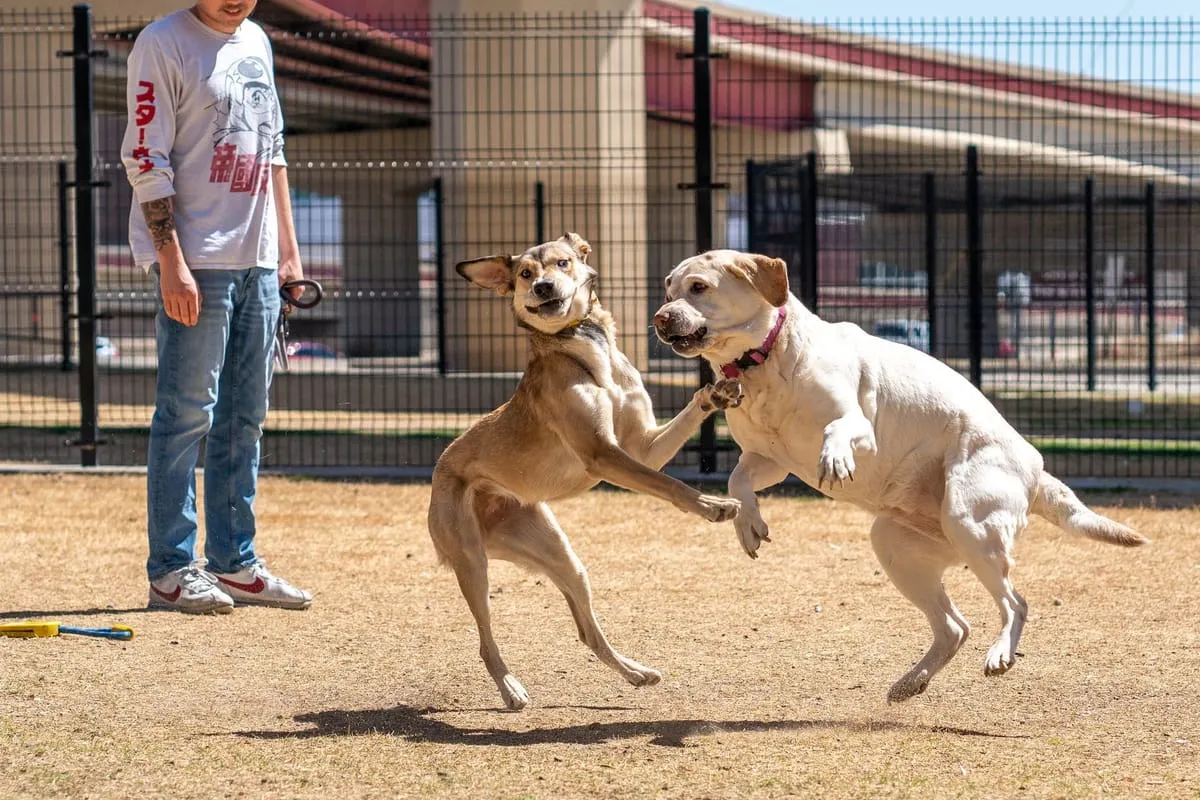
Dogs greet each other and us face to face, and since our faces are a long way up, jumping is simply how they try to close the gap.
Add in the excitement of a greeting, a homecoming, or a new visitor, and you have a dog full of energy with nowhere to put it. The behaviour then sticks around for one reason: it gets a response. When your dog jumps and you look at it, talk to it, push it down, or even tell it off, you have given it attention, and to a sociable dog desperate to say hello, attention is exactly the prize it was after. This is the insight the whole fix hangs on. Jumping continues because it works, so the job is to make sure it stops working.
The one rule: four paws, or no attention
The rule is this: your dog gets attention only when all four paws are on the floor, and never while it is jumping.
In practice that means the instant your dog jumps up, you turn away, fold your arms, and go quiet, giving it nothing at all, no eye contact, no words, no touch. The moment its front feet are back on the ground, you turn back and calmly reward it with your attention, a fuss, or a treat. You are teaching a clear contrast: jumping makes the good stuff disappear, and keeping four paws down makes it appear. Dogs read that pattern quickly once it is consistent.
Give it something to do instead
Removing the reward for jumping works faster when you give your dog a better way to greet people.
Teach it that sitting earns the hello it wants: ask for a sit as people approach, and reward calm four-on-the-floor greetings generously, so sitting becomes its default way of saying hi. A dog that has learned to plant its bum down for attention has no need to jump. It also helps to take the edge off the excitement in the first place, and a dog that is well exercised and mentally tired greets far more calmly than one bursting with pent-up energy, so our guide to teaching a reliable recall and plenty of active walks feed directly into calmer manners at home.
The front door and other flashpoints
The doorway is where jumping is at its worst, because that is where excitement peaks, so early on you manage it rather than expecting training to hold under pressure.
Before you open the door, put your dog on a lead or behind a baby gate so it physically cannot fling itself at your guest, and ask visitors to wait and ignore it until it settles, then greet it once it is calm with four paws down. The same applies to your own homecomings, which are often the biggest trigger of all: keep your arrival low-key, wait for calm, and reward that instead of a leaping welcome. Handle those peak moments well and the everyday greetings tend to fall into line, and much like loose-lead walking, the whole thing comes down to rewarding the behaviour you want and quietly declining to reward the one you do not.
Common questions
- Why does my dog jump up on me?
- Almost always to say hello and to get your attention. Dogs greet face to face, and jumping brings them closer to ours, so a bouncy dog leaping up is usually just an excited, friendly one. The reason it sticks around is that it works, and even being pushed off or told no still counts as attention, so to a dog keen to say hello, any reaction can be a reward. That is also the key to fixing it.
- How do I stop my dog jumping on guests?
- The front door is the hardest moment because excitement is highest, so manage it rather than relying on training alone at first. Pop your dog on a lead or behind a baby gate before you open the door, and ask visitors to ignore the dog completely until all four paws are on the floor and it is calm, then greet it. Consistency from guests matters as much as from you, since one person making a fuss of a jumping dog undoes a lot of work.
- Should I knee my dog or push it down to stop jumping?
- No. Kneeing, pushing, or shouting can hurt or frighten a dog, and just as often it backfires, because to an attention-seeking dog any physical response is a form of engagement that can reward the very thing you are trying to stop. The kinder and more reliable approach is to remove the reward by turning away and giving no attention while the dog jumps, then rewarding it the moment it has four paws down.
- At what age should I train my puppy not to jump?
- From the day it comes home. A jumping puppy is small and cute, so it is easy to let it slide, but you are teaching it that jumping earns fuss, and that lesson gets much harder to undo once the dog is fully grown. Reward four paws on the floor and calm greetings right from the start, and make sure everyone in the household does the same, and you may never develop the problem in the first place.