A dog that goes still over its bowl the second you walk past, or that curls around a chew with its ears back and eyes fixed on you, is not being naughty. It is guarding something it does not want to lose, and for most dogs that instinct is completely normal. What matters is how you respond to it, because the wrong response is a genuinely common way owners accidentally make guarding worse.
What resource guarding actually looks like
Guarding sits on a spectrum, and most dogs never move past the mild end of it. A dog that eats a bit faster when someone approaches, or goes quiet and watchful over a chew, is guarding in a low-level way that rarely causes a real problem. Further along, a dog might freeze completely, give a hard stare, or plant its body over the item. At the serious end sits growling, snapping, air-snapping, and biting, and any of those three mean a genuine safety issue rather than a quirk to manage around.
It is not always food. Toys, stolen items, a favourite resting spot, and sometimes a particular person are all things dogs guard. A dog that only guards from other dogs in the house is a different, usually more straightforward problem than a dog that guards from people, and worth naming clearly when you are deciding how worried to be.
Why punishing the growl backfires
It is tempting to tell a growling dog off, or to physically take the item away to “show them who’s in charge.” Both feel like they are solving the problem in the moment, and both tend to make it worse over time. A growl is a warning, the last step before a dog feels it has to act. Punish that warning consistently enough and a dog does not stop guarding, it learns that warning first does not work, and skips straight to snapping or biting next time. You end up with a dog that seems to bite “out of nowhere,” when really you removed the only signal it had left to give you.
The old advice to regularly take food away mid-meal to “prove” who is in charge is outdated for the same reason. It does not teach a dog that hands near its bowl are safe, it teaches a dog that hands near its bowl mean something good is about to be taken, which is exactly the fear that drives guarding in the first place.
The trade-up approach that actually works
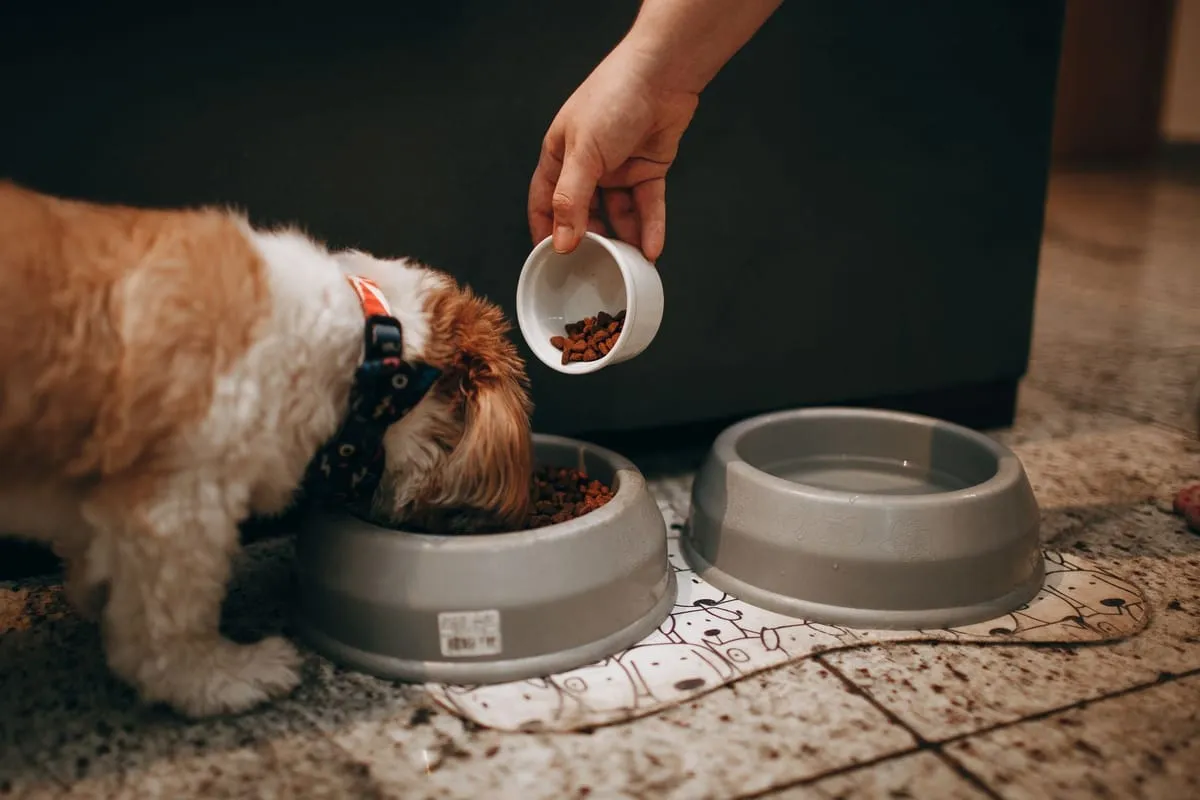
The fix that behaviourists reach for first changes what a hand approaching the bowl or chew predicts, from “something is about to be taken” to “something even better is about to arrive.” Walk past at a distance your dog is comfortable with and drop a piece of higher-value food near the bowl, then walk away. Repeat this over several meals, gradually closing the distance as your dog stays relaxed rather than stiffening. Over time, a hand approaching stops being a threat and starts being the reason good things happen.
The same logic works for toys and chews. Rather than reaching in to grab the item, approach and trade it for something your dog wants more, then hand the original item straight back once in a while too, so giving something up does not always mean losing it for good. A treat pouch kept loaded and ready makes this far easier to do consistently, since fumbling for treats mid-session undoes a lot of the calm you are trying to build.
In a multi-dog household, guarding is often really about competition rather than people at all. Feeding dogs in separate spaces, or behind a walk-through gate if your layout allows it, removes the trigger far more reliably than trying to train the guarding away while the competition is still happening every mealtime.
What to actually avoid while you work on it
Do not let children approach a dog that is eating or chewing, even a dog that has never growled, since guarding can develop or worsen with age and kids are the group least likely to notice or respect the early warning signs. Avoid cornering your dog to retrieve an item by force, and skip games that involve teasing a dog with food or toys just out of reach, since that builds exactly the anxiety around losing valuable things that guarding comes from.
A dog with mild guarding, some stiffening, faster eating, no growling, usually settles well with a few weeks of consistent trade-ups. A dog already growling or snapping needs a trainer who can see your dog’s specific triggers in person, because guessing at the details from general advice is how well-meaning owners get bitten. Puppies showing early signs are worth working with straight away too, since the habits that form now are much easier to shape than ones that have had a year or more to set in, and our guide on stopping a puppy biting covers the related habit of mouthing that often comes up alongside it.
Common questions
- Why does my dog guard its food or toys?
- Resource guarding is a normal survival instinct, protecting anything valuable from being taken is wired into dogs long before they ever lived in houses with a full bowl guaranteed twice a day. Some dogs are simply more prone to it than others, and early experiences matter too, a dog that once genuinely lost food to a sibling or a shelter mate often guards harder than one raised with plenty and no competition.
- Is it dangerous, or just an annoying habit?
- It depends on the level. A dog that eats a little faster or stiffens slightly when you walk past is a mild case most owners can manage themselves. A dog that growls, snaps, or has ever bitten over an item is showing a genuine bite risk, especially around children who do not read warning signs the way adults do, and that level needs a professional in your home, not just advice from an article.
- Should I punish my dog for growling over food?
- No, and this is the single most important thing to get right. A growl is information, your dog telling you it is uncomfortable before it feels the need to bite. Punish the growl and a dog does not become less likely to bite, it becomes more likely to skip the warning next time, because the warning is what got it into trouble. Address what is making the dog uncomfortable instead of suppressing the sign that tells you.
- When should I get a trainer involved instead of handling it myself?
- Any growling, snapping, or biting over an item, any guarding around children, or any case where you feel nervous approaching your own dog is worth a certified trainer or behaviourist in your home. Mild stiffening or fast eating with no growling usually responds well to the trade-up approach on its own, but guarding that is already at the growl-or-bite stage needs hands-on, tailored help rather than general advice.