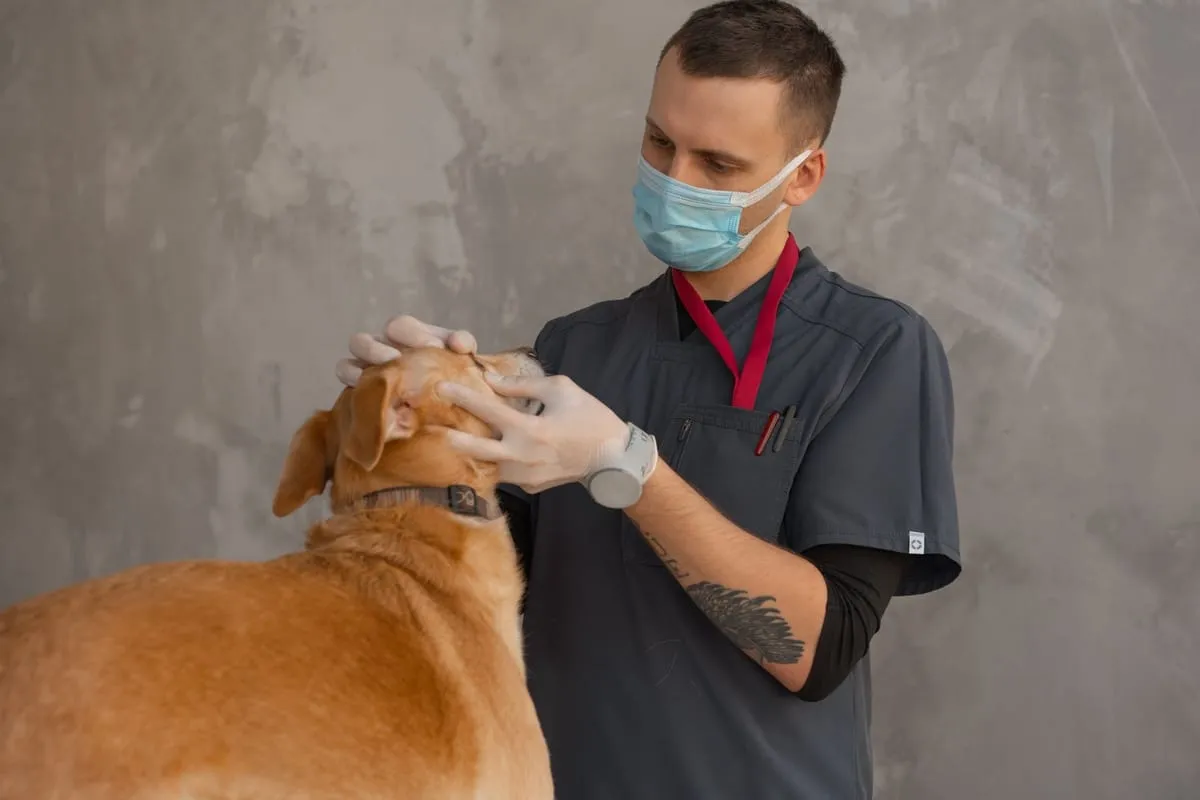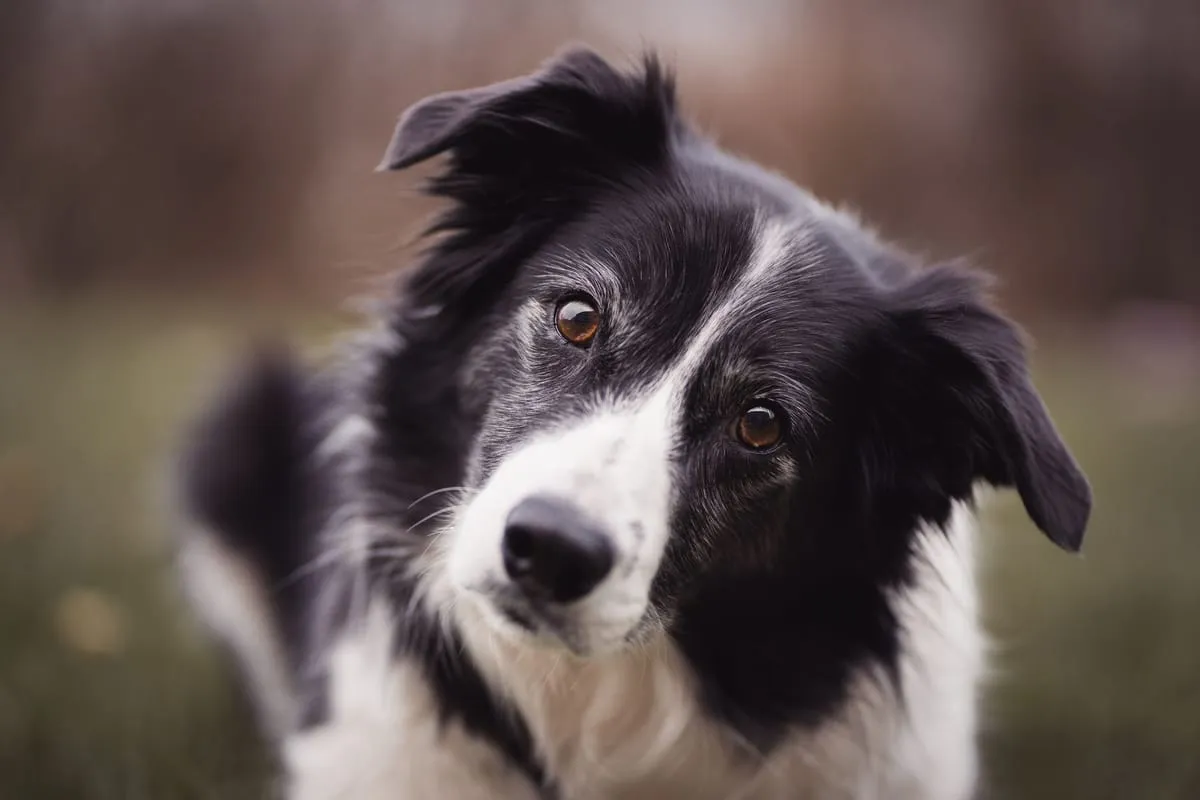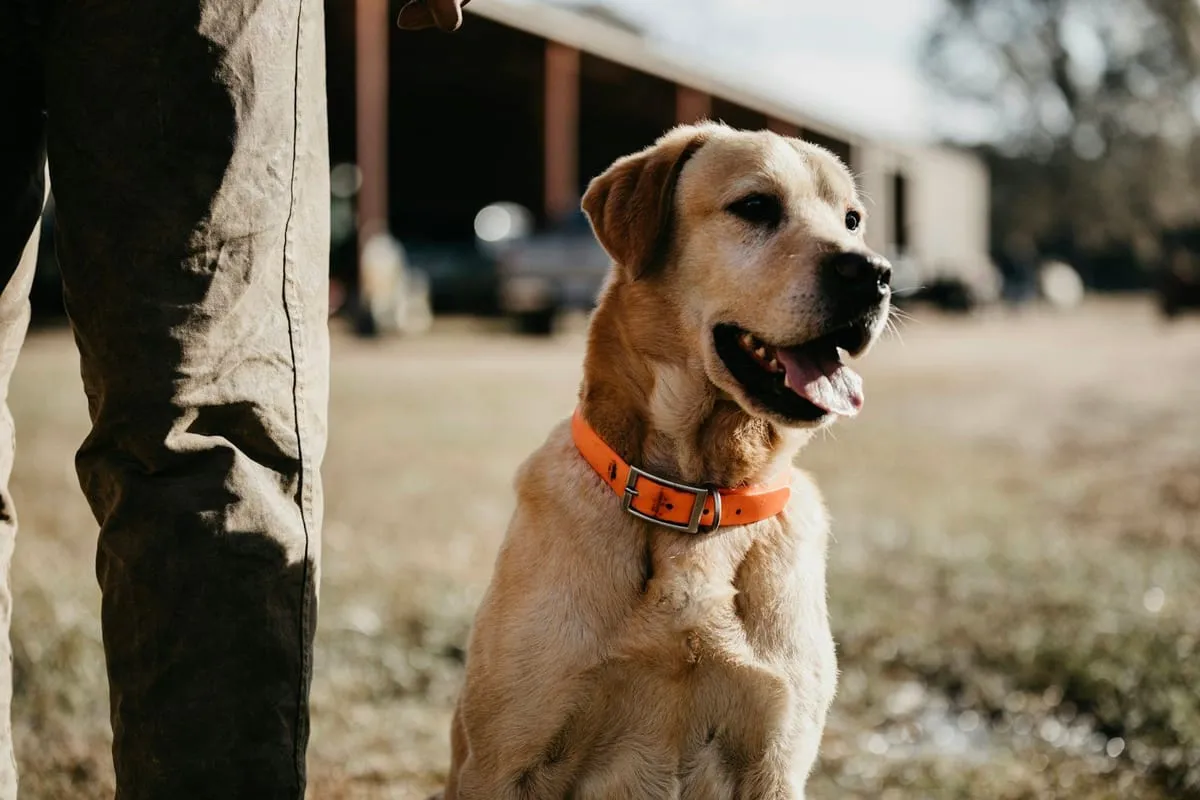
Here is an uncomfortable truth from the vet world: a large proportion of dogs are overweight, and most of their owners have no idea. It is not neglect. It is that weight goes on slowly, day by day, so you never notice, and that our idea of what a normal dog looks like has quietly drifted heavier, so a dog carrying too much now looks unremarkable at the park. Learning to check your dog honestly, and being willing to see what you find, is one of the most valuable health habits you can build, because a lean dog is a healthier, longer-lived, more comfortable dog by a wide margin.
As always, the honest note: I am a writer, not a vet, and a weight-loss plan for a dog with health issues should be guided by one. But the basic check below is something every owner can and should learn to do.
Why the scales lie and your hands don’t
The instinct is to judge weight by a number on the scales, but that number means little on its own, and the better tool is your own hands.
A dog’s healthy weight varies enormously with breed, frame, and build, so a figure that is right for one dog is wrong for another, and the scales cannot tell you whether the weight is muscle or fat. What actually tells you is body condition, which you assess by feel and shape, and it takes about ten seconds. This is the same check vets use, and it is far more reliable than either the scales or a glance across the room, because it reads the individual dog in front of you rather than an average.
So before worrying about pounds and kilos, learn to read the dog itself. The scales are useful for tracking change over time once you know the direction of travel, but the hands tell you where you are.
The three-part body condition check
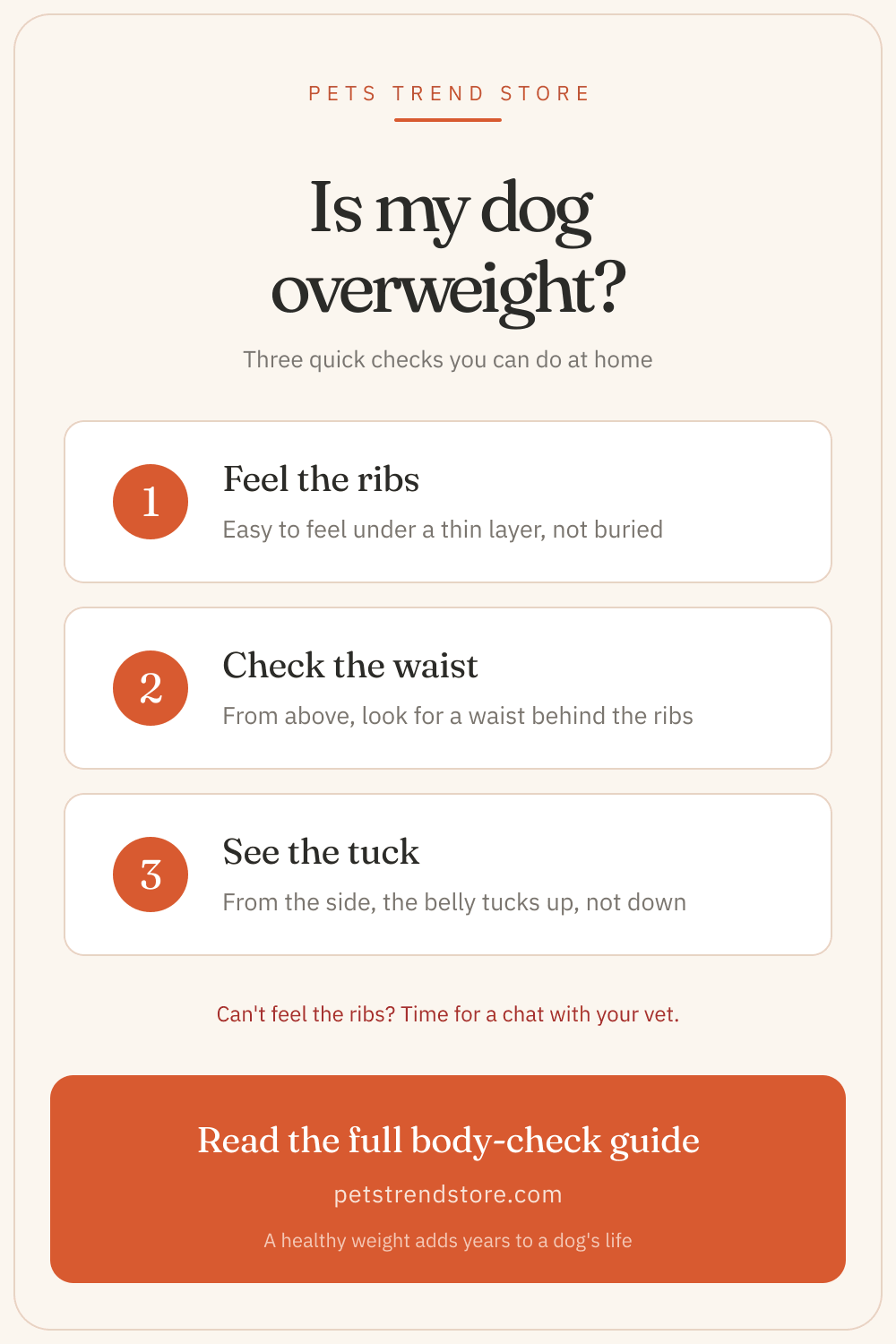
The check has three simple parts, and you want all three to line up, because any one on its own can mislead.
First, the ribs. Run your hands along your dog’s sides. You should be able to feel the ribs quite easily, with only a thin covering of fat over them, without having to press hard. Ribs you cannot find under a thick layer mean too much weight, ribs that stick out sharply mean too little. Second, the waist, viewed from above. Looking straight down at your standing dog, you should see the body narrow behind the ribs into a visible waist, rather than being straight-sided or bulging outward. Third, the tuck, viewed from the side. The belly should rise up towards the back legs rather than hanging level with the chest. A dog with easily felt ribs, a clear waist, and a good tuck is in good shape. A dog with hard-to-find ribs, no waist, and a level or sagging belly is carrying too much.
Why even a little extra matters
It is tempting to think a slightly round dog is no big deal, but the health cost of excess weight is real and worth taking seriously.
Carrying too much weight is linked to a shorter life and to a long list of problems: it puts strain on joints and worsens arthritis, raises the risk of diabetes, and adds to heart and breathing trouble, among others. It also makes existing conditions harder to manage and surgery and anaesthetic riskier. Studies have found that lean dogs simply live longer and stay healthier than their overweight littermates on the same care in every other respect. None of this is meant to induce guilt, weight creeps up on the most devoted owners, but it is meant to make clear that keeping a dog lean is not vanity. It is one of the highest-value, lowest-cost things you can do for its health and its lifespan.
What to do if the check says too much
If the honest check tells you your dog is carrying too much, the fix is straightforward in principle, and best done gradually and with support.
Weight comes off the same way it goes on, through food and activity. Measure the meals rather than guessing, and reduce the amount, remembering that the treats and extras are usually where the surplus calories hide, so counting or cutting those often does most of the work. Add gentle, appropriate exercise, building it up sensibly rather than suddenly. And do it slowly, aiming for gradual loss over weeks and months, ideally with your vet’s input to set a target and rule out any medical cause, since a few conditions can cause weight gain and need treating in their own right. Crash dieting is not safe, so steady and supervised is the way.
The reassuring part is that this is one health problem you have real control over. Learn the body condition check, do it regularly, be honest about what you feel, keep the treats in check, and adjust as you go, and you can keep your dog at the lean, comfortable weight that adds healthy years. It asks nothing more than the habit of looking properly and the willingness to act on what you see, and few things you can do for a dog pay back as reliably.
Common questions
- How can I tell if my dog is overweight?
- Use the body condition check rather than the scales. You should be able to feel the ribs easily under a thin layer, see a waist when you look down from above, and see the belly tuck up from the side. If the ribs are hard to find and there is no waist, the dog is carrying too much.
- Why does it matter if my dog is a bit overweight?
- Even modest excess weight shortens a dog's life and raises the risk of joint problems, diabetes, heart and breathing trouble, and more. It also makes existing problems like arthritis worse. Keeping a dog lean is one of the simplest things that adds healthy years.
- How do I help my dog lose weight safely?
- Reduce and measure the food, cut out or count the treats, and increase gentle exercise, ideally with your vet's guidance so weight comes off slowly and safely. Crash dieting is not safe, especially for cats, and sudden change can cause problems, so steady and supervised is best.
- Is my breed just meant to be chunky?
- Some breeds carry weight differently, but very few are genuinely meant to be heavy, and "he's just a big lad" hides a lot of avoidable obesity. Judge by body condition, feeling the ribs and seeing a waist, rather than by what looks normal for the breed at the park.