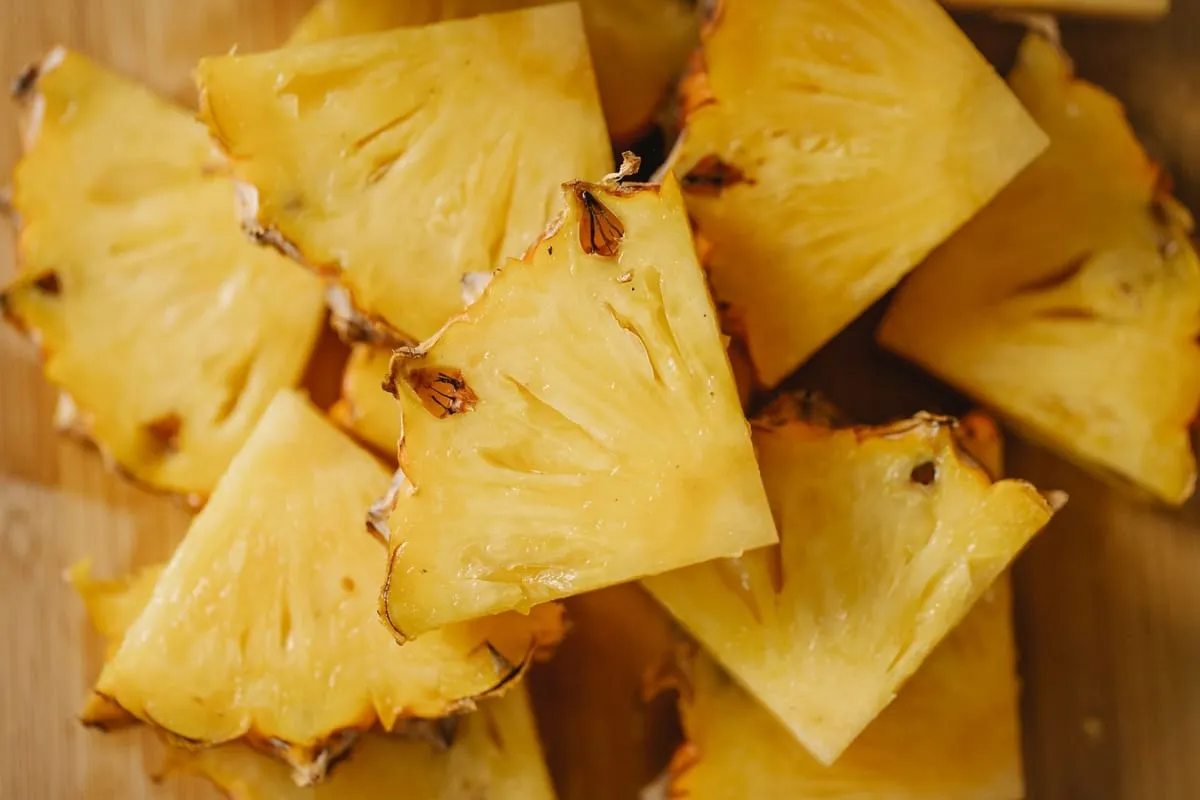
Yes, dogs can eat pineapple, and fresh pineapple flesh is a safe treat in small amounts. It has to be prepared properly though: the tough skin, woody core and spiky crown all need to come off first, and the amount matters more than with some other fruits, because pineapple is sweeter and more acidic than an apple or a banana. Get those two things right and it is a perfectly good occasional treat.
The short answer
Fresh, plain pineapple flesh is fine for most dogs in small quantities, a couple of small chunks rather than a bowlful. Skip the skin, the hard core, and the spiky green crown, and skip canned pineapple in syrup and most dried pineapple, since both usually carry far more sugar than the fresh fruit does. If your dog has diabetes, pancreatitis, or is already overweight, treat pineapple as an occasional rare exception rather than a regular snack, or ask your vet first.
How much is safe
A couple of small chunks for a medium or large dog, and a smaller piece still for a little dog, is a sensible serving. Pineapple is one of the sweeter fruits dogs are commonly given, more sugar per bite than apple or watermelon, so it earns a smaller portion even though the flesh itself is not toxic. The usual rule for any treat or extra applies here too: keep it to roughly a tenth of what your dog eats in a day, with the rest coming from a complete, balanced dog food. Pineapple is a garnish on top of the diet, not a food group in it.
How to serve it
Cut the crown off first, then the skin, working around the fruit the way you would for yourself, and slice out the tough, fibrous core running through the middle, which is difficult for dogs to chew or digest properly. What is left, the yellow flesh, is what you offer, cut into pieces sized for your dog so there is no choking risk. Fresh is best. Frozen chunks make a cooling treat on a hot day, much like the frozen watermelon trick, and freeze well since the texture holds up better than some other fruits.
When it becomes a problem
The core and the crown are the two parts to actually worry about. The core is tough and fibrous enough to be a choking hazard or, in a small dog, contribute to a blockage if swallowed in a large piece, and the spiky crown and skin are not meant to be eaten at all. Beyond the plant parts, the main risk is simply too much fruit at once: pineapple’s natural sugar can cause loose stools or an upset stomach in any dog given a large amount, and it is a genuine concern for dogs that are diabetic, prone to pancreatitis, or already carrying extra weight, where the sugar and calories add up faster than they should. Canned pineapple in syrup and sugared dried pineapple make all of this worse and are best avoided entirely.
What to do if they had too much
A dog that gets into a larger amount of pineapple flesh than intended will most likely end up with a mild, temporary upset stomach or looser stools for a day, which usually settles on its own with access to water and a normal light meal. Keep an eye on them and call your vet if you see repeated vomiting, diarrhea that does not settle within a day or so, obvious pain, or lethargy, particularly in a dog with diabetes, a history of pancreatitis, or any dog that managed to swallow a piece of the hard core, since that raises the chance of a blockage rather than just an upset tummy.
Does pineapple really stop dogs eating poop?
It is one of the most searched pineapple-and-dog questions, and the honest answer is that there is no good evidence behind it. The idea going around is that pineapple makes stool smell or taste bad enough to put a dog off eating it, but this is an internet home remedy rather than anything backed by veterinary research, and in practice plenty of dogs eat stool from a pineapple-fed dog without any hesitation at all. If your dog eats poop, pineapple is not a reliable fix. It is worth working out why it is happening instead, since coprophagia usually has a real cause behind it, from boredom to a nutrient gap to simply mimicking behaviour learned as a puppy. Our guide on why dogs eat poop goes through the common causes and what actually helps.
So, can dogs eat pineapple? Yes, as an occasional treat, fresh, in small pieces, with the skin, core and crown removed. It is one of the sweeter fruits on the safe list, so smaller portions and less often than apple or watermelon is the right way to think about it. For where pineapple sits against the rest of what dogs can safely eat, see our guide to safe and toxic foods for dogs, and for more fruit-by-fruit answers, our guides to apples, avocado and bananas.
Common questions
- Can dogs have pineapple, or is it only fine in theory?
- They can, in practice as well as in theory. Plain fresh pineapple flesh, given in small amounts with the skin, core and crown removed, is a genuinely safe treat for most dogs. It is the syrup, sugar and awkward parts that cause the trouble, not the fruit itself.
- Can dogs eat canned or dried pineapple?
- Better to avoid both. Canned pineapple usually sits in sugary syrup or juice that adds far more sugar than a dog needs, and most dried pineapple sold for people has sugar added and coated on top during drying, plus a chewy, sticky texture that is more of a choking risk than fresh fruit. Fresh or plain frozen chunks are the safer choice.
- Does pineapple actually stop a dog eating poop?
- There is no real evidence for it. The idea is that pineapple makes stool taste unpleasant enough to put a dog off, but it is an old home remedy passed around online rather than something backed by research, and plenty of dogs eat pineapple-fed stool without any hesitation. If your dog eats poop, it is worth working out why, rather than relying on a fruit to mask it.
- My dog's mouth seemed irritated after eating pineapple. Is that normal?
- It can happen. Fresh pineapple contains bromelain, an enzyme that can cause mild tingling, drooling or lip-licking in some dogs, similar to the reaction some people get. It is usually harmless and passes quickly, but if you see swelling, real distress or it happens every time, skip pineapple for that dog and mention it to your vet.