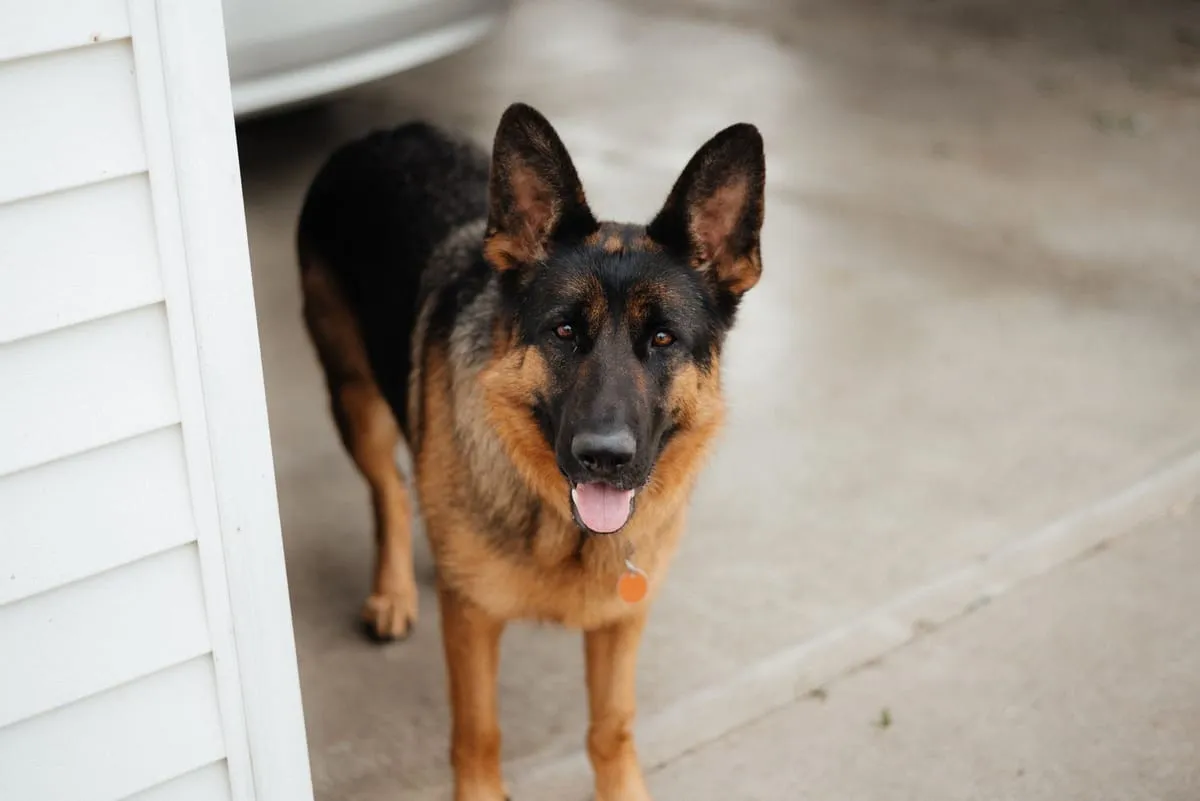
Few breeds carry a reputation as solid as the German Shepherd’s, loyal, clever, endlessly trainable. Most of that holds up in practice, which is exactly why the breed ends up in so many working roles, from police and military dogs to guide dogs. What the reputation leaves out is how much that intelligence and drive actually demands day to day, and how a Shepherd left without enough of either tends to turn that cleverness against you. Here is the honest version of what living with one is like.
Temperament
German Shepherds were bred as versatile working and herding dogs, and that working brain is still the defining trait of the breed today.
Typically they are confident, watchful, and deeply loyal to their own family, forming a strong bond with their people rather than being instantly friendly with everyone they meet the way a Labrador might be. That is not the same as being unfriendly. A well-socialised Shepherd is usually polite and settled around strangers, just naturally more assessing than instantly affectionate, and the protective instinct that makes the breed a good watchdog is exactly why early, consistent exposure to new people, dogs, and places matters so much in the first year. A Shepherd that misses out on that socialisation is more likely to grow up wary or reactive rather than confidently protective, and that difference comes down almost entirely to the work an owner puts in early on.
Exercise and mental work
A German Shepherd’s biggest need, and the one most likely to catch new owners out, is how much mental work it wants on top of physical exercise.
As adults, Shepherds generally need well over an hour of exercise a day, and a plain walk around the block does not come close to using up what this breed has to offer. They were bred to work all day, herding, patrolling, problem-solving, and a modern pet Shepherd still carries that drive even with none of the job to burn it off on. Training sessions, scent work, a proper recall game, or a task like carrying items on a walk all give a Shepherd’s brain something to do, and that mental tiredness matters as much as the physical kind. Skip it and a smart, athletic dog with energy to spare tends to find its own outlet, often destructive chewing, excessive barking, or fence-pacing, none of which are a flaw in the dog so much as a sign the job it was bred for has gone unfilled.
The coat, and the truth about shedding
German Shepherds carry a dense double coat, a coarser weatherproof outer layer over a thick undercoat, and it sheds steadily all year with two heavier seasonal blowouts.
Brushing two or three times a week is the realistic baseline to keep loose undercoat from matting and off the furniture, and during a heavy moult that can mean daily brushing just to keep pace. This is not a low-maintenance coat, and anyone who finds dog hair genuinely intolerable should weigh that honestly before falling for the breed’s other qualities. The everyday grooming routine that works for most dogs applies here, just more often and with a proper undercoat tool in the kit.
Health, honestly
This is the part of the German Shepherd conversation that deserves more attention than the breed’s tough reputation usually gets it.
Hip and elbow dysplasia are well documented in the breed, and choosing a breeder who health-tests the parents’ joints is one of the most meaningful things you can do to lower the odds. Shepherds are also deep-chested dogs, which puts them among the breeds at raised risk of bloat, a genuine emergency that is worth recognising the signs of before you ever need to. Less widely known outside the breed is degenerative myelopathy, a progressive disease of the spinal cord that some Shepherds develop later in life, gradually affecting their back legs. It is not curable, though a genetic test exists and responsible breeders screen for it. None of this should scare anyone off a healthy, well-bred Shepherd, but it is worth knowing in advance rather than being blindsided by it, and it is a good reason to ask a breeder directly about the health testing behind a litter. Keeping a Shepherd lean also matters more than owners tend to assume, since carrying extra weight adds real strain to joints that may already be working against the odds, and it is worth knowing the signs of arthritis as the breed reaches its senior years.
Who they suit
A German Shepherd suits an active, committed household that wants a genuinely intelligent, trainable dog and is realistic about the time that intelligence demands, daily exercise well past an hour, regular training or mental work, and a serious brushing routine. They are a strong match for people who enjoy dog sports, structured training, or simply having an engaged working partner rather than a passive companion, and for families prepared to put in the early socialisation that shapes a confident, well-rounded adult. They are a poor match for anyone wanting a low-maintenance dog, unable to commit real time to exercise and training, or hoping a strong protective instinct will substitute for that groundwork rather than being built on top of it. Weighing a Shepherd against other options is worth doing properly, and our wider guide on choosing the right dog for your life is a useful companion to this one.
Get the exercise, the training, and the health screening right, and a German Shepherd gives back one of the most capable, loyal companions there is, a dog that genuinely wants to work with you rather than just live alongside you. That reputation is earned. It just comes with more daily demands than the calm, confident dog on the poster tends to let on.
Common questions
- Are German Shepherds good family dogs?
- Generally yes, with the right upbringing. German Shepherds tend to be deeply loyal and protective of their own household, and most are gentle and patient with children they have grown up around. The protective instinct means early, ongoing socialisation with new people, dogs, and situations matters more than it does for a naturally easygoing breed, since an under-socialised Shepherd can become wary or reactive rather than confidently friendly.
- Are German Shepherds aggressive?
- Not by nature. A well-bred, well-socialised German Shepherd is confident and watchful rather than aggressive, and the breed's reputation as a guard and police dog comes from trainability and a strong protective instinct, not a hair-trigger temper. Problems tend to trace back to poor breeding, a lack of early socialisation, or an intelligent dog left without enough exercise or mental work, all of which are on the owner to get right.
- How much do German Shepherds shed?
- A lot, and it is fairly constant rather than just seasonal. Shepherds carry a dense double coat that sheds year-round with two heavier blowouts a year, so brushing two or three times a week is realistic, more during a moult. Anyone who cannot live with dog hair on the floors and furniture should think carefully before choosing this breed.
- What health problems are German Shepherds prone to?
- Hip and elbow dysplasia are the best-known concerns, and buying from a breeder who health-tests the parents' joints meaningfully lowers the risk. German Shepherds are also deep-chested, which puts them among the breeds at higher risk of bloat, and they have a notable rate of degenerative myelopathy, a progressive spinal cord disease that affects mobility in older dogs. None of this rules the breed out, but it is worth knowing before you commit rather than after.