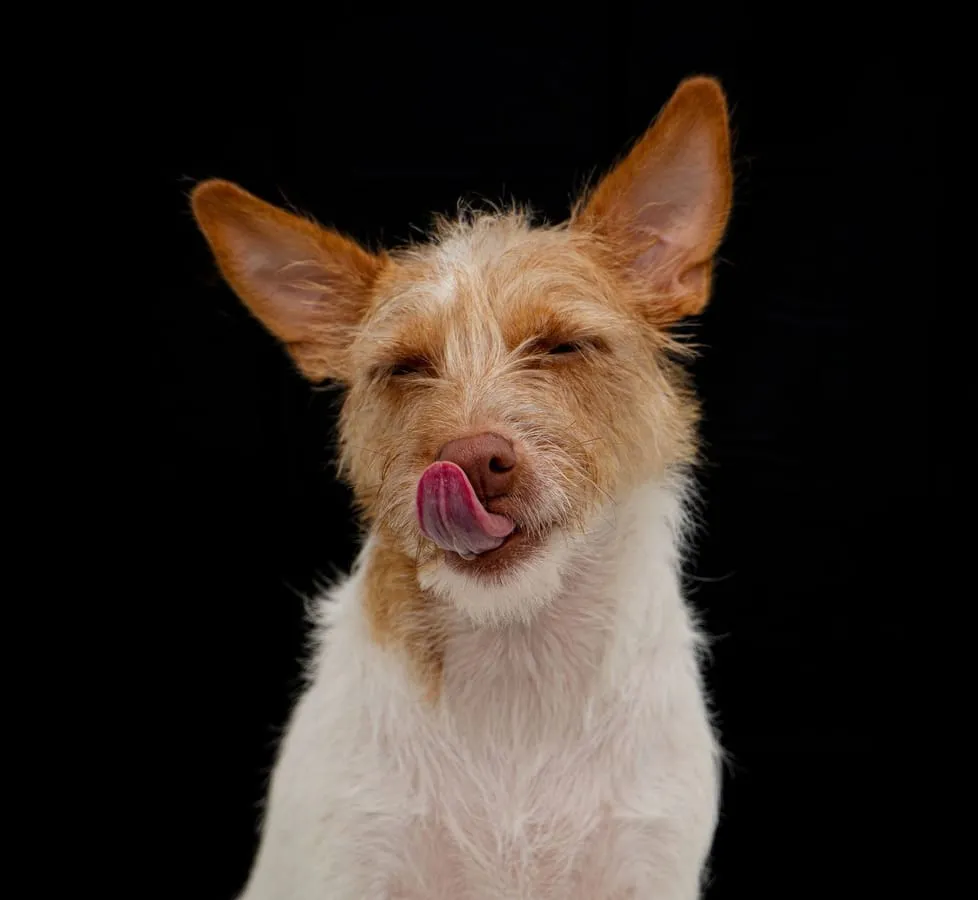
Ask ten owners why dogs lick people and you will get ten confident answers, most of them at least half wrong. As a trainer I spend a surprising amount of time translating this one behaviour, because licking is not one message, it is a whole vocabulary. The good news is that it is usually easy to read once you know what to look for, and easy to dial down if your dog has turned it up to eleven.
The friendly reasons, which cover most dogs
Most licking is some blend of affection, greeting, and plain old taste.
Licking is baked in early. Puppies are licked by their mothers from their first minutes, and they lick back as part of bonding, so for an adult dog, licking a trusted human is a natural extension of family behaviour. Add the fact that human skin is genuinely interesting, salty from sweat and carrying every smell you have brushed past all day, and a certain amount of licking is just a dog enjoying its favourite person. A relaxed body, soft eyes, and a wagging rear end alongside the licking tell you it is the friendly kind.
The tactical reasons, your dog has trained you
The next tier of licking is less about love and more about results, and this is the kind most owners want to reduce.
Dogs repeat what works. If a lick reliably gets eye contact, a laugh, a fuss, or even a theatrical “yuck, stop it”, the lesson lands: licking makes the human respond. Over time that becomes a go-to move whenever your dog is bored or wants something, exactly like jumping up, which runs on the same fuel. Some dogs also lick as a polite appeasement gesture when they are slightly unsure, a way of saying no trouble here, friend. That version tends to come with lowered ears and a softer, quicker lick.
When licking is worth a closer look
A minority of licking is a flag worth taking seriously, and the direction of the licking is your best clue.
Frantic licking of the air, floors, or furniture that the dog struggles to switch off can point to nausea or anxiety, and licking that spikes when you prepare to leave the house often belongs to the separation anxiety picture. As always, sudden changes matter more than habits your dog has had for years.
How to dial it down without being unkind
You do not need to ban licking, just to stop paying it a wage.
When the tongue starts, go quiet and neutral, turn away, or stand up, and give warm attention back the moment the licking stops. Be consistent, because an intermittent payoff actually strengthens a habit. Then fill the gap: a properly exercised, mentally busy dog simply has less licking in it, so up the walks, add some training games, and give the urge a legal outlet like a licking mat or a stuffed food toy, and our roundup of the best toys for a bored dog has solid options. Most dogs meet you halfway within a couple of weeks, keeping the affectionate hello and losing the full face-wash.
Common questions
- Does my dog licking me mean it loves me?
- Partly, yes. Licking starts in puppyhood as a bonding behaviour between mother and pup, and adult dogs carry it into their relationships with people. A relaxed dog giving you a few licks during a cuddle is genuinely being affectionate. But licking is also a tool your dog uses to get attention, to taste interesting skin, and sometimes to say it is a little unsure, so the meaning depends on the moment more than the lick itself.
- Why does my dog lick me when I get home?
- The homecoming lick-fest is usually a mix of genuine excitement, greeting behaviour inherited from puppyhood, and the simple fact that it works, since most of us respond with attention, fuss, and a happy voice. Your skin also carries a day's worth of fascinating smells and a salty taste. If the greeting is friendly and your dog settles quickly afterwards, there is nothing to fix.
- How do I stop my dog licking me constantly?
- Quietly remove the reward. When the licking starts, calmly withdraw your attention, stand up or turn away, and give attention back the moment the licking stops. Pair that with more exercise and mental work, since bored dogs lick more, and offer a better outlet such as a food puzzle or a licking mat, which satisfies the urge without you being the target. Avoid telling the dog off, because for an attention-seeking licker, even a scolding counts as a win.
- When is dog licking a sign of a problem?
- Watch for licking that is directed at the dog itself rather than you, especially one spot such as a paw or joint being licked raw, which often points to pain, itchiness, or allergy and deserves a vet visit. Constant, frantic licking of you, the air, or objects that the dog cannot seem to switch off can signal anxiety or, occasionally, nausea. A sudden change in licking habits is always more meaningful than a long-standing one.