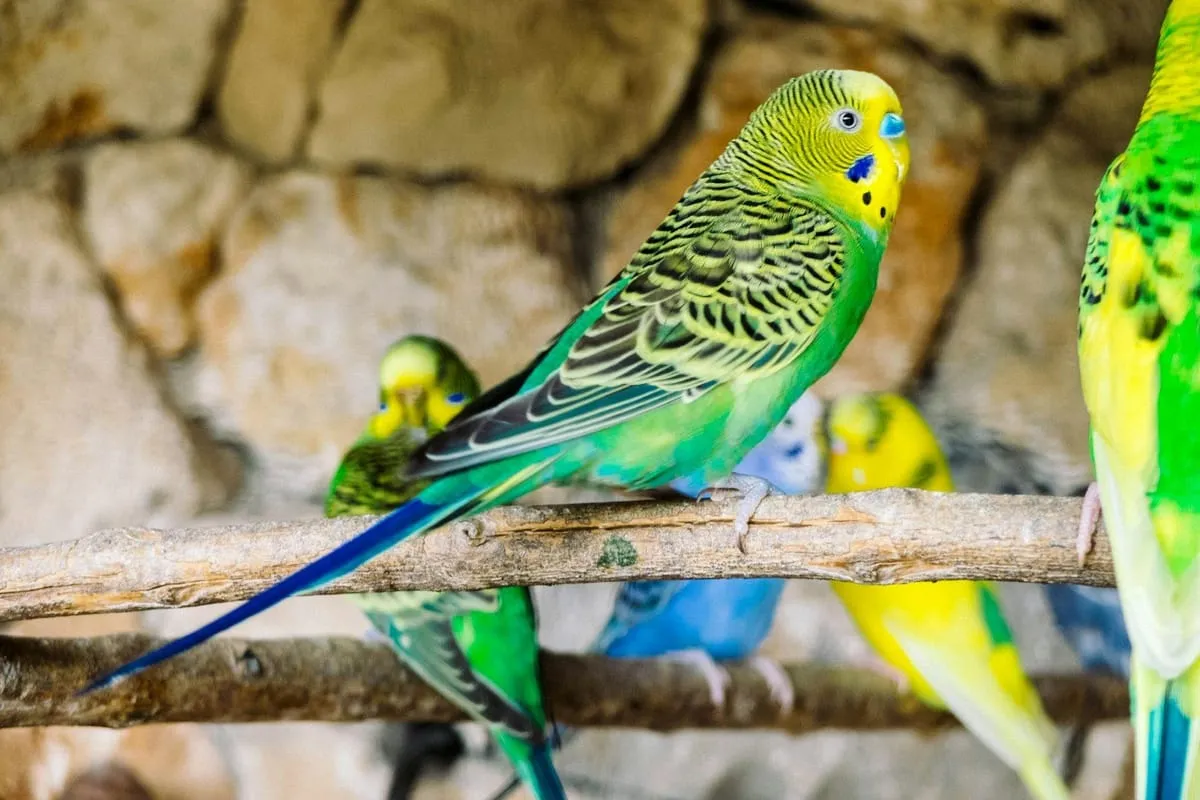
The budgie, or budgerigar, is Britain’s favourite small parrot and one of the most popular pet birds in the world, and it deserves a great deal more respect than it often gets. Too many budgies still live the old-fashioned life of a lone bird in a small cage, treated as a low-effort ornament rather than the intelligent, social little parrot it actually is. Given what they really need, budgies are wonderful pets, tame, affectionate, playful, and surprisingly capable, and they can live well over a decade. This is a proper care guide to help a budgie thrive rather than merely survive.
More than a cage ornament
The first thing to understand about budgies is that they are genuine parrots, with a parrot’s intelligence and social nature, just in miniature.
Behind the small size and modest price is a bright, active, sociable bird that forms bonds, enjoys interaction, plays, problem-solves, and, in many cases, learns to mimic speech, sometimes with impressively large vocabularies. Treated well, budgies become tame and affectionate companions with real personality. The old image of the budgie as a decorative bird that sits quietly in a corner cage doing very little is not a reflection of the animal but of how it has too often been kept. When people say a budgie is “just a budgie”, they are usually describing a bird whose needs have not been met. Approached as the little parrot it is, with the company, stimulation, and care that implies, a budgie reveals itself to be a far more engaging and rewarding pet than its humble reputation suggests, which is exactly why they are worth doing properly.
Company and space
Two of a budgie’s most important and most often neglected needs are company and room, and getting these right transforms a budgie’s life.
Budgies are flock birds, highly social by nature, and in the wild they live in large, active groups. That social drive does not disappear in captivity, so most budgies are happier and healthier with the company of at least one other budgie, and a lone budgie kept without much interaction can become lonely and dull. It is possible to keep a single budgie if you can genuinely provide a great deal of daily company yourself, effectively becoming its flock, but for many households a pair or small group is the kinder choice. Alongside company comes space: budgies are active fliers and need a cage that is as large as possible, wider rather than taller so they can fly across it, plus daily time out in a safe, bird-proofed room to properly stretch their wings. A cramped cage with no flight time is one of the commonest ways budgies are let down.
Diet, the big health issue
If there is one thing that most affects a budgie’s health and lifespan, it is diet, and it is where the most common mistakes are made.
The traditional budgie diet of nothing but seed is a genuine health problem, high in fat and lacking many of the nutrients a budgie needs, and it contributes to obesity, fatty tumours, and shortened lives, which is why so many budgies sadly die young. A far better diet is balanced: appropriate formulated pellets to provide complete nutrition, plus a daily variety of suitable fresh vegetables and greens, with seed as a part of the mix rather than the entire diet. Moving a budgie off all-seed can take patience, as they can be stubborn about new foods, but it is one of the most valuable things you can do for the bird, and the approach is the same as for any bird, covered in why an all-seed diet is bad for your bird. Fresh water, and safe items to forage and chew, round out a good diet. Get the diet right and you address the leading cause of premature death in pet budgies.
Enrichment, and who they suit
Finally, budgies need mental stimulation like any parrot, and it is worth being clear about the commitment before taking one on.
An intelligent, active bird needs things to do, so a budgie’s home should include a variety of safe toys, things to chew and forage, opportunities to climb and play, and regular interaction, whether from you or from budgie companions, along the lines of keeping a parrot from getting bored. A bored budgie in a bare cage is an unhappy budgie. As for who they suit: budgies are an excellent choice for beginners and families who understand they are taking on a proper little parrot, can provide company or companions, a large cage with flight time, a good diet, and daily enrichment, and are ready for a bird that may live well over a decade. They are not the effortless, disposable pets they are sometimes sold as, and anyone wanting a bird that needs nothing should reconsider.
Given what they actually need, budgies are among the most rewarding of all pet birds: characterful, affectionate, capable, and long-lived, and accessible in a way larger parrots are not. The key is simply to treat the budgie as the intelligent, social creature it is rather than the ornament tradition made of it. Provide company, space to fly, a proper diet beyond seed, and plenty to do, and a budgie will repay you with years of genuine companionship and personality, which is a great deal of bird for such a small and unassuming package.
Common questions
- Are budgies good pets for beginners?
- Yes, budgies are one of the best starter birds, being small, affordable, hardy, and full of personality, and they can become very tame and even learn to talk. But they are proper little parrots with real needs, company, space, a good diet, and enrichment, not the low-effort ornaments they are often treated as.
- Should budgies be kept alone or in pairs?
- Budgies are highly social flock birds and generally do much better with the company of at least one other budgie. A lone budgie can be kept if you can give it a great deal of daily interaction to stand in for a flock, but for most people a pair or small group is kinder and happier.
- What should budgies eat?
- Not just seed. An all-seed diet is a common cause of ill health in budgies. They do best on a balanced diet that includes appropriate formulated pellets and a daily variety of suitable fresh vegetables and greens, with seed as part of the mix rather than the whole of it.
- How long do budgies live?
- Longer than many people expect, often into their early teens with good care, though sadly many die younger due to poor diet and husbandry. Given the right diet, space, company, and care, a budgie is a commitment of well over a decade, not a short-lived throwaway pet.