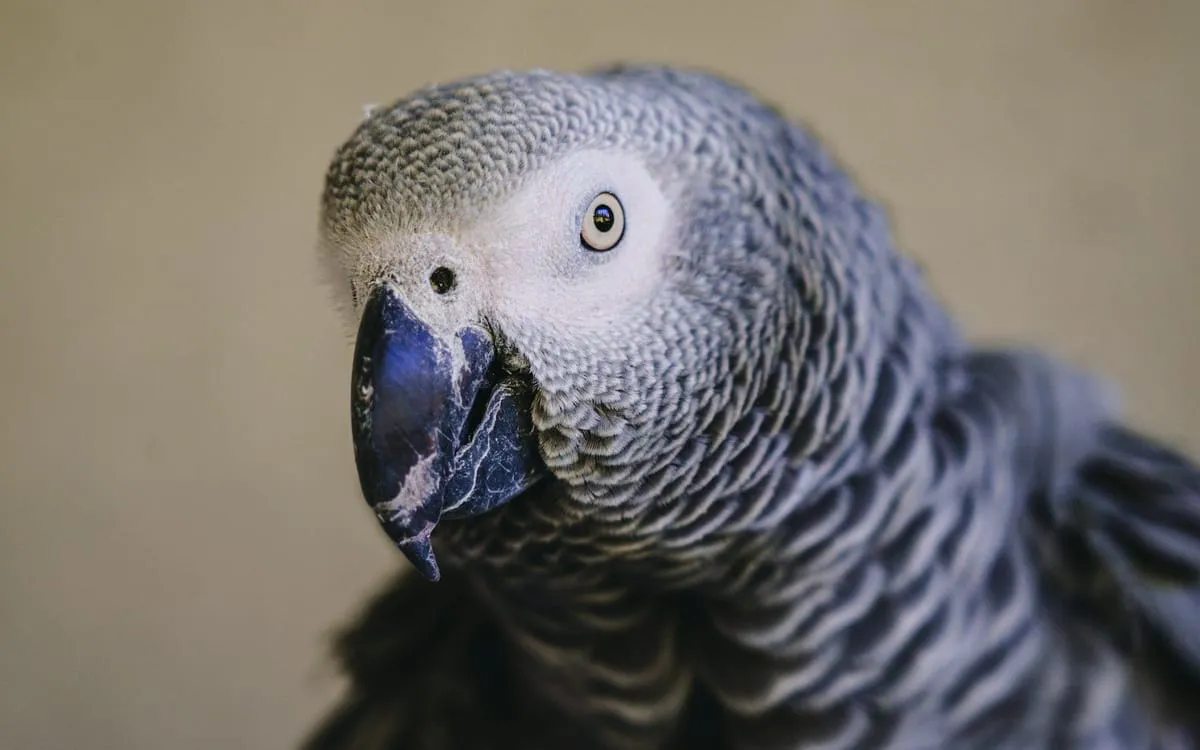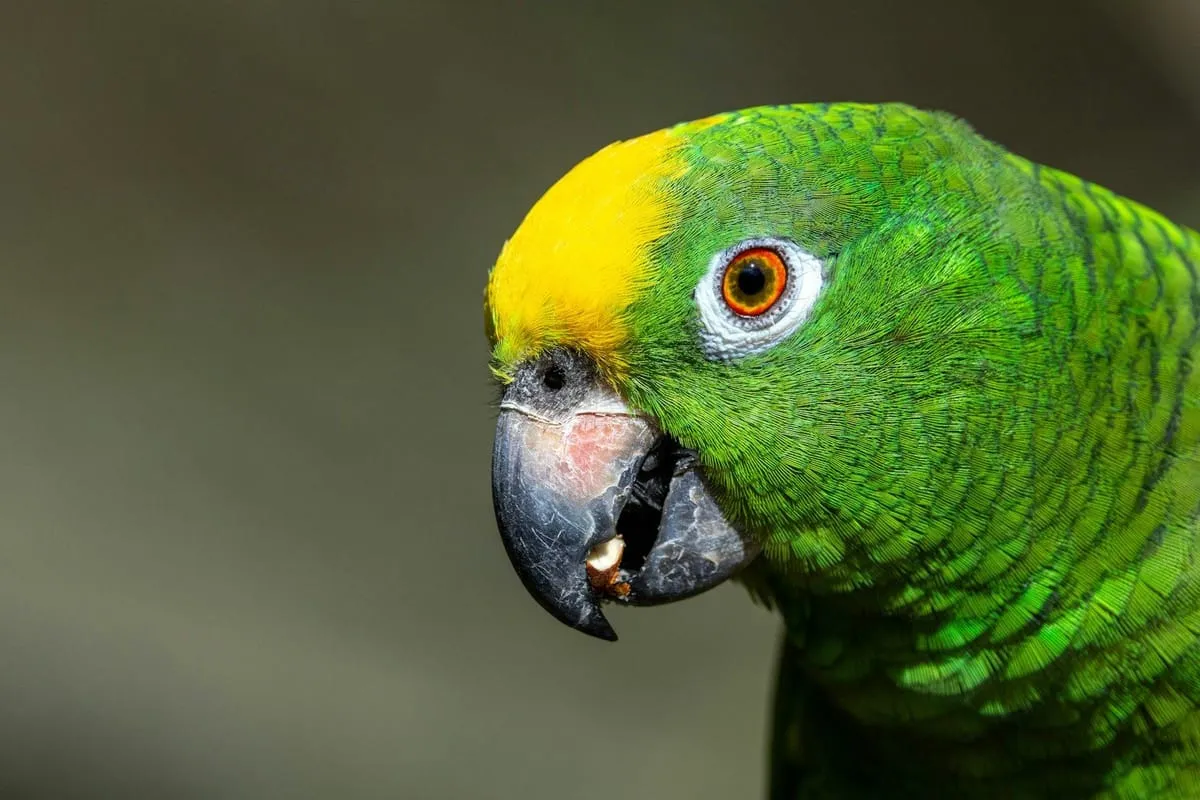
A parrot is not a decorative pet that sits in a cage looking pretty. It is one of the most intelligent animals you can keep, with roughly the problem-solving of a young child and a beak evolved to crack, pry, and demolish. Give that mind and that beak nothing to work on and they do not switch off. They turn inward, into screaming, feather plucking, and the kind of frustration that makes a bird miserable and its owner despair. Keeping a parrot occupied is not spoiling it. It is meeting the central need of the animal.
Why a bored parrot goes wrong
To understand why enrichment matters so much, look at what a parrot’s day is actually built for, because a cage removes almost all of it.
In the wild, a parrot spends the bulk of its waking hours on the move: flying, foraging for food that takes real effort to find and open, interacting constantly with its flock, and chewing through vegetation. It is busy, all day, using its brain and body. A pet parrot has its food handed to it in a bowl in seconds, cannot fly far, and often spends long stretches alone. All that time and intelligence has nowhere to go, and an idle parrot mind does not stay idle quietly. It produces the screaming, the plucking, the pacing, and the aggression that fill the rescues I volunteer at. Nearly every one of those birds was bright and under-occupied.
So this is the frame for everything that follows: you are not entertaining a bird, you are replacing a full day’s worth of natural work.
Make it forage for its food
The single most powerful thing you can do is stop giving food away for free, because foraging is the activity a wild parrot spends most of its day on.
Instead of a full bowl, make your bird work for its meals. Wrap portions in paper it has to tear open, hide food inside foraging toys it must manipulate, skewer vegetables on a holder, or scatter it so the bird has to search. You are turning a two-minute meal into an hour of the exact activity the bird is built for, and it is genuinely absorbing for them. Start easy so the bird understands the game and does not give up hungry, then make it gradually harder as it gets the idea. A parrot that spends its day foraging for its food is a calmer, quieter, more content bird, and it is the closest thing to a cure for boredom problems there is.
Variety, rotation, and destruction
Beyond foraging, a good toy collection covers a few different jobs, and the trick that keeps any of it working is rotation.
Give destructible toys, made of bird-safe wood, paper, palm, and leather, that the bird is meant to chew and shred to bits, because destroying things is a natural, satisfying parrot behaviour and far better aimed at a toy than your furniture. Give puzzle and manipulation toys that make the bird figure something out. And provide plenty to chew, which keeps the beak busy and healthy. The essential move is to rotate them: a toy that has been in the cage for a fortnight is invisible to the bird, while the same toy brought back after a week away is fascinating again. Keep a box of toys and swap a few every few days, and a modest collection feels endlessly new. When you are ready to build that collection, our bird toys and enrichment picks are chosen with chewing, foraging, and problem-solving in mind.
Time out, and company
Finally, no amount of kit replaces the two things a parrot wants most: freedom to move and the company of its flock.
Give your bird as much supervised out-of-cage time as you safely can, in a bird-proofed room, because the exercise and change of scene do enormous good and the cage, however large, is still a cage. And remember that you are the flock. Parrots are intensely social, and a bird left alone all day in a quiet house suffers for it however many toys it has. Talk to it, involve it in your day, let it be near you. The enrichment fills the hours it is occupied on its own, but the relationship is the thing underneath all of it.
Put those together, forage for the food, a rotating spread of things to shred and solve, real time out, and genuine company, and most of the classic parrot problems shrink or never appear. A parrot is a big commitment precisely because of this: a bright, long-lived animal that needs its mind fed every single day. Meet that need and you have a wonderful companion. Ignore it and no cage is big enough.
Common questions
- Why does my parrot need so many toys?
- Parrots are highly intelligent and in the wild spend most of the day foraging, problem-solving, and chewing. A cage with nothing to do leaves that mind idle, which leads to screaming, feather plucking, and other problems. Toys and foraging give the intelligence somewhere to go.
- What kind of toys are best for parrots?
- A mix. Foraging toys that make the bird work for food, destructible toys it can shred and chew, and puzzle or manipulation toys that make it think. Rotate them so they stay novel, and match the size and materials safely to your species.
- Can boredom cause feather plucking?
- It can be one cause, along with stress and health problems. A bored, under-stimulated parrot may start plucking its own feathers, and once it becomes a habit it is very hard to reverse. Plucking always warrants an avian vet check to rule out medical causes first.
- How much time out of the cage does a parrot need?
- As much as you can safely give, ideally several hours a day of supervised out-of-cage time in a bird-proofed space. No cage, however large, replaces the exercise, interaction, and stimulation a parrot gets from being out with its flock, which is you.