A good bird diet is built on a balanced base with plenty of fresh food around it, so sharing fruit and vegetables with your bird is not just allowed, it is part of feeding it well. But the same variety that makes fresh food valuable also means a bird can be offered something harmful, and while most fresh produce is safe, a handful of items are dangerous and one in particular can kill. Knowing clearly which foods are safe to share and which to keep well away takes the worry out of offering fresh food and, more importantly, protects your bird from a serious mistake.
As ever, I am not a vet, individual species differ in what suits them best, and if your bird eats something toxic you should contact an avian vet straight away rather than waiting to see what happens.
The one to never forget: avocado
If you remember only one thing from this article, make it this, because it is the food most likely to catch an owner out with tragic results.
Avocado is genuinely toxic to birds. It contains a compound that birds cannot handle, and it can cause serious illness and death, sometimes quite quickly. This matters more than it might seem, because avocado is everywhere in modern food, in guacamole, on toast, in salads and wraps and sandwiches, so it is easy for a bird sharing your meal or your kitchen to encounter it without you thinking about it. There is no safe amount to offer, so the rule is simple and absolute: birds and avocado never mix. Keep it off any food you share, and be mindful of it when a bird is out and about near your plate.
The other foods to avoid
Beyond avocado, several other foods are harmful to birds and should not be shared, and most of them are the same culprits that cause trouble for other pets.
Chocolate is toxic to birds as it is to dogs and cats, so no chocolate in any form. Caffeine, in coffee, tea, and energy drinks, and alcohol of any kind are both dangerous and off-limits. Very salty foods are harmful to a bird’s small body, which rules out crisps, salted snacks, and heavily seasoned food. High-sugar and highly processed human foods are poor choices too, offering nothing good and potentially causing harm. Onion and garlic in any quantity are best avoided. And fruit pips and stones, the seeds of apples and pears, cherry and other stone-fruit pits, contain compounds worth steering clear of, so remove them before offering the fruit. None of these belong in a bird’s diet, and because several overlap with everyday human food, the safest habit is to only ever share things you have positively confirmed are safe, rather than assuming something is fine because it seems harmless.
What is safe and good to share
The reassuring news is that a wide range of fresh foods are not only safe but genuinely good for birds, so avoiding the dangers still leaves plenty to offer.
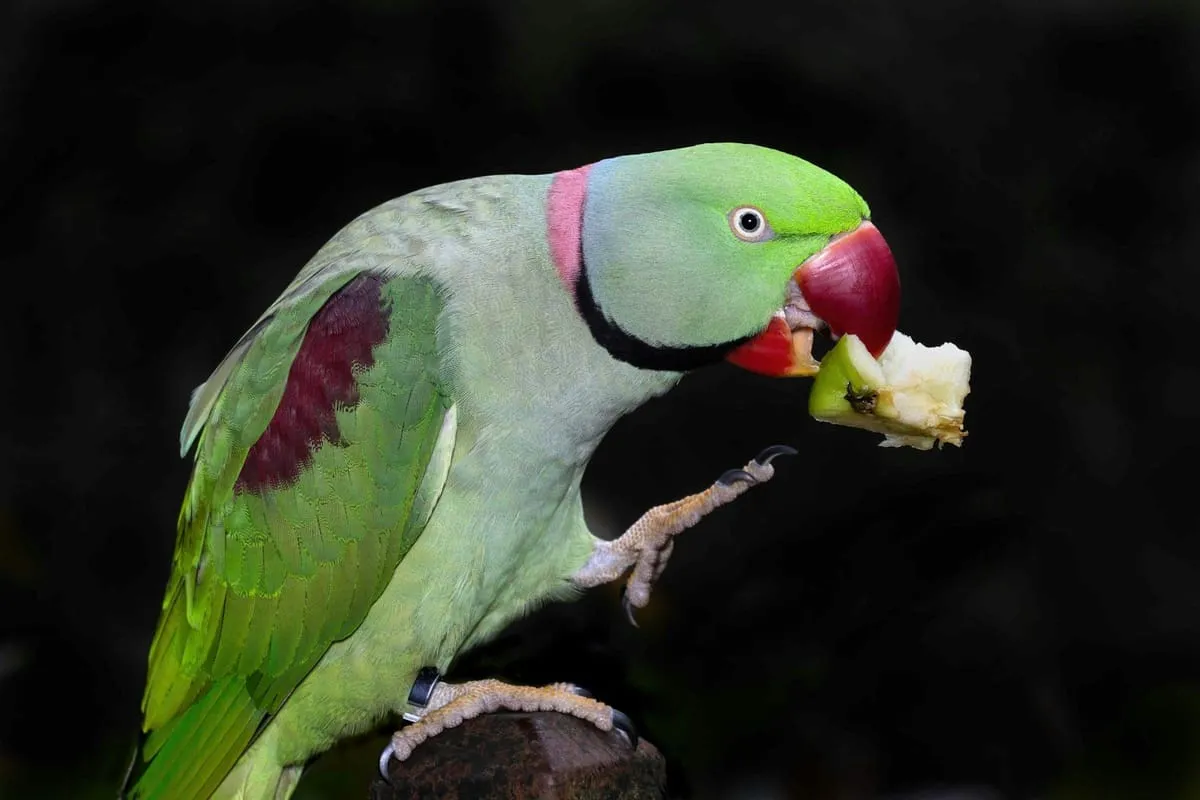
Many vegetables are excellent, leafy greens, peppers, carrot, broccoli, courgette, and others, and fresh vegetables in particular deserve to be a regular, daily part of most pet birds’ diets rather than an occasional treat. A good range of fruits is safe and enjoyed too, apple with the pips removed, berries, melon, banana, and more, offered in moderation since fruit is sugary. Cooked, plain wholegrains and pulses suit some species. Offering a varied selection of safe fresh foods adds nutrition, moisture, and valuable enrichment, since foraging through a mix of chopped vegetables is mentally engaging as well as nourishing. The best specific mix does depend on the species, some birds need more of certain foods than others, so it is worth learning what suits your particular bird, but the general direction, plenty of varied fresh vegetables with some fruit, is right for most.
Sharing food sensibly
Putting it together, sharing fresh food with your bird is a good thing done within a couple of simple rules, and keeping those rules clear is what makes it safe rather than risky.
Offer plain, fresh, bird-safe fruits and vegetables as a regular part of the diet, remove pips and stones, and keep fruit in moderation because of its sugar. Never share the dangerous foods, avocado above all, and steer clear of chocolate, caffeine, alcohol, salty, sugary, and processed foods. And do not simply feed a bird whatever is on your plate, since cooked, seasoned human dishes are usually too salty, fatty, or processed even when they contain nothing outright toxic. Stick to safe, plain fresh items you have checked, and you get all the nutritional and enrichment benefits of fresh food with none of the risk.
This fits alongside the bigger picture of feeding a bird well, which starts with getting off an all-seed diet and onto a balanced base of pellets and fresh food, the subject of why an all-seed diet is bad for your bird. Fresh foods are the healthy, varied part you build on top of that base, and shared sensibly they are one of the pleasures of keeping a bird, for you and for it. Just keep that one absolute rule about avocado front of mind, because it is the food most likely to turn a kind gesture into a disaster, and it is entirely avoidable once you know.
Common questions
- What foods are toxic to birds?
- Avocado is the most important, it is genuinely poisonous to birds and can be fatal. Also avoid chocolate, caffeine, alcohol, very salty or sugary foods, and anything with a lot of fat or additives. Onion and garlic in quantity are best avoided too. These should never be shared with a bird.
- What fresh foods can birds eat safely?
- Many vegetables, leafy greens, peppers, carrot, broccoli, and others, and a range of fruits like apple (without the pips), berries, and melon, are safe and healthy in moderation. The exact best mix depends on the species, so it is worth checking what suits your particular bird.
- Can birds eat apple seeds or fruit pips?
- The flesh of apples and many fruits is fine, but the seeds and pips of apples, pears, cherries, and some stone fruits contain compounds best avoided, so remove them. The fruit itself is a healthy treat once the pips and stones are taken out.
- Is it safe to give my bird human food from my plate?
- Some plain fresh items are fine, but a lot of human food is too salty, fatty, sugary, or processed for a bird, and some is toxic. Share only safe, plain fresh foods you know are suitable, not seasoned or cooked dishes off your plate, and keep portions sensible.