Few pets are as misunderstood as the goldfish. The image of a goldfish circling a little bowl is one of the most familiar in all of pet keeping, and it is thoroughly, harmfully wrong. Goldfish are not disposable ornaments that belong in bowls. They are large, long-lived, messy fish that need a big, well-filtered tank to have any chance of a healthy life, and the gulf between that reality and how they are sold is why so many goldfish die young or live stunted and unwell. This guide sets out honest goldfish care, so that a fish so often let down can actually thrive.
The bowl is the problem
The single most important thing to understand about goldfish is that the traditional way of keeping them is the very thing that harms them.
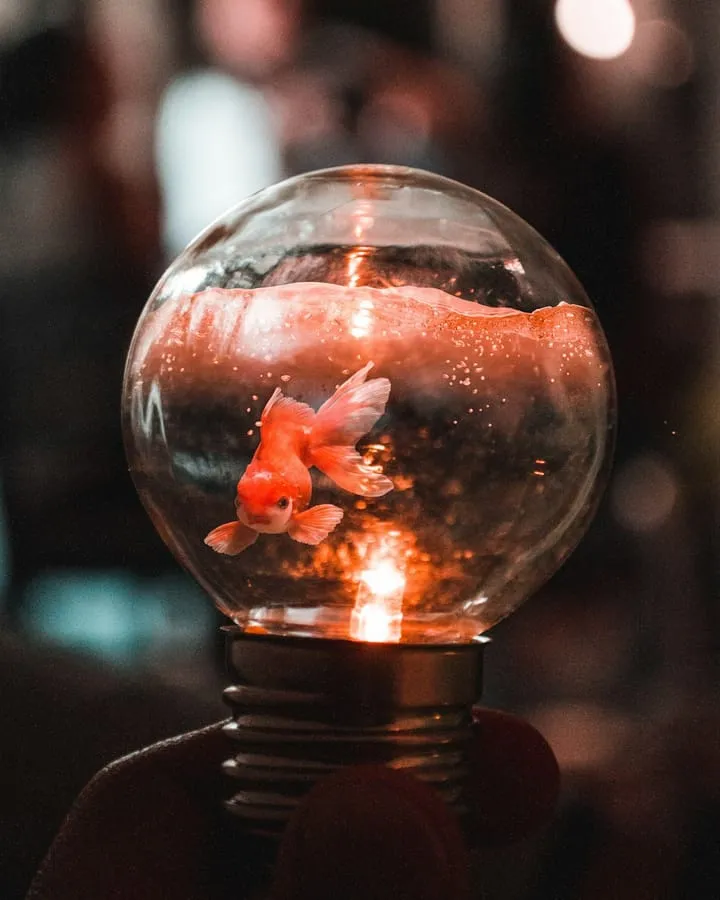
A goldfish bowl fails a goldfish on every count that matters. It is far too small for a fish that grows large and needs room to swim. It has no filtration, yet goldfish are heavy waste producers whose water fouls quickly. And its tiny volume swings in temperature and chemistry and concentrates toxins in a way that constantly stresses the fish. The result is predictable: bowl-kept goldfish commonly suffer poor water, stunted growth, chronic stress, disease, and early death, and the fish that “only lived a few months” was almost always a victim of its bowl rather than bad luck. So goldfish care really begins by rejecting the bowl entirely. Everything good you can do for a goldfish follows from giving it a proper tank instead, and almost every goldfish welfare problem traces straight back to that little bowl and the myth behind it.
Big fish that live a long time
To grasp why goldfish need so much more than a bowl, you have to understand what they actually are: big, long-lived animals in a small package at the point of sale.
The little goldfish in the bag is a baby, and common goldfish can grow to a considerable size given the space and conditions to do so, far larger than the bowl-bound survivors most people ever see. They are also genuinely long-lived, capable of well over a decade and sometimes far more with good care, which makes a goldfish a real long-term commitment rather than a passing novelty. When goldfish stay small, it is usually not because that is their natural size but because poor conditions have stunted them, which is a sign of harm, not a convenient feature. So a prospective goldfish keeper should picture the large, long-lived fish the animal is meant to become, and provide for that, rather than the tiny, short-lived version the bowl produces. Planning for the real fish is the foundation of keeping one well.
A large, filtered tank
Given their size and messiness, the practical heart of goldfish care is a substantial, well-filtered tank, set up and maintained properly.
Goldfish need a large tank, considerably bigger than a bowl and bigger than most people assume, with strong filtration to cope with the heavy waste load these fish produce, since goldfish are famously messy and foul their water quickly. The exact size depends on the type and number of goldfish, but the honest answer is always a proper, generously sized aquarium, and goldfish are frequently better suited to larger tanks or outdoor ponds than to any indoor bowl or small tank. As with any fish, the tank must be cycled before the goldfish go in, and kept up with regular water changes and testing, following the same fundamentals as water changes and testing and why fish keep dying. One kindness worth noting: because goldfish are so messy and grow so large, it is easy to overstock, so err on the side of fewer fish in more water. A large, filtered, lightly stocked, well-maintained tank is exactly what a goldfish needs and exactly what the bowl cannot provide.
Cold-water, sociable, and rewarding
Finally, a few points about goldfish nature round out how to keep them well, and show what a good goldfish setup gives you.
Unlike tropical fish, goldfish are coldwater fish and do not need a heater, though they do need stable, appropriate temperatures and clean water, so they bring their own requirements rather than being simpler than tropicals overall. They are also sociable and generally do well in the company of other goldfish, provided the tank is large enough to house them properly without overstocking. Kept correctly, goldfish are hardy, interactive, and genuinely rewarding, often becoming tame enough to recognise their keeper and come to be fed, and living for many years as a long-term companion. They suit a keeper willing to provide a large, filtered tank or pond and the ongoing maintenance it needs, and who understands they are taking on a big, long-lived fish. They are a poor choice for anyone wanting the casual bowl pet of tradition, which does the fish a real disservice.
Given what they actually need, goldfish are far from the throwaway pets their reputation suggests: they are handsome, characterful, long-lived fish that can be with you for many years. The whole key is to reject the bowl and the myth around it, and to keep a goldfish as the large, messy, coldwater fish it truly is, in a spacious, well-filtered, properly maintained tank or pond. Do that, and the goldfish stops being the tragic fairground prize that lasts a few weeks and becomes one of the most rewarding and enduring fish you can keep.
Common questions
- Can goldfish live in a bowl?
- No. Goldfish grow large, produce a lot of waste, and need a big, filtered tank, not a bowl. A bowl cannot provide the space, filtration, or stable water they require, which is why bowl-kept goldfish so often die young or live stunted, unhealthy lives. The goldfish bowl is a genuinely harmful myth.
- How big do goldfish get and how long do they live?
- Much bigger and much longer than people expect. Common goldfish can grow to a considerable size and, kept properly, live well over a decade, sometimes far longer. The small fish in the bag is a baby, and treating it as a short-lived bowl pet is why so many never reach their potential.
- How big a tank do goldfish need?
- A large one, far bigger than a bowl and bigger than most people assume, with strong filtration, because goldfish are big, messy waste producers. The exact size depends on the type and number of fish, but the honest answer is a substantial, well-filtered tank, and goldfish are often better suited to bigger setups or ponds.
- Are goldfish good beginner pets?
- They can be rewarding, but only if kept properly, which means a big filtered tank, not the casual bowl setup they are sold for. Kept correctly they are hardy and long-lived, but the mismatch between how they are sold and what they need makes them one of the most commonly mis-kept fish.