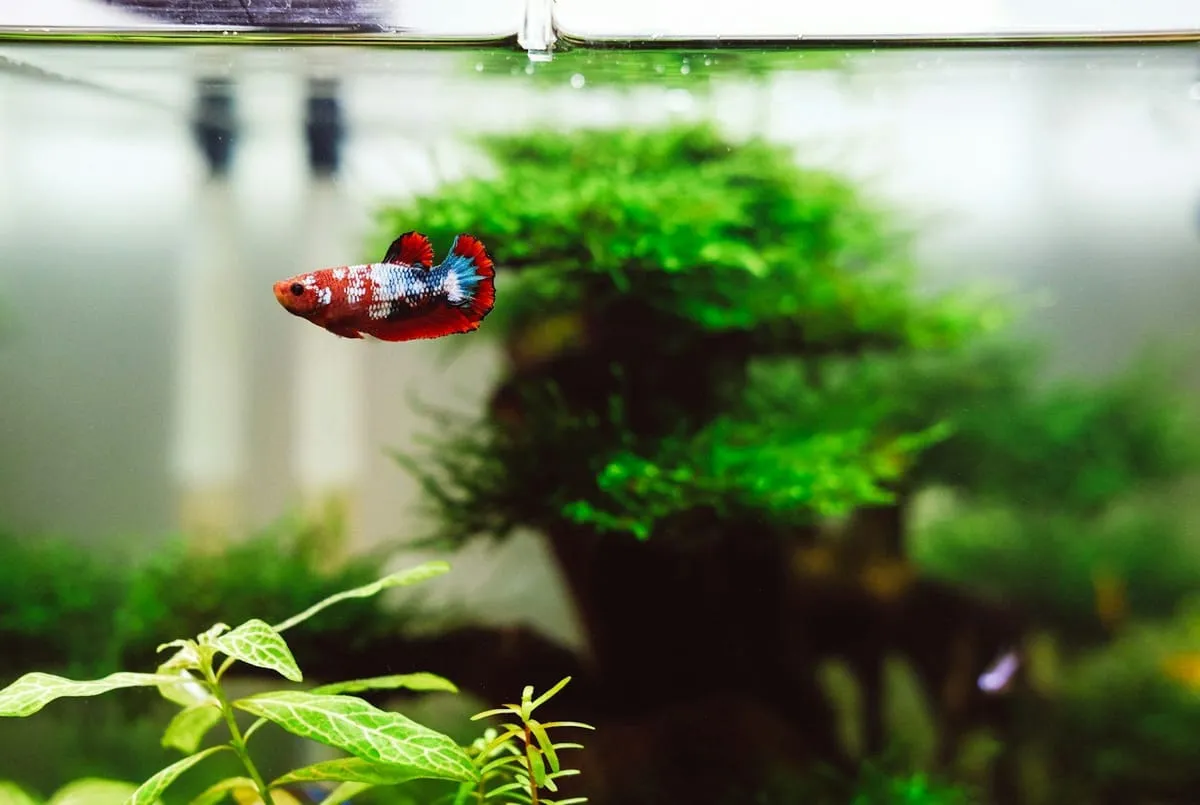
The betta, or Siamese fighting fish, is one of the most beautiful fish you can keep, with its flowing fins and jewel colours, and it is also one of the most badly kept, precisely because of how it is sold. Bettas are routinely displayed in tiny cups and marketed as fish that thrive in miniature bowls needing almost nothing, and that picture is not just misleading, it is the reason so many bettas live short, miserable lives. The truth is that a betta is a tropical fish with real needs, and given those it is a hardy, characterful, long-lived pet. This guide covers everything the little cup does not tell you.
The myth that harms them
The most important thing to understand about bettas is that nearly everything the way they are sold implies about their care is wrong.
Because bettas can breathe air from the surface using a special organ, and can survive briefly in poor conditions that would kill many fish, they have been marketed as fish that are happy in tiny, unheated, unfiltered bowls or vases, or even the cups they are sold in. This is a myth, and a damaging one. Surviving is not thriving: a betta enduring a tiny, cold, dirty container is a stressed, unhealthy fish with a drastically shortened life, not a happy one. The ability to gulp air is a survival adaptation for temporary bad conditions in the wild, not evidence that a betta belongs in a bowl. So the first and most important step in betta care is to throw out the cup-and-bowl picture entirely and understand that a betta needs the same fundamentals as other tropical fish: a proper tank, warmth, clean water, and space. Almost every betta welfare problem traces back to that single myth.
A proper heated, filtered tank
With the myth cleared away, the core of good betta care is straightforward: a real tank set up like any tropical aquarium.
A betta needs an adequately sized tank, not a tiny bowl or vase, giving it room to swim and, importantly, enough water volume to stay clean and stable, since small volumes foul and swing in temperature far too quickly. It needs a heater, because bettas are tropical fish requiring warm, stable water, and kept too cold they become listless, stressed, and prone to disease, so an unheated tank in a normal room is not suitable. And it needs a filter to keep the water clean, run gently since bettas dislike strong currents that batter their long fins. In other words, a betta tank is a proper little heated, filtered aquarium, which also means it must be cycled before the fish goes in, just like any tank, as covered in why fish keep dying. Set up this way, with regular maintenance, a betta has the stable, warm, clean environment it actually needs.
Temperament and tankmates
The betta’s other defining feature is its temperament, and understanding it is essential for keeping one safely, alone or with others.
The “fighting fish” name is earned: male bettas are territorial and will fight, sometimes to the death, so two males must never be kept together, and males may also attack fish that resemble a rival, such as colourful or long-finned tankmates, or nip slower fish. This does not mean a betta must always live alone, in a large enough, well-planned tank some peaceful, non-nippy, non-flashy companions can work, but it takes care and research, and many bettas are genuinely happiest and safest kept as the only fish. A betta alone in a proper tank is not a deprived fish, it is often the ideal setup. So tankmate decisions should be made cautiously, with the betta’s temperament firmly in mind, and never involve a second male betta. When in doubt, a single betta in a good tank is the safe, kind default.
A characterful, rewarding fish
Finally, it is worth saying what you get when you keep a betta properly, because it is a genuinely rewarding fish.
Given the right conditions, bettas are hardy, interactive, and full of character, often recognising their owner, coming to the front of the tank at feeding time, and displaying their spectacular fins and colours. They can live several years, a proper span rather than the few months a badly kept betta manages, and they make an excellent choice for someone wanting a striking, personable fish in a relatively small, though still real, aquarium. They suit a keeper who understands that “small tank” still means a heated, filtered, cycled, adequately sized one, and who will provide the maintenance and, if keeping tankmates, the careful planning that a betta needs. They are not a good choice for anyone hoping the cup-and-bowl myth is true, or wanting a decorative fish that needs nothing.
Kept as the tropical fish it truly is, the betta rewards you richly: a beautiful, characterful, long-lived companion that is accessible to keep without a large aquarium. The whole secret is simply to reject the way bettas are sold and give one what it actually needs, a warm, clean, filtered tank with room to swim and thoughtful company or none at all. Do that, and the betta stops being the tragic bowl fish of the pet-shop shelf and becomes one of the most rewarding small fish you can keep.
Common questions
- Can betta fish live in a small bowl or cup?
- No, despite how they are sold. Bettas need a proper heated, filtered tank, not a tiny bowl or the cup they come in. The idea that they thrive in tiny containers is a damaging myth, and it is behind countless short, unhealthy betta lives. A small tank of adequate size is the minimum.
- Do betta fish need a heater?
- Yes. Bettas are tropical fish that need warm, stable water, and kept too cold they become sluggish, stressed, and prone to illness. An unheated room-temperature tank is not suitable in most homes. A heater keeping the water at a stable tropical temperature is essential, not optional.
- Can betta fish live with other fish?
- Sometimes, but with real care. Male bettas cannot be kept with other male bettas and will fight, and they may attack colourful or long-finned tankmates. Some peaceful, non-nippy companions can work in a large enough tank, but many bettas are best kept alone. Never keep two males together.
- How long do betta fish live?
- Typically around two to four years with good care, sometimes more, though many die far younger because of the poor conditions they are often kept in. Given a proper heated, filtered, adequately sized tank and good care, a betta can live a full and healthy life rather than the brief one the cup suggests.