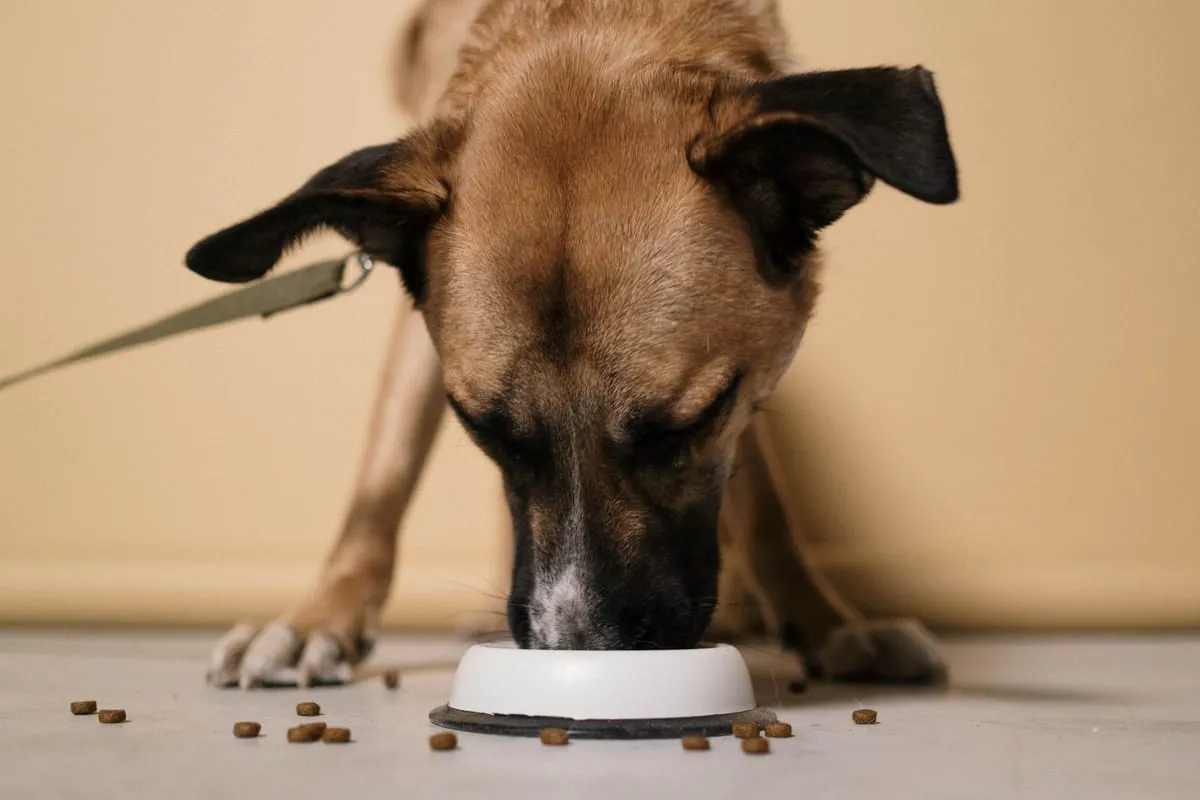
Some dogs treat every meal like it might be taken away, bowl empty in under a minute, head still down searching for scraps that are not there. It can be funny to watch the first few times, but a dog that consistently inhales its food rather than eats it is worth paying attention to, because fast eating is tied to some genuinely uncomfortable and, in large breeds, dangerous problems.
Why dogs gulp their food
Eating fast is closer to instinct than bad manners. In the wild, and in any group of animals sharing a limited food source, finishing quickly protects a meal from being stolen. Domestic dogs still carry that wiring even when nothing is actually competing for their bowl, which is why a dog can bolt its food down alone in a quiet kitchen just as fast as one sharing a room with three other dogs.
Genuine hunger plays a part too, particularly in a dog fed once a day rather than in smaller, more frequent meals, and puppies often eat fast simply because they have not learned to pace themselves yet. In a multi-dog household, real competition over food is one of the strongest drivers, and it usually shows up as one dog finishing first and then hovering near the others’ bowls.
What fast eating actually risks
Swallowing large mouthfuls means swallowing a lot of air along with the food, and that air has to go somewhere. Burping, gurgling stomach noises, gas, and regurgitating a meal shortly after finishing it are all common in dogs that eat too fast, even without anything more serious going on.
The bigger concern is bloat, where the stomach fills with gas and swells, and in the worst cases twists on itself. Large, deep-chested breeds carry the highest risk, and eating quickly, especially a large meal followed by vigorous exercise, is one of the recognised risk factors. Our guide to the emergency signs of bloat covers what to watch for and why it is always a drive-to-the-vet-now problem, not a wait-and-see one.
How to actually slow a fast eater down
The most reliable fix changes how the food is presented, not how much willpower the dog has. A slow-feeder bowl with raised ridges or a maze pattern forces a dog to work around the obstacles a mouthful at a time, which stretches a one-minute meal out to several. Scattering kibble across a snuffle mat or simply across a clean patch of floor works on the same principle and adds a bit of mental engagement on top.
In a home with more than one dog, feeding everyone in separate spaces, or even separate rooms, often does more than any bowl. Removing the competition removes most of the reason to rush.
Smaller, more frequent meals help too, since a dog that is not left hungry for long stretches has less drive to bolt what does arrive. Two or three meals a day tends to work better for a fast eater than one large one, and it is worth avoiding hard exercise for an hour or so either side of eating regardless of how quickly your dog finishes, since that combination is part of what raises bloat risk in the first place.
Give it a few weeks
Most dogs adjust to a slow feeder within a couple of weeks, though a few will find ways around it faster than you would expect, tipping the bowl over or working out the maze pattern with surprising speed. That is normal and not a sign the approach has failed, it usually just means sizing up to a more challenging design or pairing the bowl with scattered feeding on alternate days.
A dog that has always eaten fast and stays otherwise healthy, active, and a stable weight is not an emergency. It is a habit worth managing for comfort and, in the higher-risk breeds, for genuine safety, rather than something to panic about. For the wider basics of getting portions and timing right, see our guide on how much you should feed your dog.
Common questions
- Why does my dog eat so fast?
- Most fast eating comes down to instinct rather than a problem, dogs are wired to finish a meal before it can be taken by a rival, and that drive does not disappear just because the food is safe in a bowl at home. Genuine hunger, a multi-dog household where dogs compete over food, and simple habit all play a part too. Less commonly, intestinal parasites or a medical condition that increases appetite can be behind a sudden change, so a dog that starts bolting food out of nowhere is worth mentioning to your vet.
- Is it dangerous for a dog to eat quickly?
- It can be. Eating too fast means swallowing a lot of air along with the food, which leads to burping, gas, and sometimes vomiting shortly after a meal. In large, deep-chested breeds it is also a recognised risk factor for bloat, a genuine emergency where the stomach fills with gas and can twist. Fast eating is not guaranteed to cause a problem, but it raises the odds enough that it is worth slowing down deliberately rather than leaving it to chance.
- How can I slow my dog down at mealtimes?
- A slow-feeder bowl with raised ridges or a maze pattern is the simplest fix, since it forces a dog to work around obstacles instead of taking one big mouthful. Spreading food across a snuffle mat, using a puzzle feeder, or simply hand-scattering kibble on a clean floor all slow eating down in the same way. In a multi-dog home, feeding each dog in a separate space removes the competition that drives the gulping in the first place.
- When should I worry about my dog's fast eating?
- A dog that has always wolfed its food and stays well otherwise is usually just an enthusiastic eater. Get in touch with your vet if the pace changes suddenly, if it comes with weight loss, a swollen or tight-looking belly, repeated vomiting, or if your dog is a large, deep-chested breed and seems restless or unsettled after eating, since those can point to a parasite, an underlying condition, or the early signs of bloat.