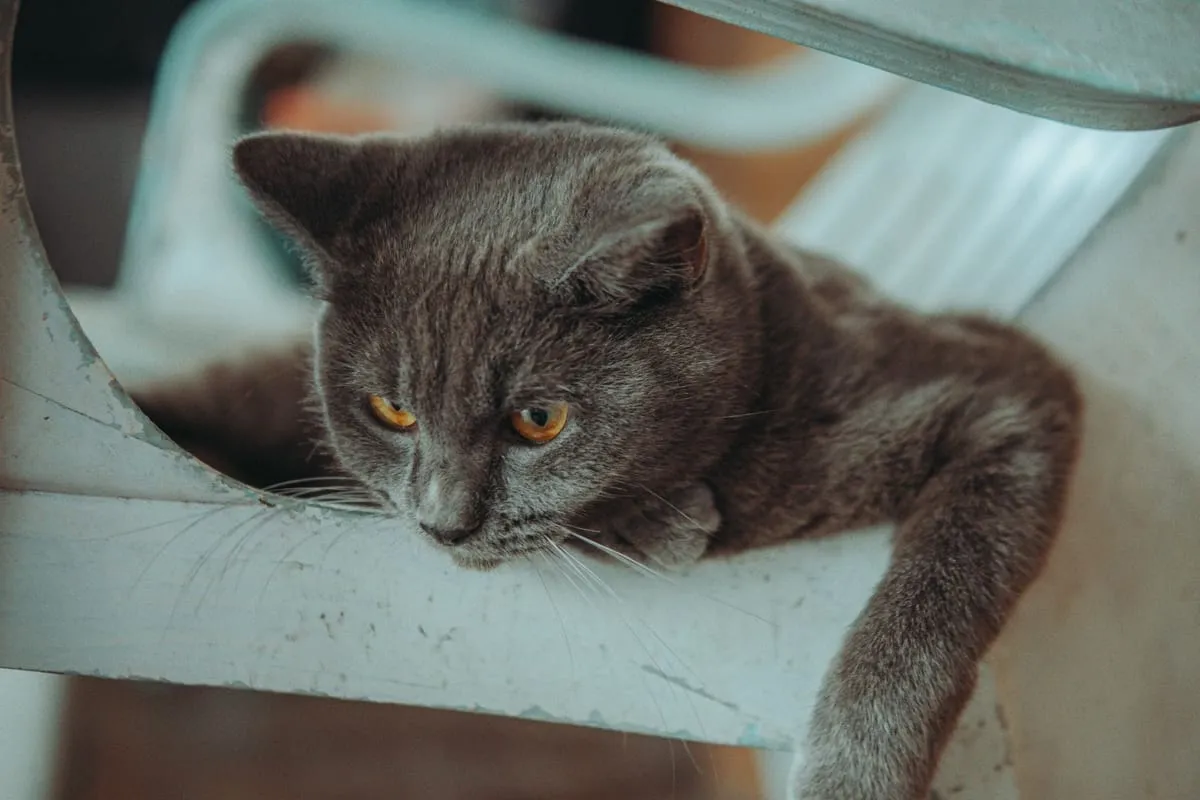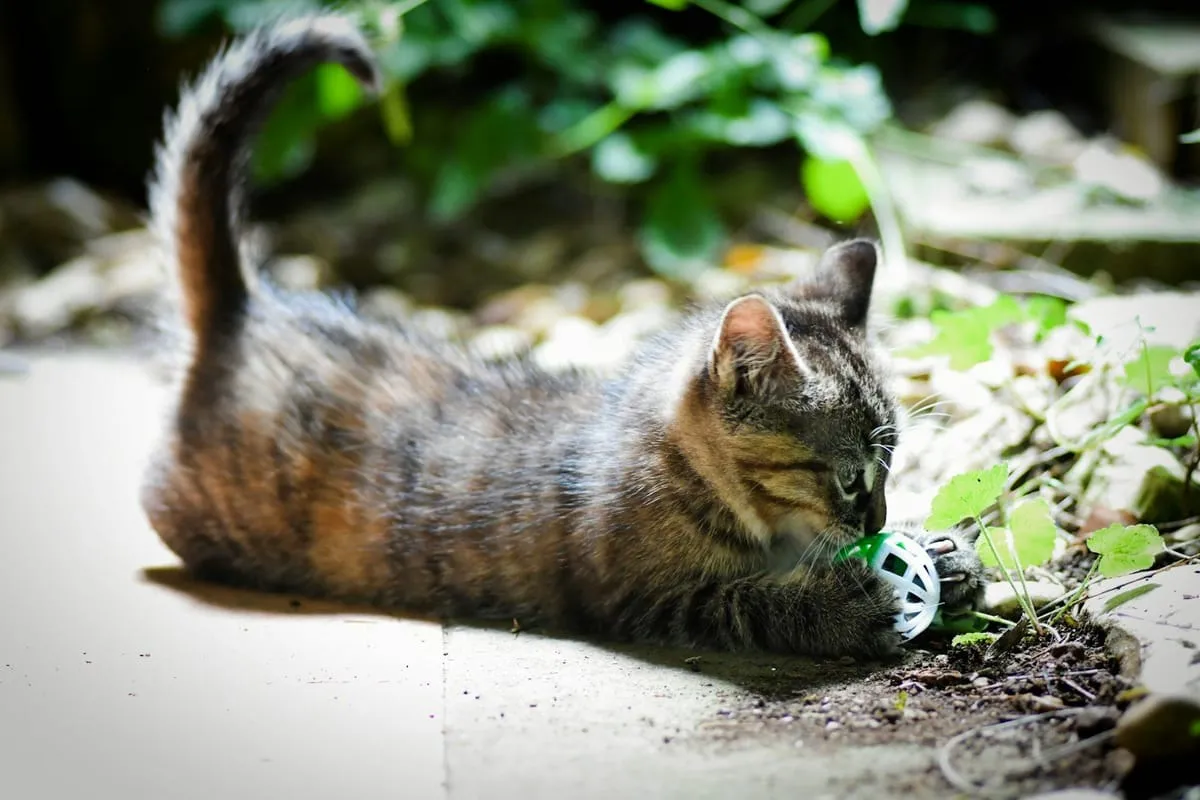
An indoor cat lives a long, safe, comfortable life, and that is exactly why so many of them are quietly bored. We have removed the traffic and the predators and the disease, and in doing so we have also removed the hunt, which is the thing a cat is most deeply built to do. A lot of the problems people bring to me, the overgrooming, the night-time yowling, the pestering, the picking on the other cat, trace back to that single missing piece. Give a cat back some version of hunting and a surprising amount settles.
Boredom is the hidden cause of “bad” behaviour
Before the toys, it is worth seeing why this matters so much, because owners rarely connect the behaviour to the cause.
A cat’s day in the wild is built around short, intense bursts of stalking, pouncing, and catching, punctuated by long rests. Indoors, the rests are all still there but the bursts are gone, and the drive does not disappear just because the outlet has. It leaks out somewhere. In one cat it becomes the three-in-the-morning sprint down the hallway. In another it is chewing, or over-washing a patch of fur bald, or an edginess that spills into swiping at people or the other cat. When I hear those complaints, my first question is almost always about play, because a genuinely well-exercised, mentally occupied cat rarely has the spare energy for them.
So this is not about spoiling your cat with toys. It is about meeting a need, and heading off the problems that come from leaving it unmet.
Play like a hunt, not like a game
The most valuable thing you can do costs nothing but ten minutes and a wand toy, and it works because it imitates the hunt rather than just waving something around.
Use an interactive toy on a string or wand, and make it behave like prey. Prey does not fly at a cat’s face, it darts away, hides behind things, freezes, and makes nervous little movements. Drag the toy away from your cat, let it dart behind a chair leg, pause it, twitch it, and let your cat stalk and plan. Crucially, let the cat actually catch it at the end. A hunt with no capture is frustrating, and part of why a cat can seem wound up rather than satisfied after play is that it never got to win.
Two short sessions a day, morning and evening, do more than one marathon. And rotate the toys, because a wand that has been put away for a week is far more interesting than one that has been lying on the floor since Tuesday.
Feed the brain, not just the belly
Alongside interactive play, make your cat use its head for some of its food, because foraging is as much a part of hunting as the pounce.
Food puzzles and slow feeders, where the cat has to paw, roll, or work kibble out of a container, turn a ten-second gulp into a satisfying task. They slow down a cat that eats too fast, and they give the mind something to solve. You do not need to buy anything to start: a handful of kibble scattered so the cat has to hunt for each piece, or dropped into a clean egg box or a toilet-roll tube folded at the ends, does the same job. Start easy so the cat succeeds and builds confidence, then make it a little harder over time.
Scattering and hiding a portion of the daily food around the room also brings back the searching part of the hunt, and turns a flat afternoon into a series of small discoveries.
Build a world worth exploring
Finally, the space itself. An indoor cat lives entirely inside the environment you give it, so a bit of thought there pays off all day, not just during play sessions.
Cats live in three dimensions and feel safest with height, so somewhere to climb and perch, a cat tree, a cleared shelf, the top of a wardrobe, adds a lot of usable territory and a place to survey the room from. A window view onto a garden or a bird feeder is genuine daytime entertainment for many cats. Somewhere to scratch at full stretch matters too, which ties directly into keeping the claws off your furniture. And quiet hiding spots let a cat retreat and feel secure, which is as much a part of contentment as stimulation is.
When you are ready to add a few well-chosen bits of kit, our cat toys and enrichment picks are chosen with exactly this in mind. But the heart of it is not the gear. It is the ten minutes, twice a day, where you stop being the person who fills the bowl and become the thing that darts and hides and gets caught. That is the part your cat cannot get anywhere else, and it is the part that changes the most.
Common questions
- How much should I play with my indoor cat each day?
- Aim for a couple of short sessions of around ten to fifteen minutes, ideally with a wand toy that lets the cat chase, stalk, and pounce. Short and frequent beats one long session, because it matches how a cat naturally hunts in bursts.
- Why does my indoor cat get the zoomies or go a bit mad in the evening?
- Often it is pent-up energy with nowhere to go. A cat that has not had the chance to hunt and problem-solve during the day saves it up. A proper play session, especially before their evening meal, usually takes the edge off.
- Do food puzzles really help?
- Yes. Making a cat work a little for its food taps into the natural drive to hunt and forage, slows down fast eaters, and gives the brain a job. Start easy so the cat succeeds, then make it gradually harder.
- Is one cat lonely on its own all day?
- It depends on the cat. Some are content alone, others struggle, and a second cat is not a guaranteed fix since not all cats want company. Good daily enrichment and interactive play matter more than numbers for most single indoor cats.