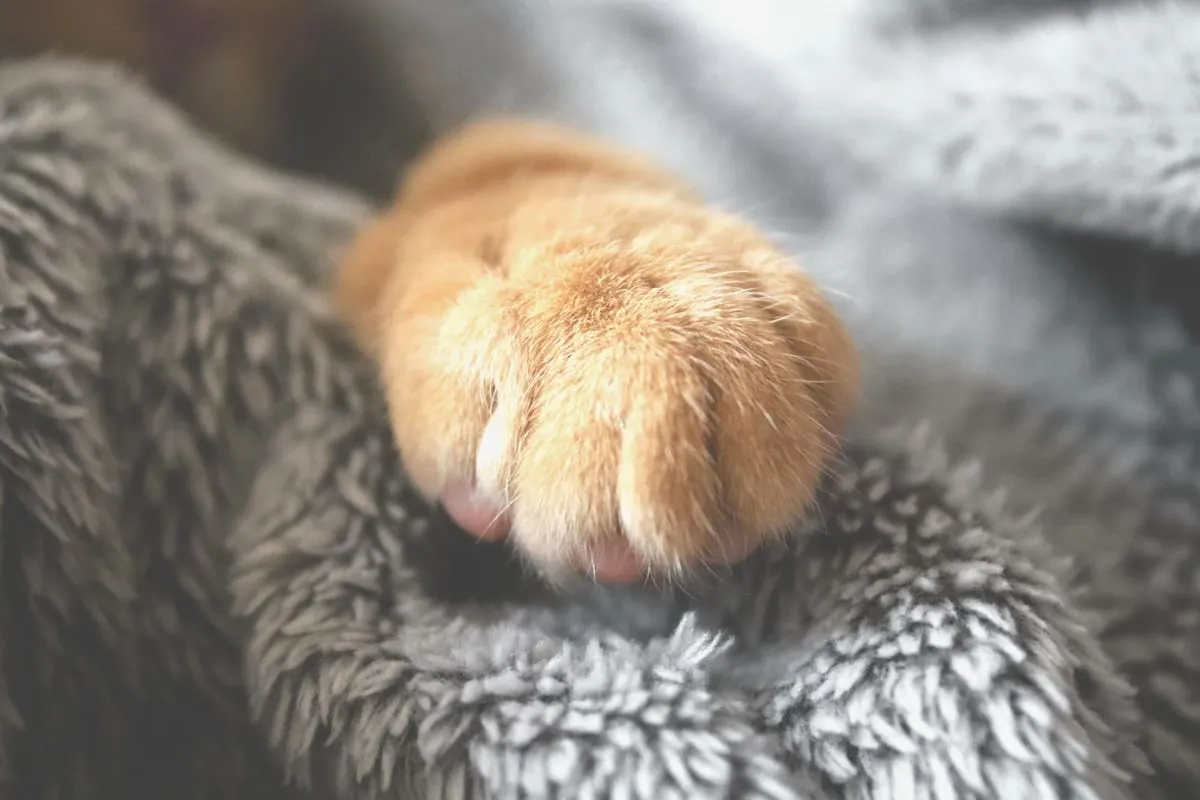
Few cat behaviours get asked about as often, or filmed as often, as kneading, that rhythmic push-push of the front paws into your lap, a blanket, or occasionally your bare stomach at five in the morning. Owners call it making biscuits, and once you know where it comes from, it becomes even more endearing. Here is the full story, plus what to do about the claw problem, because affection should not leave marks.
It starts at day one
Kneading is nursing behaviour that never switches off.
Newborn kittens knead their mother’s belly to stimulate milk flow, pairing the motion with warmth, food, and safety in the very first days of life. That wiring runs deep, and most cats carry the behaviour into adulthood as a comfort ritual. When your cat kneads you, it is replaying the safest feeling it has ever known, with you cast in the leading role. It is about as close to a direct compliment as cats come.
What your cat is saying when it kneads
In adult cats, kneading bundles several friendly messages into one behaviour.
Contentment is the big one, which is why kneading usually appears as your cat settles on a lap, a fleece, or that one specific cushion it has claimed. There is also a territorial whisper to it: cat paws carry scent glands, so kneading leaves a gentle chemical label that says this person is mine. Many cats knead to prepare a sleeping spot, an instinct inherited from wild ancestors who trampled grass into a bed. And unspayed females knead more around their cycles, which is one of the few versions with a hormonal driver. Whatever the mix, a kneading cat is a cat that feels secure, the same way a relaxed cat shows it through slow blinks and an upright greeting tail.
The claws problem, solved kindly
The single complaint about kneading is that happiness apparently requires sixteen needle points.
What you should not do is punish the kneading, since from the cat’s side it is pure affection, and a shove or a scolding at that moment is confusing at best. If your cat is the intense type whose kneading escalates into nipping when overstimulated, our guide on why cats bite the people they love explains the warning signs to watch as you gently end the session.
When kneading changes
As with most cat behaviour, the pattern matters more than the act.
A cat that has always been an enthusiastic biscuit-maker is simply telling you it is happy. A cat that suddenly kneads far more than usual, or does it with a tense body rather than a melted one, may be self-soothing through stress, and it is worth scanning for the other signs of a stressed cat such as hiding, overgrooming, or litter tray changes. And if a big behaviour shift comes with appetite loss or anything else out of character, a vet visit rules out the medical explanations first. Nine times out of ten, though, the biscuits mean exactly what they look like: you are warm, you are trusted, and you have been claimed.
Common questions
- Why do cats knead their owners?
- Kneading starts in the first days of life, when kittens press rhythmically on their mother while nursing to stimulate milk flow. The motion stays wired to comfort and contentment for life, so when your adult cat kneads you, it is treating you as safe, warm, and family. Cats also have scent glands in their paw pads, so kneading gently marks you as theirs, which from a cat is high praise.
- Why does my cat knead and purr at the same time?
- Because both behaviours come from the same happy place. Kneading and purring were paired during nursing, and adult cats often bundle them together when they are deeply relaxed, typically as they settle on a lap or a favourite blanket. Some cats add a dreamy far-away stare or a little drool to the routine. The whole package is a cat broadcasting total contentment.
- How do I stop my cat's kneading from hurting?
- Do not punish it, redirect it. Keep a folded blanket or cushion on your lap as a kneading pad so the claws land on fabric rather than skin, and keep nails trimmed to blunt the pinpricks. If the claws still dig in, gently lift the cat onto the blanket beside you and reward it for settling there. Pushing the cat off or telling it off risks souring one of the friendliest behaviours it offers you.
- Is it normal for a cat to knead constantly?
- Frequent kneading is normal for many cats, especially at settling-down times. A sudden big increase is worth a closer look though, since some cats knead more when they are stressed or unwell, using it to self-soothe. If new, intense kneading arrives alongside hiding, appetite changes, overgrooming, or litter tray changes, treat it as part of a bigger picture and consider a vet check.