Free tool
New kitten checklist
Everything to buy, sort, and do before and after your kitten comes home, in one tickable checklist you can save your progress on and print. From the shopping list to vaccinations and the first week.
Before your kitten comes home: the shopping list
Sort out around arrival: health and admin
The first day and week
Settling and socialisation
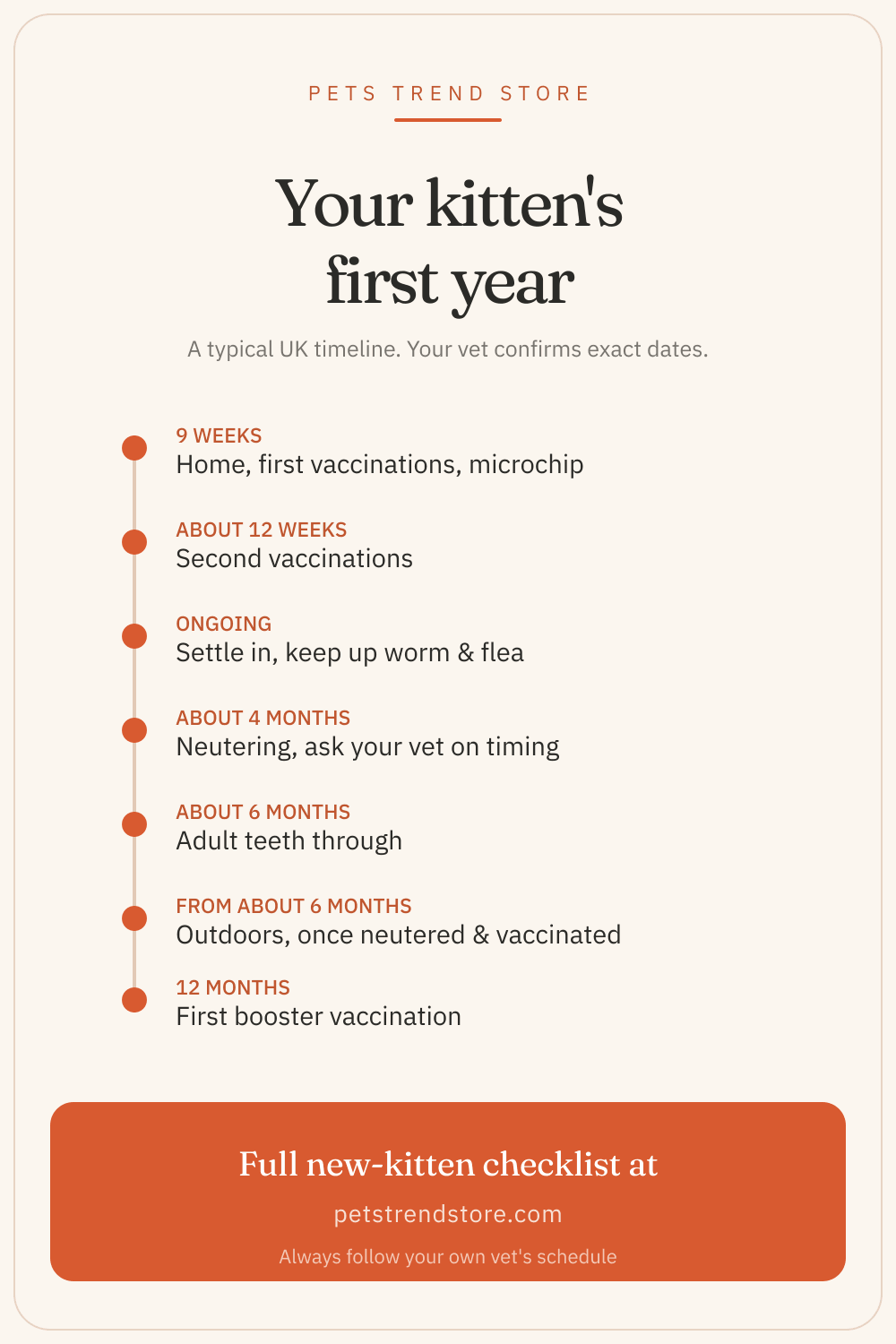
Health timeline to keep in mind
Common questions
What do I need to buy for a new kitten?
The essentials are food and water bowls, the kitten food your breeder or shelter uses, at least one litter tray and litter, a bed or cosy hideaway, a scratching post, a secure carrier, toys including a wand toy, and a grooming brush, plus cat-proofing your home and removing any lilies and toxic plants. The full tickable list is above, so you can work through it before your kitten arrives.
What should I do in the first week with a kitten?
Set your kitten up in one quiet room at first rather than the whole house, show it the litter tray, food, and bed, and let it explore and come to you at its own pace. Keep things calm, limit visitors, and give it places to hide so it feels safe. Keep feeding the same food it had before, then change it over gradually to avoid an upset tummy.
When can a kitten go outside?
Keep a kitten indoors until it is fully vaccinated and neutered, and settled in its new home, which is usually from around six months old. Letting a kitten out too early risks disease, getting lost, and unwanted litters. Your vet will confirm the right time. When you do start, do it gradually, before a meal, and supervised at first.
Do kittens need microchipping?
Yes. In England, microchipping cats is a legal requirement, and it is strongly recommended everywhere as the best way to be reunited with a lost cat. Many kittens are already chipped by the breeder or shelter, so check the paperwork, keep your contact details on the microchip database up to date, and register the chip to you.
This is a general checklist to help you prepare. Every kitten and household is different, and your vet is the best source for advice on vaccinations, neutering, and health specific to your kitten.