New owners are often disappointed when a small pet does not behave like the cuddly companion they pictured. The rabbit bolts under the sofa, the guinea pig freezes into a statue, the hamster nips a reaching hand. It feels like the animal does not like them. It is almost never that. These are prey animals, and running, hiding, freezing, and nipping are the survival instincts of creatures that, in the wild, are eaten by things bigger than them, which from their point of view includes you. Once you understand that, the behaviour stops being rejection and becomes information, and you can start building the trust that turns a frightened animal into a relaxed one.
They are wired to see you as a threat
The starting point for all of this is understanding how a small pet experiences the world, because it is very different from how we assume.
Rabbits, guinea pigs, and rodents are near the bottom of the food chain, hunted from the ground and from the air. Evolution has tuned them to treat anything large and looming as a potential predator until proven otherwise, and to react first and ask questions later, because in the wild the animal that hesitated got eaten. So when a giant hand descends from above to scoop the animal up, every instinct screams predator, and the animal does what has kept its kind alive: it flees, freezes, or defends itself. None of that is personal, and none of it means you have a bad or unfriendly pet. It means you have a normal prey animal that does not yet have any reason to believe you are safe. Your whole job is to give it that reason, patiently.
Reading the behaviour
Once you see the behaviour as communication, the specific things a small pet does start to make sense, and reading them helps you respond well.
Running and hiding are simply a frightened animal seeking safety, and a pet that bolts to its hide when you approach is telling you it does not feel secure yet, not that it hates you. Freezing, going completely still, is another fear response, an animal hoping that if it does not move, the danger will pass. Nipping and biting are usually fear too: an animal that feels cornered, trapped, or grabbed, and has no way to flee, may nip as a last resort, and some nips are a clear “put me down” or a warning you pushed too far. Occasionally a nibble is just an animal mistaking a finger for food. Thumping, in rabbits, is an alarm signal. Read together, these behaviours are a running account of how safe the animal feels, and the aim is to change that feeling rather than to stop the behaviour directly.
Building trust the right way
The way to change a frightened animal into a confident one is to let it make the choices, and this is where patience pays off enormously.
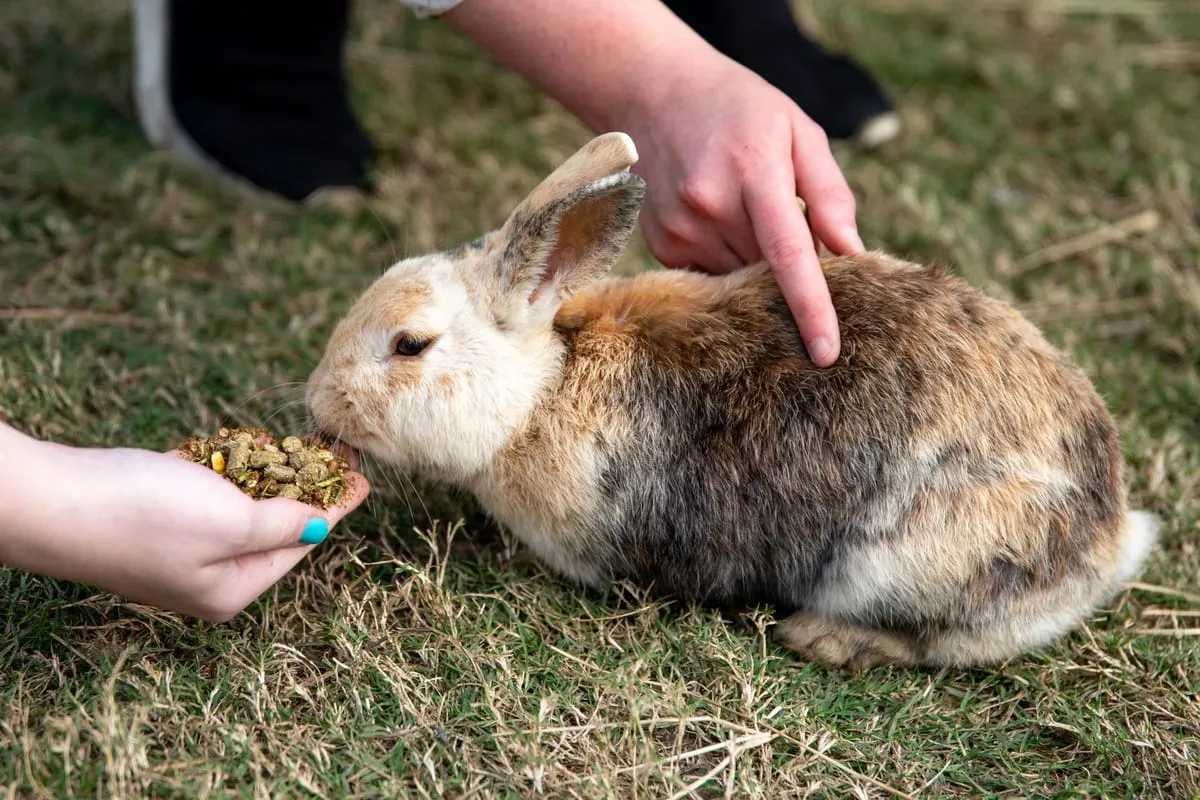
Start by simply being present without demanding anything, sitting calmly near the enclosure, talking softly, so the animal gets used to you being close and learns that your presence brings nothing scary. Then let food do the talking: offer a favourite vegetable or treat from your open hand and let the animal choose to come and take it, rather than reaching for the animal. Every time it approaches you of its own accord and nothing bad happens, trust grows. Approach from the side and at their level rather than looming from above, which is far less threatening to a prey animal. Keep sessions short and end them while things are going well. This is slow work, measured in weeks, and rushing it sets you back, but it builds the real thing rather than a grudging tolerance.
Patience turns it around
The encouraging truth is that almost all of this behaviour softens with time and the right approach, and the animal you end up with is worth the wait.
A small pet that runs and freezes and nips at first can, over weeks of patient, low-pressure trust-building, become an animal that comes to the front of its enclosure to greet you, takes food from your hand, and settles calmly in your company. What changes is not the animal’s nature but its assessment of you, from probable predator to reliable source of good things. Get to know the individual, respect the signals it gives, let it come to you, and never force contact on a frightened animal, and you will find that the “unfriendly” small pet was only ever a scared one waiting for a reason to trust. Give it that reason and the relationship these animals can offer, on their own gentle terms, is a genuinely lovely one.
Common questions
- Why does my rabbit or guinea pig run away from me?
- Because it is a prey animal and, from its point of view, a large creature reaching down from above looks like a predator. Running, hiding, and freezing are survival instincts, not signs of a mean pet. With patience and the right approach, most learn that you are safe.
- How do I get my small pet to trust me?
- Go slowly and let the animal choose. Spend calm time near it, offer favourite foods from your hand, and let it come to you rather than grabbing it. Approach from the side, not above, and keep early sessions short. Trust is built over weeks, not forced in a day.
- Why does my small pet nip or bite me?
- Usually fear or feeling trapped, sometimes a warning that it wants to be put down, and occasionally mistaking a finger for food. It is rarely aggression for its own sake. Watch for the signs it gives before nipping, and avoid grabbing or cornering, which provoke it.
- Should I pick up my small pet a lot to tame it?
- Not by force. Many small pets, especially rabbits, dislike being lifted, since being scooped up mimics being caught by a predator. Building trust at ground level first, and keeping handling calm and secure, works far better than repeatedly grabbing a frightened animal.