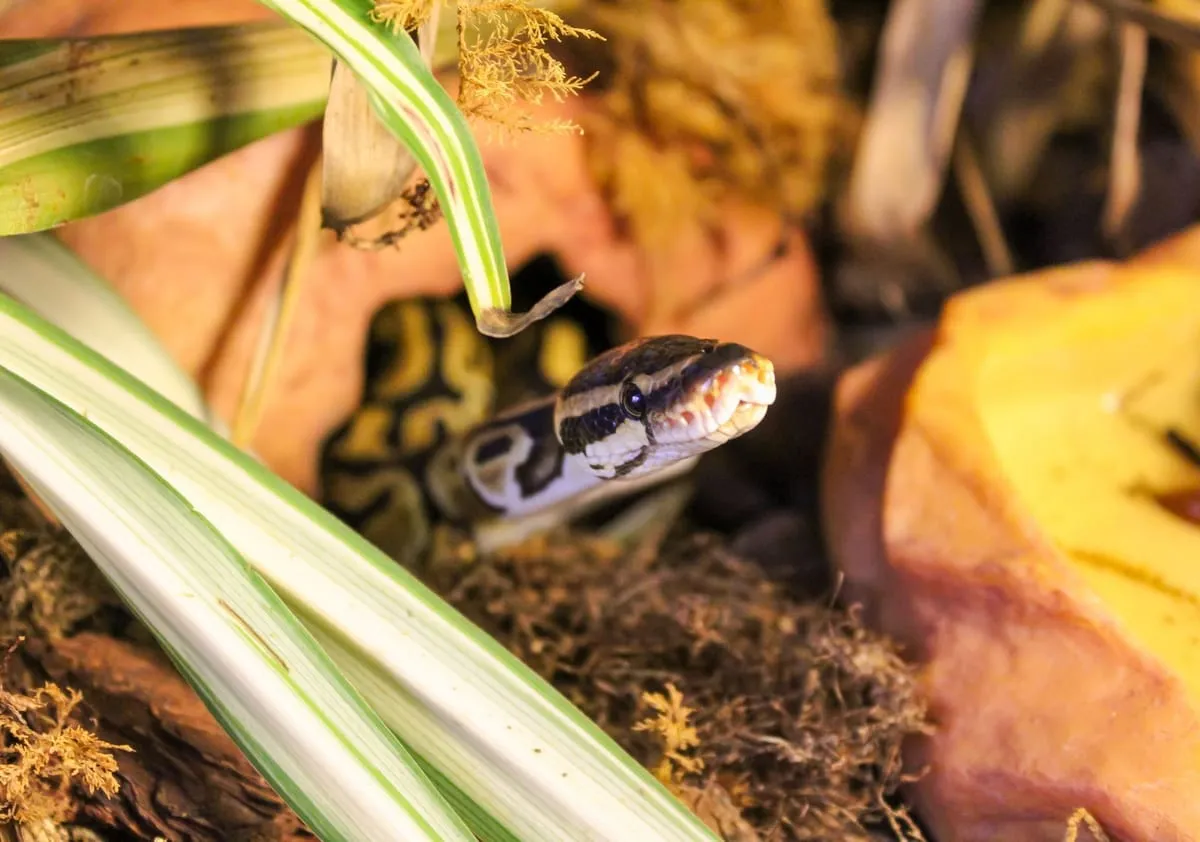
The ball python’s reputation as the classic first pet snake is well earned. It stays a manageable size, tends to have a calm, docile temperament once it settles in, and its care, while genuinely involved, is thoroughly documented and achievable for a first-time keeper who does their homework. That said, it is not a low-effort pet, and a snake that can live for decades deserves an honest look before it comes home, not just an enthusiastic one.
Why they suit beginners
The reasons the ball python became the default starter snake are real, not just tradition.
They stay a manageable adult size, typically three to five feet, which makes housing and handling far less demanding than a snake that grows to eight or ten feet. Their temperament tends toward calm and unhurried, and their signature defense, curling into a tight ball rather than striking, is exactly why they got the name and why keepers generally find them easy to handle once acclimated. Their needs are also extremely well understood after decades as the most popular pet snake, which means good information and appropriate equipment are both easy to find. None of that makes them effortless, but it does mean the learning curve is forgiving for someone who actually reads up before buying one.
What a ball python needs
Getting the enclosure right matters more for a ball python’s wellbeing than almost anything else you will do as a keeper.
Start with size: a lot of older care advice suggests keeping ball pythons in tubs smaller than what current keepers and vets now recommend, and an undersized enclosure is a common, avoidable source of stress. Give an adult a genuinely appropriate footprint, not the bare minimum a pet shop starter kit provides. Inside that space, you need a clear temperature gradient, a warm end and a cool end, so the snake can move between them to regulate itself, with the warm side heat source run through a thermostat rather than left uncontrolled, since an unregulated heat source is a genuine burn and fire risk. Add secure hides at both the warm and cool ends so the snake always has somewhere to feel safe regardless of temperature, appropriate substrate that holds a bit of humidity, and a water bowl large enough for the snake to soak in fully. Verify every temperature with a real thermometer rather than trusting the dial on the heat source, and have the whole setup running and stable before the snake arrives, exactly as with any other reptile.
Feeding, and the not-eating problem
Feeding a ball python is simple in principle and then, for a lot of owners, mysteriously stressful in practice.
They eat appropriately sized rodents, usually mice or rats depending on the snake’s size, offered roughly every one to two weeks for an adult, more often for a growing juvenile. What throws new owners is how readily ball pythons refuse food, sometimes for weeks at a stretch, for reasons that are frequently benign: a shed cycle approaching, a recent move or handling stress, a slight temperature problem, or simply an adult ball python’s naturally variable appetite. This is common enough that it has its own nickname among keepers, and a healthy adult can usually go a surprisingly long time without eating before it becomes a genuine concern.
Is it right for you
Even the best beginner snake is not automatically the right pet for everyone, and it is worth being honest about what you are taking on.
The lifespan is the single biggest factor: a well-kept ball python commonly lives twenty to thirty years, which means a hatchling bought today could still be your responsibility decades from now, well past most other decisions people make about pets. Beyond that, think about whether you are comfortable feeding whole prey items, keeping up a thermostat-controlled heat setup indefinitely, and owning a pet that is mostly calm and low-activity rather than interactive in the way a dog or cat is. If the multi-decade commitment and the setup do not put you off, and you are drawn to a genuinely fascinating, low-drama reptile, a ball python remains one of the best-reasoned choices for a first snake there is.
Done properly, with a correctly sized enclosure, a thermostat-controlled heat gradient, and patience around its feeding quirks, a ball python is a rewarding, long-lived reptile that lives up to its beginner-friendly reputation. The catch is entirely in the word “properly”, since the setup and the decades-long commitment are real, even if the day-to-day care is genuinely manageable once you have it right.
Common questions
- Are ball pythons good for beginners?
- Yes, they are widely considered the best beginner pet snake. They stay a manageable size, are generally calm and docile once settled, and their care needs are well understood, with plenty of good information available. They still need a correct enclosure and a consistent feeding routine, but a careful first-time keeper can genuinely succeed with one.
- What does a ball python need in its enclosure?
- A secure enclosure of the right size (bigger than many old care sheets suggest), a warm and cool end with a proper temperature gradient, a heat source controlled by a thermostat, hides at both ends, appropriate substrate, and a water bowl large enough to soak in. Correct temperatures should be verified with real thermometers before the snake arrives.
- Why is my ball python not eating?
- Ball pythons are notorious for going off food, often for weeks at a time, and it is frequently normal rather than a sign of illness, especially in adults or during a shed cycle. Check temperatures and stress factors first, and see a vet if the fast goes on for several months, the snake loses noticeable weight, or it is a young, still-growing snake.
- How long do ball pythons live?
- A very long time, commonly twenty to thirty years with good care. That lifespan is one of the most important things to weigh before getting one, since it is a multi-decade commitment rather than a short-term pet, and it is worth thinking honestly about where you will be in twenty years before bringing one home.