Finding a claw that has curled all the way round and grown back into your cat’s own paw pad is the kind of thing that makes owners feel genuinely awful, usually because it means it has been growing unchecked for a while without anyone noticing. It looks worse than most claw problems because it is, but it is also very preventable once you know what to check for. Here is why it happens and what to actually do about it.
Why claws grow into the paw in the first place
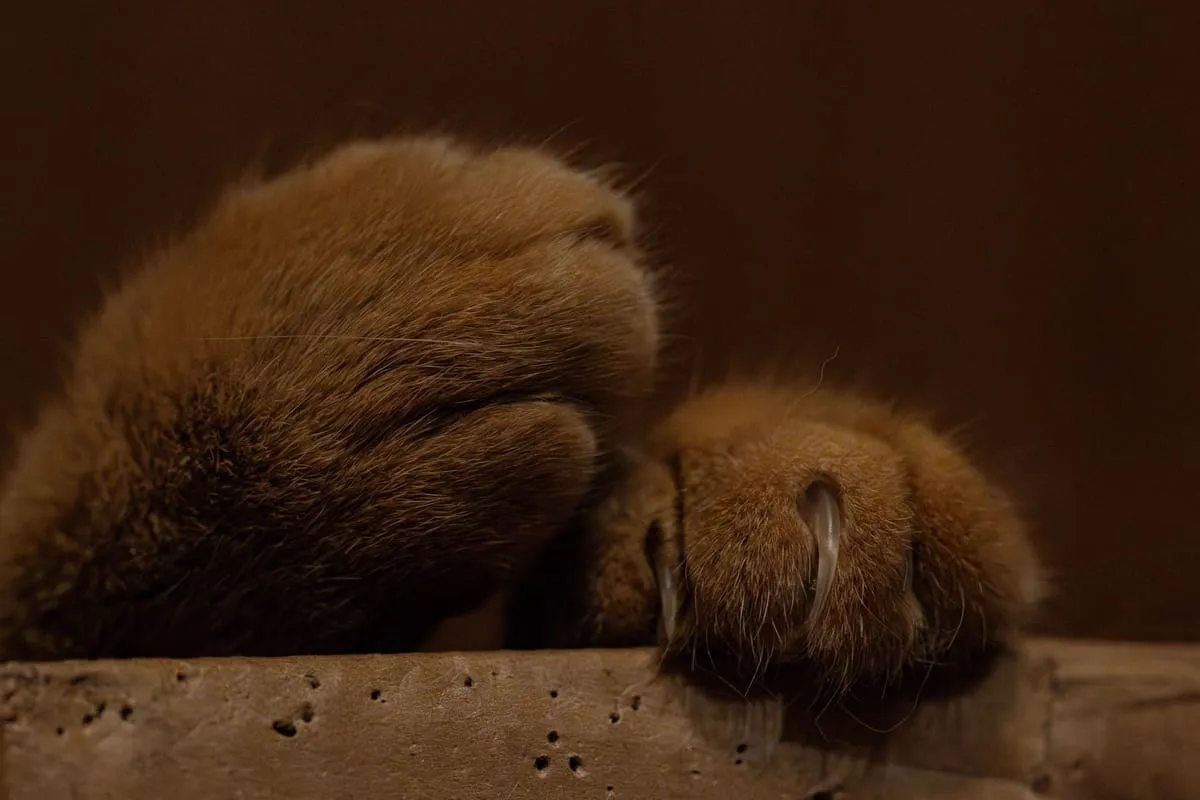
A cat’s claws grow continuously, the same way nails do, and normally that growth gets worn down by scratching, on posts, trees, and rough surfaces, and by everyday activity like climbing and running. When that wearing-down stops keeping pace with growth, a claw just keeps curving until the tip meets the pad, and eventually pierces it.
Indoor cats are the most common candidates, simply because they scratch less than a cat with an outdoor life full of trees and fences. Senior cats are especially prone, for two compounding reasons: they move around less, so scratching drops off, and claws often become thicker and more brittle with age at the same time. A cat with arthritis has an extra reason to scratch less, since the motion itself can be uncomfortable on stiff joints, which is one more way arthritis in cats quietly changes daily habits beyond the obvious signs of stiffness.
What to actually look for
An overgrown claw is long, visibly curved, and often clicks against hard flooring, but the tip is still free and visible. That is worth trimming, but it is not an emergency.
An embedded claw is different. The tip has curled far enough round that it has pierced back into the pad itself, and you will typically see swelling, redness, a bad smell, or discharge around the point of entry. Your cat may lick or chew at that paw repeatedly, limp, or refuse to let you touch it at all. Watch, too, for a cat that has simply started favouring one paw or walking oddly, since a painful claw is not always obvious until you actually part the fur and look.
What treatment usually looks like
A vet will typically sedate or heavily settle the cat to free the claw safely, clean out the wound, and prescribe antibiotics if infection has taken hold, which it often has by the time an owner notices. Most cats recover well and are back to normal within a week or two, though your vet may want to check it has healed properly rather than assume it has.
Preventing it from happening again
The fix is unglamorous but genuinely effective: check and trim claws regularly, and make a specific habit of checking the dewclaws, since they are the ones most likely to be forgotten. Every two to four weeks is a reasonable baseline for most cats, adjusted up if your cat is older, less active, or spends all its time indoors, and adjusted down if it is an active climber that wears its claws down on its own.
Get your cat comfortable with having paws handled well before you actually need to trim anything, a few seconds of gentle handling paired with a treat, done regularly, so a trim is not the first time paws have ever been touched. Use proper cat nail clippers rather than human ones, which crush rather than cleanly cut and can split the claw. Trim a small amount at a time and stop well short of the pink quick, the blood vessel visible inside a light-coloured claw, since cutting into it is painful and bleeds more than owners expect. If you are ever unsure where the quick is on a particular claw, or your cat will not tolerate handling at all, a vet or groomer can do it safely instead of guessing.
The honest bottom line
An overgrown claw is a trim away from being a non-issue. An embedded one is a vet visit, not something to work out at home. The difference between the two, in practice, comes down to whether anyone checked the paws in the last month, particularly the dewclaw and particularly in an older or less active cat. Make it a routine rather than something you only think about once a claw has already curled back on itself, and it stops being a problem worth worrying about at all.
Common questions
- How do I know if my cat's claw is actually embedded in the paw or just overgrown?
- An overgrown claw is long and curved but the tip is still free, often clicking on hard floors. An embedded claw has curled all the way round so the sharp tip has pierced back into the pad itself, and you will usually see swelling, redness, discharge, or a cat that will not let you touch that paw. If the tip has disappeared into the skin, treat it as embedded, not just overgrown.
- How often should I trim my cat's claws?
- Roughly every two to four weeks for most cats, though it depends on the individual. Indoor cats, older cats, and cats that scratch less all need checking more often than an active outdoor cat that wears its claws down naturally. The dewclaw, the one partway up the inner front leg, never touches the ground and often needs trimming even in cats whose other claws stay short on their own.
- Is an ingrown cat claw an emergency?
- It is not usually life-threatening, but it is genuinely painful and prone to infection, so it counts as a same-week vet visit at minimum, and sooner if the paw is swollen, smells bad, or your cat is limping badly or will not bear weight on it. A vet can free the claw properly and treat any infection that has already set in, which is safer than trying to force it out yourself.
- Why does this happen more in senior cats?
- Older cats scratch less because they are less active and sometimes because arthritis makes the motion uncomfortable, so the natural wearing-down that scratching provides drops off just as claws may also be growing thicker and more brittle with age. That combination is why overgrown and ingrown claws show up disproportionately in senior cats, even ones that were never a problem when younger.