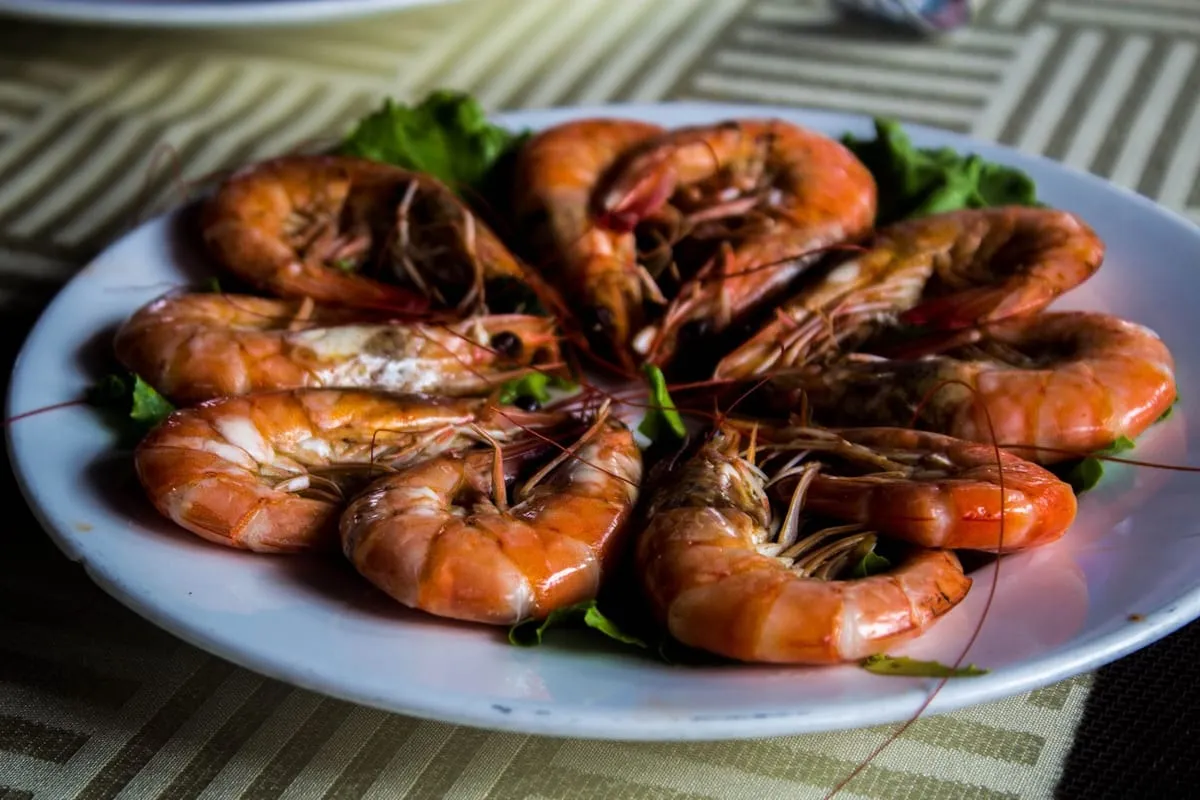
Yes, a small amount of plain cooked shrimp is a safe treat for most cats, and plenty of cats are keen on it. The shrimp itself is not the issue. The trouble comes from the shell and tail, which are genuinely risky if swallowed, and from how shrimp so often gets served for people, in butter, garlic, batter, or a fryer, none of which belong anywhere near a cat’s bowl.
What makes shrimp fine as a treat
Plain cooked shrimp is a lean source of protein, low in fat compared with a lot of other treats, and most cats find the smell and taste appealing, which makes it a useful way to tempt a fussy eater onto their regular food or to hide a supplement. A small piece now and then, on top of a complete cat food, is a perfectly reasonable treat.
As with any seafood treat, shrimp is not a balanced meal on its own. It does not provide everything a cat needs, so it stays in occasional-treat territory, not something to build a regular feeding routine around.
The shell and tail are the real risk
The part of shrimp that actually causes problems is not the flesh, it is what surrounds it.
Devein the shrimp as well as peeling it. The dark vein running along the back is the digestive tract, and while it is not toxic, removing it is standard practice and keeps the treat cleaner and easier to check over before it goes anywhere near your cat.
Cook it plain, skip the seasoning
How shrimp is usually cooked for people is where the second set of risks hides.
Raw shrimp should be avoided the same way raw fish and raw meat are, since it can carry bacteria and parasites that cooking removes. Boil, steam, or poach the shrimp with nothing added, then let it cool fully before offering a small piece. Skip anything battered, breaded, or fried, and skip butter, oil, garlic, or seasoned sauces entirely, since garlic and onion are toxic to cats and fried, buttery food is unnecessary fat and salt a cat’s diet does not need. A plain piece of shrimp, cooked and cooled, is the version worth giving. The seasoned version off your plate is not.
So, can cats eat shrimp? Yes, a small amount of plain, fully cooked, peeled and deveined shrimp is a safe occasional treat for most cats, as long as the shell and tail are removed and nothing is added in the cooking. Keep it plain, keep it occasional, and let a complete cat food do the real feeding. For the wider picture of feeding cats safely, see our guide to safe and toxic foods for cats.
Common questions
- Is shrimp safe for cats?
- A small amount of plain, fully cooked, peeled and deveined shrimp is safe for most cats as an occasional treat. It is low in fat and a source of protein. The shell, tail, and legs should always be removed first, since they are hard for a cat to digest and can be a choking or blockage risk, and shrimp should never be fried, breaded, or cooked with butter, garlic, or seasoning.
- Can cats eat raw shrimp?
- No, avoid raw shrimp. Like other raw seafood, it can carry bacteria and parasites that cooking kills off. Always serve shrimp fully cooked, with nothing added, and let it cool before offering it.
- Can cats eat shrimp shells or tails?
- No. Shrimp shells and tails are hard and sharp-edged, and cats do not digest them well. Swallowed pieces can cause choking or, in the gut, a blockage that needs surgery to fix. Always peel and devein shrimp completely and remove the tail before giving any to a cat.
- Are any cats allergic to shrimp?
- Shellfish allergy can happen in cats, though it is uncommon. Offer a very small piece the first time and watch for vomiting, diarrhoea, itching, or swelling over the following day. If your cat shows any of those signs, stop giving shrimp and check with your vet before trying it again.