There is an old, grim reason miners took canaries underground: birds are so sensitive to airborne poisons that they succumb long before a person would notice anything wrong. That same exquisite sensitivity lives in your pet bird, and it means an ordinary home is full of things that are harmless to us and deadly to it. Some of these hazards kill in minutes, silently, with no warning. Knowing them is not optional caution, it is basic, life-saving knowledge for anyone who keeps a bird, because with some of these dangers there is no second chance to learn the lesson.
The usual note applies, I am not a vet, and a bird exposed to any of these needs an avian vet urgently, but the most important thing here is prevention, because for several of these hazards, prevention is the only protection that works.
The invisible killer: fumes
The single most important danger to understand is airborne, because it is the one that kills fastest and gives no warning at all.
Birds have remarkably efficient respiratory systems, superbly adapted for flight, and that efficiency makes them extraordinarily vulnerable to anything toxic in the air. The most notorious example is the fumes given off by overheated non-stick cookware. Non-stick coatings such as PTFE release gases when they get too hot that are completely invisible and odourless to us but rapidly fatal to birds, frequently within minutes. A pan left heating empty on the hob has killed countless pet birds whose owners had no idea anything was wrong until the bird collapsed. And it is not only cookware: non-stick coatings turn up on some other appliances, self-cleaning ovens reach temperatures that can release fumes, and strong chemical smells, aerosols, and vapours of many kinds can overwhelm a bird’s system.
Other airborne hazards
Beyond non-stick fumes, a range of everyday sources of smoke, scent, and vapour pose a real threat to a bird’s sensitive lungs, and they are easy to overlook.
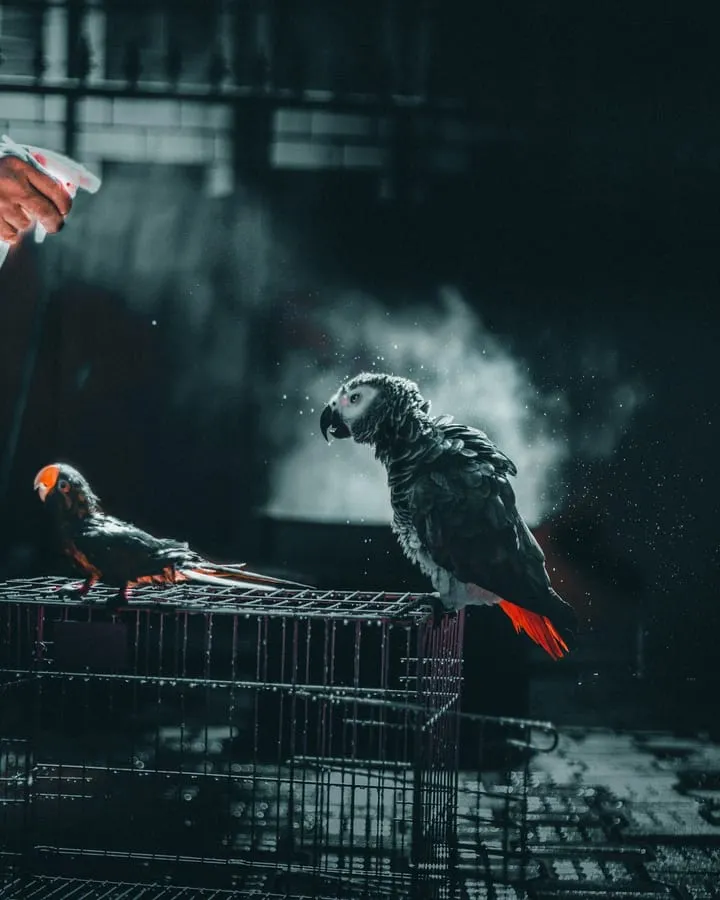
Cigarette and other smoke is harmful to birds, both the smoke itself and residue. Scented candles, incense, air fresheners, plug-ins, and strong perfumes fill the air with compounds a bird’s system copes with poorly. Aerosol sprays of many kinds, cleaning products, hairspray, and the fumes from fresh paint or new non-stick appliances being burned in can all be dangerous. The general rule follows from the biology: if it puts strong stuff into the air, keep it well away from your bird and ventilate thoroughly. What is a mild inconvenience to us, a smoky kitchen, a heavily scented room, can be a genuine threat to an animal built to extract every scrap of oxygen from the air it breathes.
Toxic foods and plants
Some dangers are things a bird might eat rather than breathe, and a couple are worth knowing specifically because they turn up so easily.
Avocado is genuinely toxic to birds and must never be offered, and chocolate, caffeine, alcohol, and very salty foods are all harmful, as covered in more detail alongside a bird’s proper diet. A number of common houseplants are also toxic to birds if nibbled, and since a bird out of its cage will explore and chew, it is worth checking that any plants within reach are bird-safe. The theme, again, is that a bird’s small body and inquisitive beak turn ordinary household items into risks that would never trouble a larger, less curious pet.
Physical dangers and safe out-of-cage time
Finally, alongside the toxins, there are straightforward physical dangers, and most bird accidents happen in the few minutes a bird is out of its cage unsupervised.
Open windows and doors are the obvious one: a startled bird flies, and a bird lost outside rarely comes back and faces predators, weather, and traffic. Large windows and mirrors can injure a flying bird that does not see the glass, so they should be covered during flight time. Ceiling fans are lethal to a bird in the air and must be off. Other pets, even normally gentle ones, can kill a bird in an instant, so cats and dogs should be shut away. Open water a bird can fall into and not climb out of, a full sink, a toilet, a deep bowl, is a drowning risk. And there are smaller hazards too, from toxic fumes drifting from the kitchen to things a bird might chew. The answer to all of this is simple in principle: any time your bird is out of its cage, it should be in a properly bird-proofed room and genuinely supervised, because these accidents happen in the unwatched moment.
Keeping a bird safe, then, comes down to respecting just how sensitive and vulnerable these animals are, and building a few firm habits around it: no non-stick fumes or strong airborne chemicals anywhere near the bird, no toxic foods or plants within reach, and supervised, bird-proofed out-of-cage time with windows shut, fans off, and other pets away. None of it is difficult, but several of these dangers offer no warning and no second chance, so the habits have to be reliable rather than occasional. Get them right and your home is a safe place for a bird. Get complacent about even one, especially the kitchen, and the consequences can be sudden and final.
Common questions
- Why are non-stick pans dangerous to birds?
- Non-stick coatings, like PTFE, release fumes when overheated that are invisible and odourless to us but rapidly fatal to birds, often within minutes. Overheated non-stick cookware is one of the most common causes of sudden bird death, so it is a serious hazard to know about.
- What household things are toxic or dangerous to pet birds?
- Overheated non-stick cookware, many aerosols and strong fumes, scented candles and air fresheners, cigarette smoke, some houseplants, and toxic foods like avocado and chocolate. Physical dangers include open windows and doors, other pets, ceiling fans, and water they can drown in.
- Can cooking fumes really kill a bird?
- Yes. Birds have extremely efficient, sensitive respiratory systems, which makes them very vulnerable to airborne toxins. Fumes that barely bother us, from overheated non-stick pans, self-cleaning ovens, and strong chemicals, can kill a bird quickly, which is the old reason for the canary in the coal mine.
- How do I make my home safe for a bird out of its cage?
- Supervise all out-of-cage time in a bird-proofed room, closing windows and doors, covering mirrors and large windows, turning off ceiling fans, removing other pets, covering or emptying open water, and keeping the bird away from kitchens and toxic plants. A moment's lapse is how many bird accidents happen.