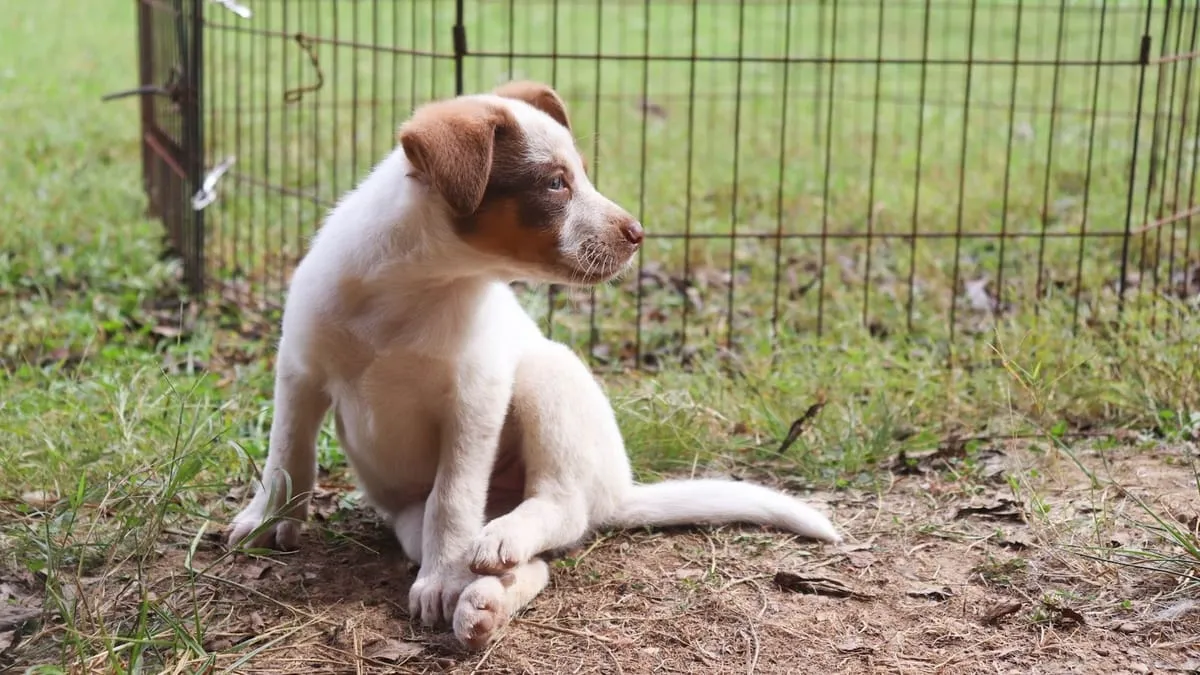
A crate divides opinion, and a lot of that comes from a misunderstanding of what it is for. Used badly, a crate is a cage. Used well, it is the opposite: a dog’s own safe, cosy den, a place it takes itself off to rest, feels secure in, and genuinely likes. The difference is entirely in how you introduce and use it. A well crate-trained puppy has somewhere calm to settle, sleeps better, and often toilet trains more easily, and it gives you a safe way to manage a young puppy when you cannot watch it. Here is how to build that happy place, step by step and at the puppy’s pace.
Make the crate a good place from the start
The whole method rests on one principle: the crate should only ever be associated with good things.
Set the crate up in a quiet but not isolated corner, with comfortable bedding, and leave the door open at first so it is simply part of the furniture. Then make going in rewarding: toss treats inside for your puppy to find, feed its meals in there, and put a favourite chew or toy in it, all with the door open so it can come and go freely. Praise it calmly whenever it chooses to go in. At this stage you are not shutting the door at all, you are just teaching your puppy that the crate is where nice things happen and a pleasant place to be. Let it wander in and out in its own time, and never push or force it inside.
Build up the door and the time, gradually
Once your puppy happily goes in on its own, you can start, slowly, to close the door and extend the time.
Begin by closing the door for just a few seconds while it eats or chews, then opening it again before it frets, and build up from there in small steps: a few seconds, then a minute, then a few minutes, staying nearby at first and then briefly leaving the room. Keep sessions positive and end them before your puppy gets anxious, so it never learns that the crate means being trapped. A stuffed chew or a food toy gives it something pleasant to do and helps it settle. If at any point your puppy starts getting upset, you have gone too fast, so simply drop back to a shorter, easier step and build up again more gradually. Slow and steady genuinely is quicker in the end, because it avoids creating fear you then have to undo.
Nights, and how long is too long
Two practical points cause most of the questions: using the crate at night, and how long a puppy can be in it.
The crate can be a real help at night, since puppies avoid soiling where they sleep, which supports toilet training, and many settle well once used to it. Put the crate where your puppy is not alone at first, often your bedroom, so it feels secure, and expect to get up once or twice for toilet trips in the early weeks. During the day, though, keep crating short. A young puppy can only hold its bladder for a few hours and needs company, play, and the toilet, so a crate must never be used to leave a puppy shut away for a full working day.
Get the introduction right and the pace gentle, and most puppies come to treat their crate as the safest, comfiest spot in the house, taking themselves off to it to sleep with the door wide open. That is the goal: not a cage you put your dog in, but a den your dog chooses. For the rest of settling a new puppy in, our new puppy checklist covers what you need, and crate training pairs naturally with toilet training a puppy, since the two support each other.
Common questions
- Is crate training cruel?
- Not when it is done properly. A crate used kindly becomes a dog's own safe, cosy den, a place it chooses to go to rest, not a cage it is locked in for long stretches. The cruelty comes only from misuse, leaving a dog crated too long, using it as punishment, or forcing a frightened dog inside. Introduced gradually and made a positive place, most dogs come to love their crate.
- How long can a puppy be left in a crate?
- Not long, especially at first. As a rough guide, a young puppy can only hold its bladder for a small number of hours, so crating should be short and never used to leave a puppy for a full working day. Overnight is different, as puppies sleep, though you should expect to get up for toilet trips early on. The crate is for short rests and sleeping, not long confinement.
- Should I put a puppy in a crate at night?
- Many people do, and it can help both with sleep and with toilet training, since puppies avoid soiling their bed. Put the crate somewhere the puppy is not alone at first, often your bedroom, so it feels secure, and expect to take it out for the toilet once or twice in the night early on. Over time it will sleep through and settle happily in its crate.
- My puppy cries in the crate, what do I do?
- First rule out a real need, a puppy crying may need the toilet, especially at night. If needs are met, avoid rushing to it every time it whimpers for attention, or you teach it that crying works, but never leave a genuinely distressed puppy to panic for a long time either. The fix is usually to go back a few steps and build up crate time more gradually, so it never gets that upset in the first place.