Almost every cat owner knows the routine. The carrier comes down from the loft, and the cat, who was asleep on the sofa a moment ago, has vanished. What follows is a stressful chase, a wrestling match, some scratches, and a miserable, yowling journey. It is unpleasant for everyone, but the real cost is worse than a bad morning: the carrier battle is one of the main reasons people skip vet visits, which means cats miss the check-ups and early care that keep them well. So getting this right is not just about convenience, it is about your cat’s health. And the fix is genuinely achievable, because the problem is not the carrier, it is what the carrier has come to mean.
Why the carrier became the enemy
To solve this, you have to see it from the cat’s point of view, because once you do, the hatred makes complete sense.
Think about when the carrier appears in your cat’s life. Almost always, it comes out of storage, the cat is stuffed into it, and then comes a frightening car journey and a visit to a strange place full of smells where it gets prodded by strangers. From the cat’s perspective, the carrier is a reliable predictor of one of the worst experiences it knows, so it has learned, sensibly, to disappear the instant it sees it. The carrier itself is neutral, a plastic box, but it has become a signal for fear. This is why forcing the issue on the day never really works and often makes the next time worse: every bad carrier experience deepens the association. The whole strategy, then, is to break that link, to make the carrier stop meaning “terror ahead” and start meaning “nothing, or even something nice”.
Make the carrier part of the furniture
The single most effective change is also the simplest: stop putting the carrier away, and let it become an ordinary, unthreatening object in the cat’s world.
If the carrier only appears twice a year as a prelude to horror, it will always be frightening. If it is simply there, all the time, in a spot the cat likes, it gradually loses its power to alarm. So leave it out as a permanent piece of furniture. Take the door off or fix it open, put a soft, familiar blanket inside, and place it somewhere the cat already relaxes. Then make good things happen in and around it: drop treats inside, feed the occasional meal in it, and let the cat investigate at its own pace with no pressure. Over weeks, most cats stop avoiding the carrier and many begin to use it as a cosy napping spot, exactly the outcome you want. A cat that chooses to sleep in its carrier is a cat for whom the carrier is no longer scary, and getting it in on vet day becomes a non-event.
Choose a carrier that helps you
The type of carrier you use makes a real practical difference on the day, and the wrong design turns a manageable job into a wrestling match.
A carrier that opens only through a small door at the front is the hardest kind, because getting a reluctant cat through a little opening means pushing, and pushing means a fight. Far better is a top-loading carrier, or a two-part one where the whole top half lifts off, because it lets you lower a cat in gently from above, or place it into the base and simply put the lid back on, rather than forcing it through a gap. This is much less stressful for a nervous cat and much easier for you. A sturdy, secure carrier with a removable top is worth choosing for exactly this reason, and it also makes the vet’s job easier, since they can often examine the cat in the base of its own carrier rather than dragging it out.
Making the trip itself calmer
Finally, once the carrier is no longer the enemy, a few things make the whole journey gentler, and they build on the calm you have created.
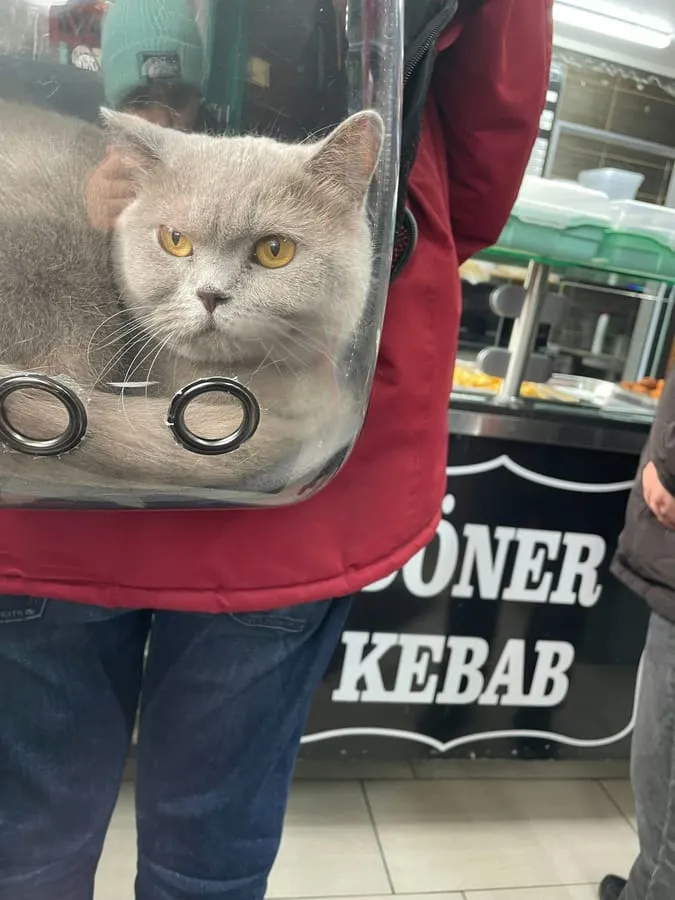
Cover the carrier with a towel or blanket for the trip, since being able to hide makes a cat feel far more secure than being exposed in a clear box in a moving car. A synthetic calming pheromone, sprayed in the carrier a little while before, helps some cats settle. Secure the carrier in the car so it does not slide about, and drive smoothly. And watch your own state, because cats are acutely tuned to our tension, so if you are anxious and rushing, the cat reads danger, whereas if you are calm and unhurried, that reassures it. None of these replace the groundwork with the carrier, but on top of a cat that already sees the carrier as safe, they turn a formerly dreadful trip into something merely dull, which is exactly what you want.
Done this way, the carrier stops being a twice-a-year trauma and becomes just another object the cat is comfortable with, and vet trips lose most of their horror for both of you. It asks a little patience up front, a carrier left out and made pleasant over a few weeks, but it repays that many times over: less stress, no scratches, and, most importantly, a cat you can actually get to the vet when it matters, which is the whole point.
Common questions
- Why does my cat hate the carrier so much?
- Because for most cats the carrier only ever appears right before something frightening, a car journey and a vet visit, so they learn to associate it with fear and hide the moment it comes out. The carrier itself is not the problem, it is what it predicts. Changing that association is the fix.
- How do I get my cat used to the carrier?
- Leave it out all the time as a normal piece of furniture, make it cosy and feed treats and meals in it, so the cat comes to see it as a safe, everyday place rather than a trap. Done over weeks, many cats will start choosing to nap in it.
- What is the best way to put a cat in a carrier for the vet?
- A top-loading or two-part carrier where the top comes off is far easier, since you can lower the cat in gently rather than forcing it through a small front door. Stay calm, move slowly, and if the cat is used to the carrier already, it is usually straightforward.
- How can I make vet trips less stressful for my cat?
- Get the cat comfortable with the carrier in advance, cover it with a towel to make it feel secure, use a calming pheromone spray if it helps, and keep yourself calm since cats read your tension. A cat that already sees the carrier as safe finds the whole trip far less frightening.