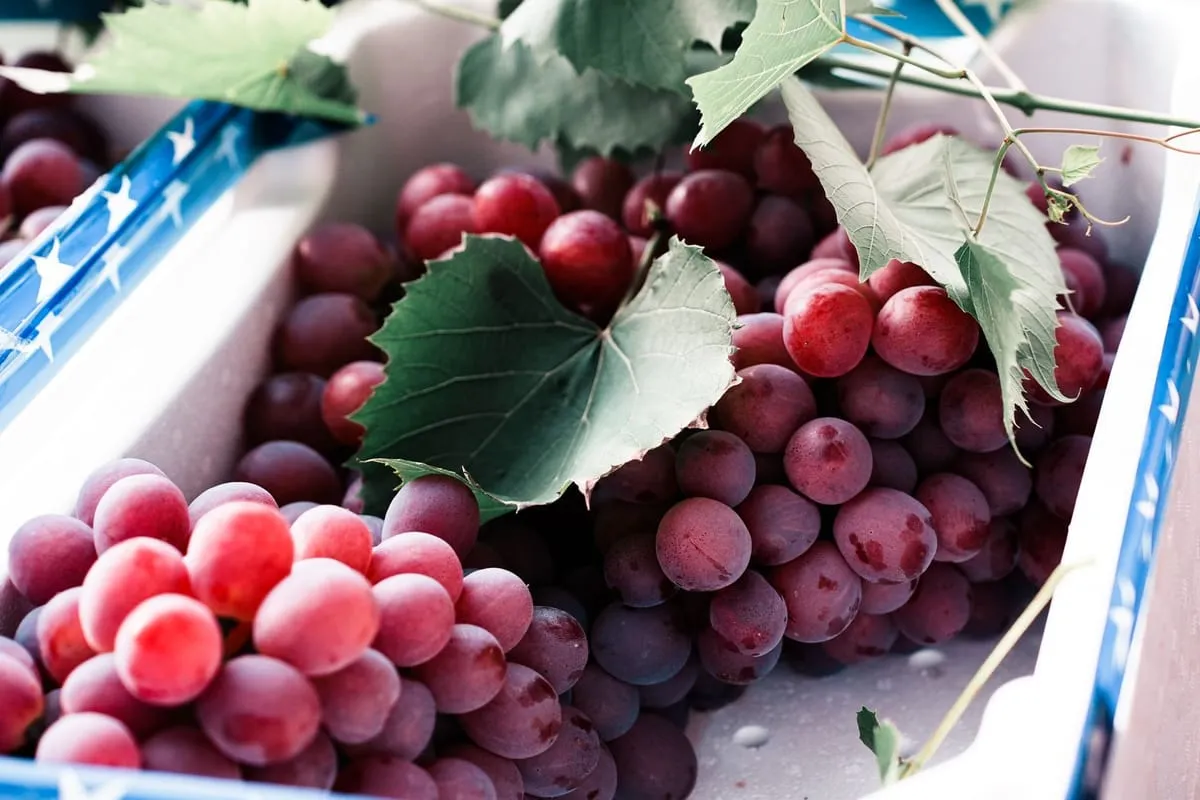
The honest answer is no, keep grapes and raisins away from cats. Grape and raisin poisoning is well documented in dogs, where it can cause sudden kidney failure, but far fewer cases have been reported in cats. That is not the same as grapes being safe for cats, it more likely reflects that cats rarely eat them, since they lack the sweet tooth that gets dogs into trouble. The handful of feline cases on record looked enough like the damage seen in dogs that vets treat grapes as an unproven but real risk rather than a green light.
Before going further, the usual honest note: I am a writer, not a vet, and any suspected poisoning is a job for a professional, not a search engine. If your cat has eaten grapes or raisins, the right move is to call your vet.
Why vets say no, even without much cat-specific data
The substance in grapes responsible for kidney injury in dogs still is not pinned down, which is part of what makes this such an awkward one to reassure anyone about, in cats or dogs.
What is known is that a small number of cats have shown the same pattern of acute kidney injury after eating grapes or raisins that is far more commonly reported in dogs, and vets and poison control lines take that as reason enough to apply the same caution across both species. Because the toxic dose in dogs does not reliably scale with body size or the amount eaten, and the mechanism is not understood, there is no way to calculate a supposedly safe amount for a cat either. Given a genuinely serious possible outcome and no reliable way to rule it out, the sensible approach is the same blanket no that applies to dogs.
Signs to watch for
If a cat has eaten grapes or raisins, possible signs follow a similar pattern to what is seen in dogs, developing over hours to a couple of days.
Vomiting, diarrhoea, and lethargy are the earlier signs, sometimes with reduced appetite. If kidney injury is underway, increased thirst can follow, and later, concerningly, reduced urination as the kidneys struggle. As with dogs, the point of acting immediately is to get ahead of this stage, not to wait and watch for it, since treatment is far more effective before kidney damage has set in.
What to do if your cat eats grapes
Because the outcome being guarded against is kidney failure and the risk in cats has not been ruled out, the response is the same as it would be for a dog.
So, can cats eat grapes? No. The evidence in cats is thinner than it is in dogs, but what exists points the same direction, and there is no reliable safe amount to fall back on. Keep grapes, raisins, and anything made with them away from your cat, and if one does get hold of some, call your vet rather than waiting to see what happens. For the wider list of what is genuinely risky, see our guide to which human foods are safe for cats.
Common questions
- Are grapes as dangerous for cats as they are for dogs?
- Nobody knows for certain, and that uncertainty is the whole reason vets say to avoid them. Grape and raisin poisoning is extensively documented in dogs, but cats eat grapes far less often, so there is much less data on cats specifically. The small number of reported feline cases looked similar to dog poisoning, kidney injury, which is enough for vets to treat grapes as an unproven but real risk rather than a food that is probably fine.
- How many grapes are dangerous for a cat?
- There is no known safe amount, the same as with dogs. Because the toxic substance in grapes still is not identified, and reactions in dogs do not reliably scale with how much was eaten, nobody can say a small taste is safe for a cat. Treat any amount, even a single grape, as a reason to call your vet.
- My cat ate a grape. What should I do?
- Contact your vet or a pet poison line straight away, even if your cat seems completely normal. Tell them what was eaten, roughly how much, and when. Vets would rather treat early on the side of caution than wait to see if symptoms of kidney injury develop, since by that point damage may already be underway.
- Why would a cat eat a grape in the first place?
- Cats are generally fussier and less drawn to sweet, plant-based foods than dogs, which is part of why reported grape poisoning in cats is so much rarer. It still happens, usually a curious cat batting a dropped grape around and eventually mouthing or swallowing it, or getting into a bowl of fruit or a raisin-studded baked good left within reach.